Best Body Break Exercises for Quick Workday Refreshment
Long hours at a desk can quietly drain energy and stiffen muscles, often dulling concentration before you realize what’s happening (it tends to sneak up on you). For home office and desk workers, the issue usually goes beyond productivity and extends to staying physically and mentally refreshed throughout the day. The best body break exercises offer a practical solution, especially in desk-based routines. They involve simple, short, and intentional movements done between tasks. Because these breaks don’t need special equipment, take only a few minutes, and can be done right next to the desk, they usually fit into the workday without disrupting momentum (which matters on packed days). That convenience is often what makes them realistic to stick with when schedules are tight.
The value becomes clearer when you compare them to full workout routines. Body break exercises are meant to interrupt long periods of sitting, which can slow circulation, tighten hip flexors, strain the neck and shoulders, and lead to mental fatigue (most people notice this by mid-afternoon). Even regular workouts before or after work don’t fully cancel out hours of stillness. In this situation, body breaks work as a reset for both muscles and attention. By loosening areas like the hips and shoulders and briefly shifting focus, they often help people return to tasks with clearer concentration instead of pushing through stiffness or mental drag.
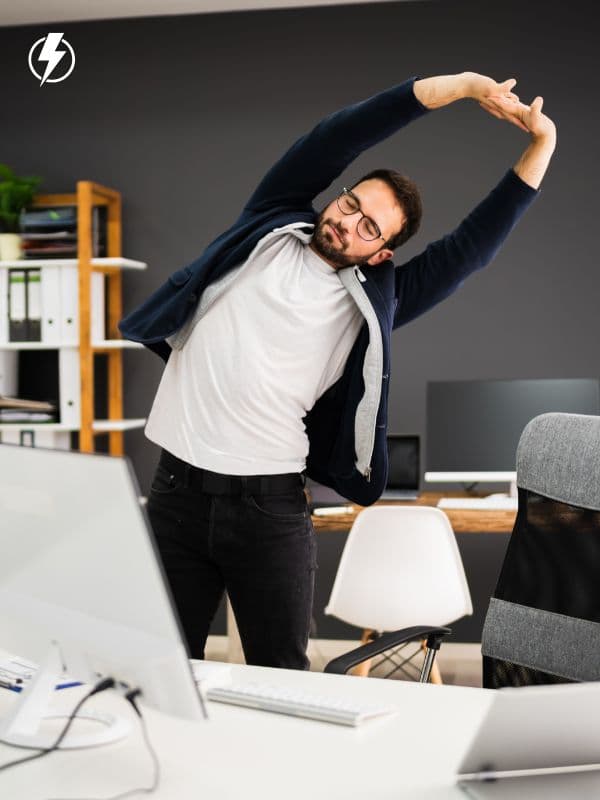
Accessibility is one of their biggest advantages. There’s no need to change clothes, block extra time, or roll out a mat (which removes a common excuse). A two- to five-minute break each hour is often enough to reduce stiffness and mental fog. Consistency tends to matter more than intensity here. Over a full workday, these brief pauses add up, often showing up as easier movement and steadier focus during the afternoon stretch.
Neck and Shoulder Release Exercises
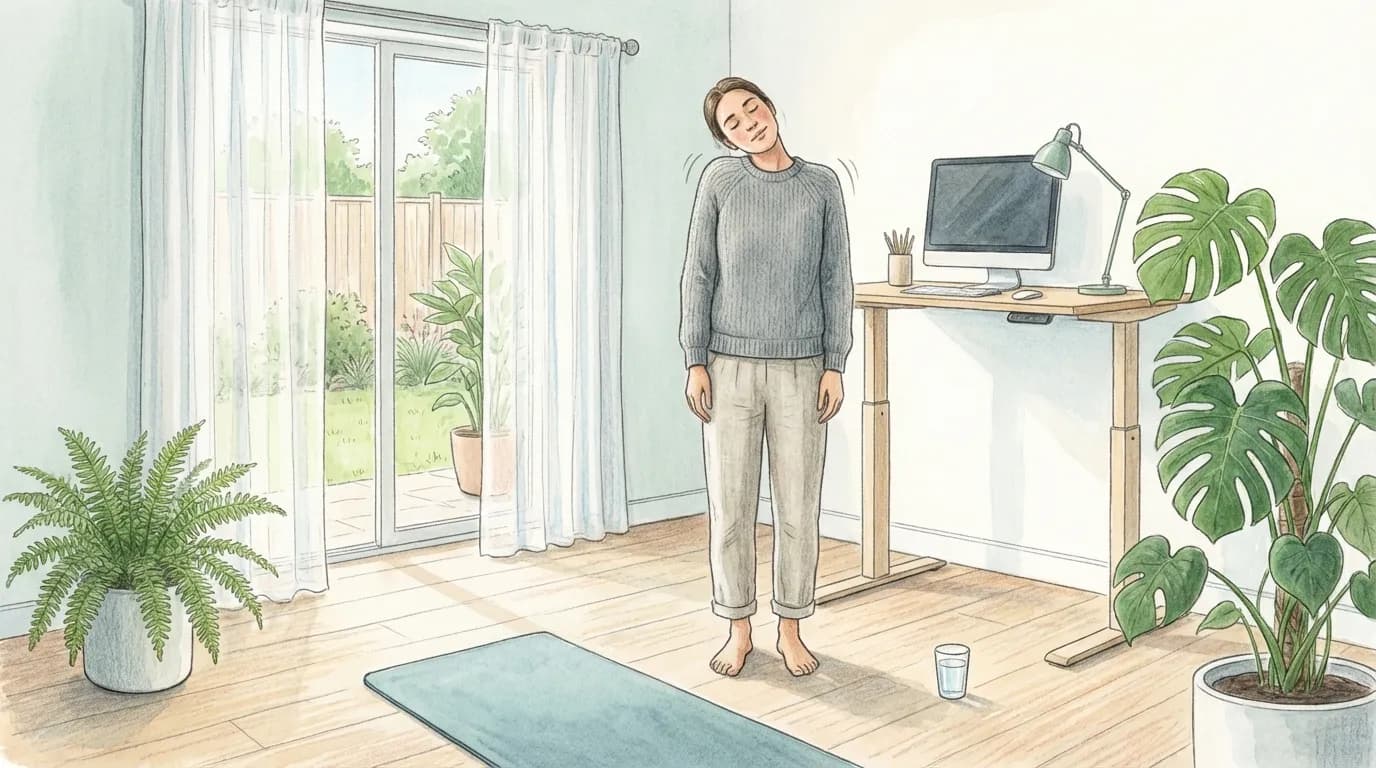
Neck and shoulder tension is one of the most common problems for desk workers, and many people feel it most by late afternoon. Screen use and typing often pull the head forward, which usually adds strain to these areas over time. In many cases, simple neck rolls and shoulder shrugs help ease built‑up tension and support better blood flow. When there’s time for slower, more controlled movement, shoulder circles can also help. A small addition that works well is a gentle side‑to‑side head tilt, pausing for a few steady breaths without forcing the stretch. Here, regular practice tends to matter more than effort, and that steady approach can reduce stiffness and help prevent tension‑related headaches.
For movements that target posture more directly, the shoulder blade squeeze is another solid option. Sitting or standing tall, you draw the shoulder blades together, hold briefly, then release. The focus stays on control, not force. Repeating this a few times can help counter rounded posture from long hours at a computer and give the upper body a simple reset.
Spine and Back Mobility Movements
The spine responds best to regular movement, especially on desk‑heavy days. Long periods in one position often leave it stiff by mid‑afternoon, which many people recognize. That’s why gentle spinal mobility exercises can refresh the body fairly quickly. Simple motion helps in clear, practical ways. With seated cat‑cow stretches, you move between rounding and arching the back in a slow, relaxed rhythm. Over time, this can support spinal disc hydration and ease lower‑back tension.
Standing back extensions are another effective option. To reverse a day of forward bending, you stand, place your hands on the lower back, keep the knees soft, and lean backward gently without forcing the movement. This shift away from desk posture often brings noticeable relief after long stretches of sitting. For more ideas, you can explore Best Stretches for Office Workers Sitting All Day which complements these techniques.
Lower Body Activation and Circulation Boosters
That dull, tight feeling around the hips is often the clearest sign that long periods of sitting have slowed blood flow in the legs. Brief lower-body movements can help by engaging large muscle groups and getting circulation moving again, which usually matters most after an hour or two at a desk. These movements are simple, effective, and need very little room.
Chair squats are a solid place to begin. Standing up from your chair and lowering yourself back down with control works the glutes and thighs, and moving slowly is often more effective for improving circulation through the legs.
For the lower legs, calf raises are an easy option. Stand behind your chair for balance, lift onto your toes, then lower your heels back to the floor. Repeating this 15 or 20 times can ease that heavy feeling in the legs and support healthy blood flow. To help hip mobility, standing hip circles or gentle lunges are also useful. No equipment is needed, and these movements fit comfortably into small spaces, including right behind your chair, without attracting attention.
Desk-Friendly Stretching for Hands and Wrists
When typing or using a mouse all day, hand and wrist discomfort can build quietly and go unnoticed until it becomes distracting. During a desk-based workday, short breaks that focus on the forearms and hands help reduce strain. Wrist circles, finger stretches, and gentle palm presses keep joints flexible and ease tension.
One simple stretch is to extend one arm forward, palm up, and gently pull the fingers back with the other hand to stretch the forearm. Hold for 10 to 15 seconds, switch sides, and repeat as needed. No equipment is needed, and it can be done right at the desk.
Breathing and Mind-Body Reset Exercises
Not every body break depends on clear physical movement. Breathing exercises can offer a quick mental and physical refresh, especially ones you can do right at your desk. During stressful periods or times of intense focus, shallow breathing often sets in and can add to fatigue. Taking a minute or two for slow, controlled breathing can calm the nervous system and improve oxygen flow. I find this type of reset simple and likely to work for most people.
One common option is box breathing: inhale for four seconds, hold for four, exhale for four, then hold again for four. After long screen time, this method often lowers stress and helps concentration. Combining breathing with gentle stretching can strengthen the effect and make it easier to get back to work after a demanding task. You can also check 5 Breathing Exercises for Desk Workers for additional techniques.
Sample Best Body Break Exercise Comparison
Below is a comparison of a few common best body break exercises, organized by time and intensity, with notes on what each is mainly useful for. What stands out is how short these breaks are, often only a couple of minutes, yet they can still make a noticeable difference when energy drops. In practice, they fit easily into brief gaps between tasks, which is often all that’s available during a busy day. Instead of scheduling a full workout, these short breaks work best between meetings or after long periods of screen time. They offer a simple reset without needing much planning or mental effort, making them easier to stick with throughout the day.
| Exercise Type | Time Required | Intensity Level | Primary Benefit |
|---|---|---|---|
| Neck rolls and shoulder shrugs | 1, 2 minutes | Low | Helps ease tension in the neck and shoulders, which often builds up first after desk work or laptop time |
| Seated cat-cow stretch | 2, 3 minutes | Low to medium | Supports spinal mobility and encourages gentle back movement without needing to get on the floor |
| Chair squats | 2, 3 minutes | Medium | Increases circulation and helps wake up the body, especially after sitting for long stretches |
| Calf raises | 1, 2 minutes | Low | Encourages blood flow in the lower legs, which can help after hours of standing or sitting |
| Deep breathing exercises | 1, 3 minutes | Very low | Lowers stress and reduces mental fatigue, especially during busy or mentally heavy parts of the day (in my view, this one’s underrated) |
Creating a Sustainable Body Break Routine
Body break exercises tend to work best through regular practice rather than high effort, especially during a packed workday. When work picks up and hours start to blend together, which happens more often than many people realize, setting a reminder every 45 or 60 minutes can gently encourage movement without much effort. Rotating different exercises during the day also helps breaks feel less repetitive and lets different muscle groups engage naturally, without needing to plan anything complex in the middle of a task.
These breaks usually fit best around natural transitions. Standing to stretch after finishing an email or before starting a new task often feels smoother than stopping mid-focus. Over time, these pauses settle into the workday and start to happen automatically.
Paying attention to how your body reacts is key. If something feels uncomfortable, adjusting the movement or choosing a gentler option is usually better. For most people, feeling refreshed comes from small, thoughtful movements, like a quick stretch before opening the next document, rather than doing more.
Mental Benefits of Quick Movement Breaks
Along with physical relief, body break exercises support mental performance. Short movement breaks often improve focus and mood. Stepping away from the screen, even briefly, which tends to happen less often than it should, and reconnecting with the body gives the brain space to reset. That pause often reduces mental clutter and is especially helpful during long periods of focused work.
For home office workers, this mental separation matters because work and personal spaces often overlap in uncomfortable ways. Body breaks help set clearer boundaries during the day. A brief stretch or breathing exercise can wrap up one task and help shift attention before starting the next.
Adapting Best Body Break Exercises to Small Spaces
Limited space is rarely the real barrier, and honestly there’s often no excuse, which matters here. What becomes clear is how little room most best body break exercises need, often only enough space to stand next to the chair you’re already using. In shared or quiet settings, many options stay discreet, which helps when attention isn’t welcome. Seated stretches, ankle circles, gentle neck rolls, and simple breathing exercises often go unnoticed and still offer real benefits in most cases.
Working from home changes things; you usually notice the added freedom quickly, like standing up or taking a few steps.
Long-Term Impact of Regular Best Body Break Exercises
The most noticeable change often appears over time, not from a single stretch. Each body break is short, but over a typical workweek the combined effect is usually clear. Regular movement supports joint mobility and can improve posture, which helps reduce the strain that builds during long hours of seated work. Over weeks and months, many desk workers report fewer aches and more consistent energy, shaping how the day feels overall, not just at 5 p.m. I think these small, repeatable adjustments slowly lead to less stiffness and greater comfort in daily work.
Best body break exercises can also change how people think about work itself. They show that productivity doesn’t depend on staying still for long periods, something you’ve likely noticed already. In my view, that shift matters because movement becomes part of doing the job well, not a separate task.
Common Questions, Answered
How often should I take body breaks during work?
A brief body break every 45 to 60 minutes usually works well; even one or two minutes of movement can offset long periods of sitting and help you refocus on the task at hand. I find this simple habit often keeps you focused, especially mid‑day.
Can body break exercises really improve productivity?
Yes. From my experience, many people get back to tasks quicker, with better focus, after a short body break, you can feel it (reset). Short movement breaks boost blood flow to the brain and reduce mental fatigue during the workday (nothing fancy).
Are body break exercises suitable for all fitness levels?
Body break exercises are low impact for most people and can work across fitness levels. Results depend on choosing gentle movements and listening to your body. Stopping before pain starts often helps keep the practice safe and appropriate.
What if I forget to take breaks during busy workdays?
Simple reminders or scheduled cues linked to routine tasks can help, like calendar alerts or quick check-ins. Short nudges often work best. Over time, this becomes part of daily work, cutting conscious effort and reducing the need for constant mental tracking.
Do body break exercises replace regular workouts?
No, body break exercises don’t replace structured workouts. Often helpful, in my view, they support training by cutting sedentary time during the workday and improving comfort and mobility, instead of taking the place of regular exercise.