Dumbbell Glute Workout: 15 Best Exercises for Mass, Shape & Strength
TLDR; This article explains why desk workers often need glute training. Sitting for long hours can weaken the glutes, tighten the hips, and shift more stress into the lower back and knees, which is honestly pretty common. If someone sits a lot, they have probably felt at least some of that already.
It also explains how to put together a solid dumbbell glute workout at home with simple movement patterns like hip thrusts, Romanian deadlifts, squats, split squats, lunges, bridges, and kickbacks. Along the way, it goes over proper form, controlled reps, and progressive overload, so the work slowly increases over time. That usually makes training safer and more effective.
The guide also gives goal-based advice for mass, shape, and strength. It includes sample weekly routines for busy schedules, plus short exercise snacks, which help when longer workouts are hard to fit in, as they often are.
A practical option is training glutes 2 to 3 times per week, choosing a routine that feels realistic to follow, and combining strength work with regular movement breaks, so sitting all day has less impact on the hips, lower back, and knees.
Hours of sitting can leave the glutes doing very little, which is why they often need extra attention. A smart dumbbell glute workout can do more than change how the lower body looks. It can help posture, ease stiffness, build hip strength, and help the body feel better after long desk-heavy workdays that add up fast.
For home office and desk workers, weak glutes are a pretty common issue. Sitting too much can tighten the hips and leave the backside underused, so focused strength work has a real purpose here. A dumbbell glute workout works well, is easy to follow, and is practical to do at home, even with very little space, like a corner of a room.
This guide explains why glute training is useful for people who work at desks, how to set up workouts, and 15 of the best exercises for glute mass, shape, and strength. It also includes form tips, a sample routine, ideas for fitting exercise snacks into the workday, and answers to common questions. If stronger hips, better lower-body strength, and a plan that feels realistic to stick with sound good, this guide is a good place to start.
Why Desk Workers Need a Dumbbell Glute Workout
Glute training matters for people who spend most of the day sitting, not just athletes or bodybuilders. Your glutes help extend your hips and support your pelvis (which is a big deal). They also help keep your body stable when you walk, climb stairs, stand up, or carry things. So if those muscles get weak, other areas often take over. That can show up as tight hip flexors, an overworked lower back, and knees that feel less steady.
Health experts still warn about the effects of too much sitting. For desk workers, a dumbbell glute workout is a simple way to build strength back in muscles that can stay inactive for hours (and yeah, that adds up fast).
| Desk-worker issue | Common cause | How glute training helps |
|---|---|---|
| Flat or underactive glutes | Long hours sitting | Improves muscle activation and size |
| Low back tightness | Hips and glutes not sharing the load | Helps support hip extension and posture |
| Poor lower-body power | Too little strength work | Builds force for walking, stairs, and daily tasks |
| Stiff hips | Limited movement during work | Adds controlled range of motion through key patterns |
Hospital for Special Surgery makes another good point here. Many of the best glute exercises use squat, hinge, lunge, and bridge patterns. These are not fancy gym moves. They are basic movement patterns that show up in everyday life and help your body move better from one day to the next.
How to Make a Dumbbell Glute Workout Work at Home
You do not need a full home gym to train your glutes well. One pair of dumbbells can do a lot. If you have enough space for a mat and just enough room to step back into a lunge, that is already plenty of room to start.
Before training, a few things matter: load, control, consistency, and form. Load means picking a dumbbell heavy enough to feel challenging. Control means moving well instead of rushing through each rep. Consistency means doing it two to four times per week, especially if long workdays make it easy to skip. And form still matters more than chasing some perfect plan.
For busy desk workers, keeping the setup simple usually works best:
Pick the right weight for your dumbbell glute workout
Use a weight that makes the last reps feel tough but still controlled, while keeping good form. If you can get through 15 reps without much effort, you’ll need more weight.
Train through full range of motion in your dumbbell glute workout
Lower with control, nice and regular. Pause if needed, then drive up through your glutes. Simple, right? You build shape and strength at the same time.
Use a smart structure for your dumbbell glute workout
A good dumbbell glute workout uses a hinge, a squat or split-squat pattern, then a bridge or thrust, plus an abduction or kickback move. It keeps the workout balanced and simple to follow.
Fit it into your week
If a fuller training schedule would help, this 3 day split workout guide shows how to fit glute work into a routine that feels realistic. It’s simple and easy to stick with.
Form Rules That Build More Muscle and Less Pain
The best dumbbell glute workout is the one they can really feel in their glutes, not the one with the longest list of exercises. That matters a lot for desk workers, since many are used to letting the lower back or quads take over.
A short warm-up at the start of each session helps. Keep it simple with bodyweight glute bridges, hip hinges, and a few slow squats. Even a short walk counts, which is good news for anyone trying to ease into things.
During reps, keep these points in mind:
Brace your core
Keep your ribs down and your midsection firm. It matters. This helps protect your lower back and lets your hips do the work, so you don’t overdo it.
Push through your midfoot and heel
In bridges, thrusts, and squats, this cue can help you feel your glutes more. For many people, it works pretty fast.
Keep your neck relaxed
During hip thrusts or RDLs, don’t yank your head up (seriously). Keep your spine long and your neck relaxed. That’s it.
Slow the lowering phase
Muscle growth responds really well to controlled tension. Lowering for two to three seconds can make light dumbbells feel a lot more useful, which is exactly the point.
Here’s a simple before-and-after example. Many desk workers start by feeling lunges mostly in the front thigh, but after a few weeks, a better stance length, a slight forward torso lean, and more pressure through the front heel move more of the work into the glute. Those small setup changes can make the same exercise feel very different.
The 15 Best Dumbbell Glute Exercises
Here are 15 really effective moves to build glute size, shape, and strength, the good stuff. You don’t need to squeeze all 15 into one workout. Pick 5, 6, 7, or a few more for each session, then switch them through the week to keep things fresh.
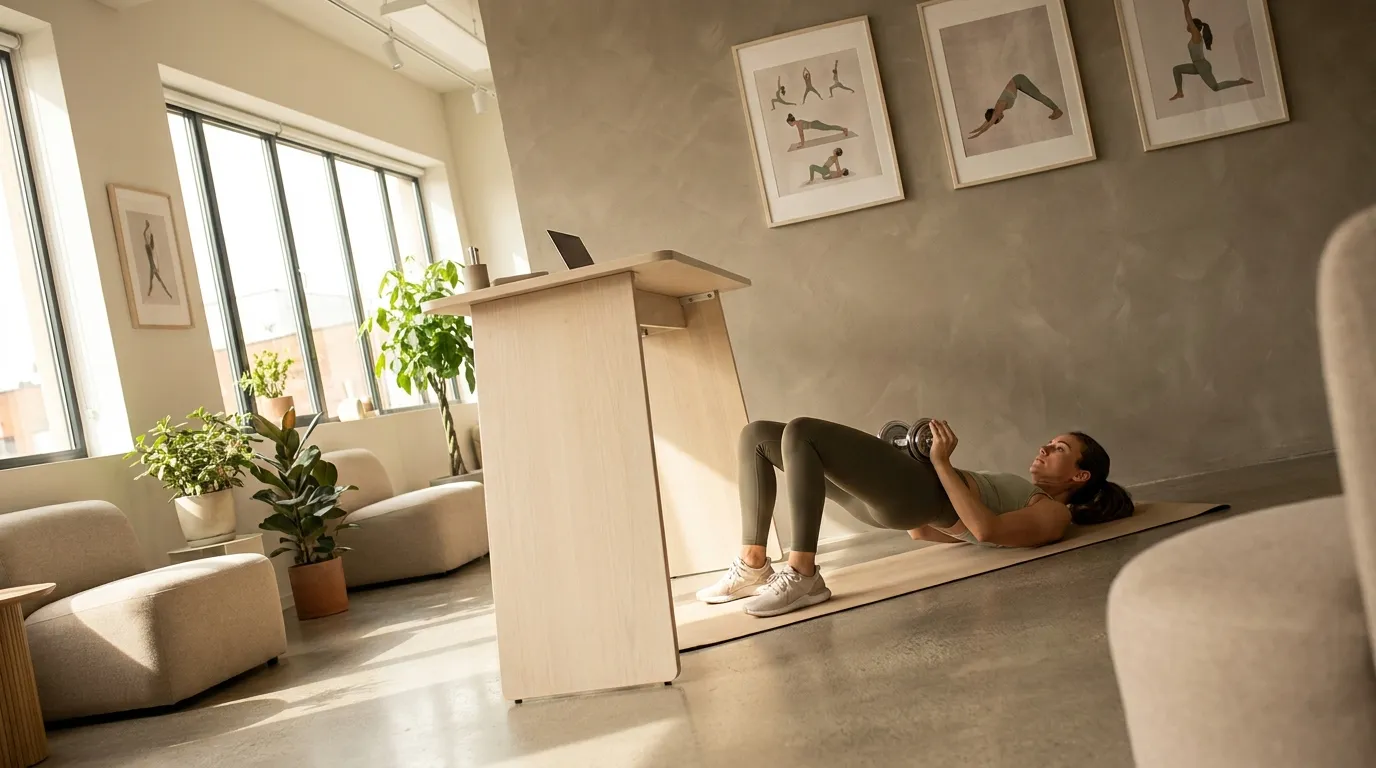
1. Dumbbell Hip Thrust
Set your upper back on a couch or bench, ideally a sturdy one. Rest a dumbbell across your hips, then push your hips up until your body makes a straight line from your shoulders to your knees. Squeeze your glutes at the top. It’s a simple move, and it works really well.
Why it works: it puts direct tension on your glutes and is easy to add weight to at home, which is a nice bonus.
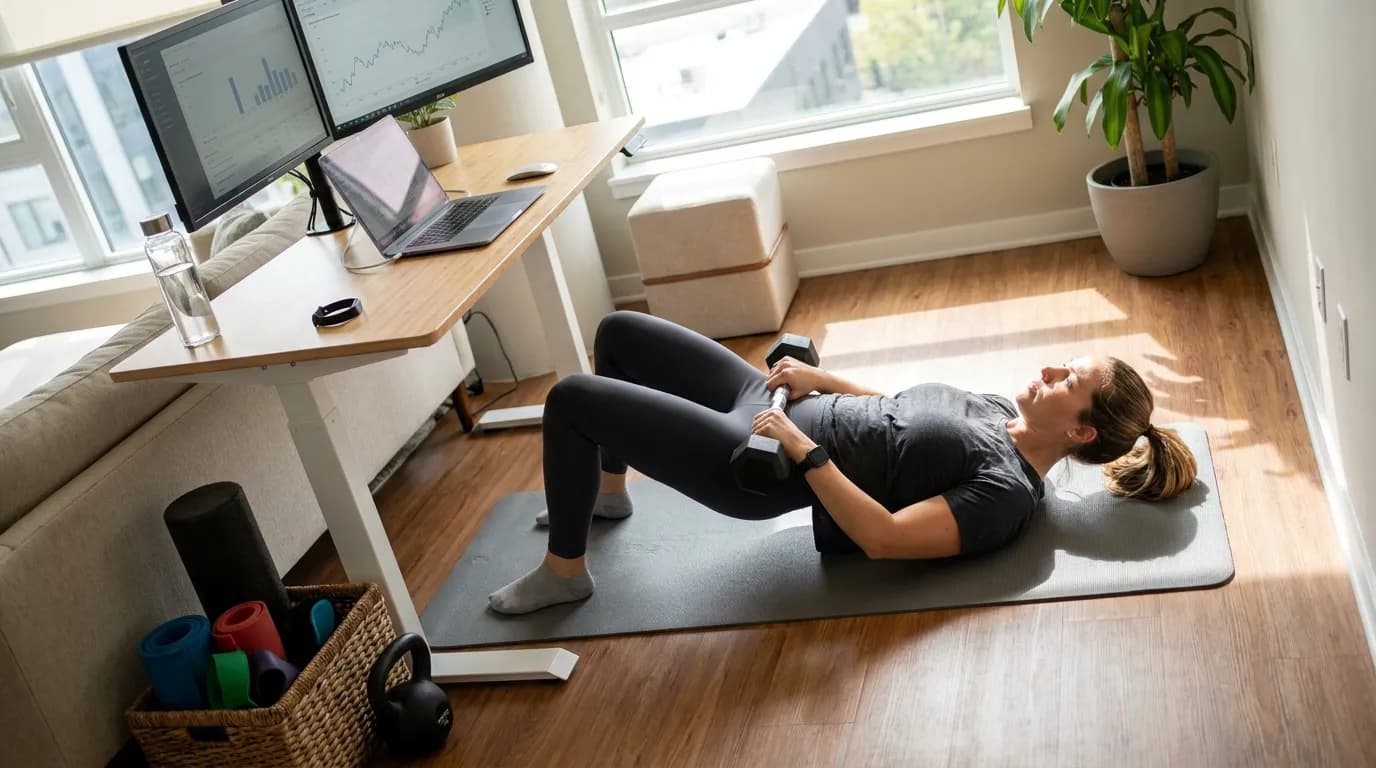
2. Dumbbell Glute Bridge
Lie on the floor with your knees bent and a dumbbell on your hips (pretty simple, right?). Then lift your hips up and pause at the top. Since it’s easier than a hip thrust, it’s a really good choice for beginners learning the movement.
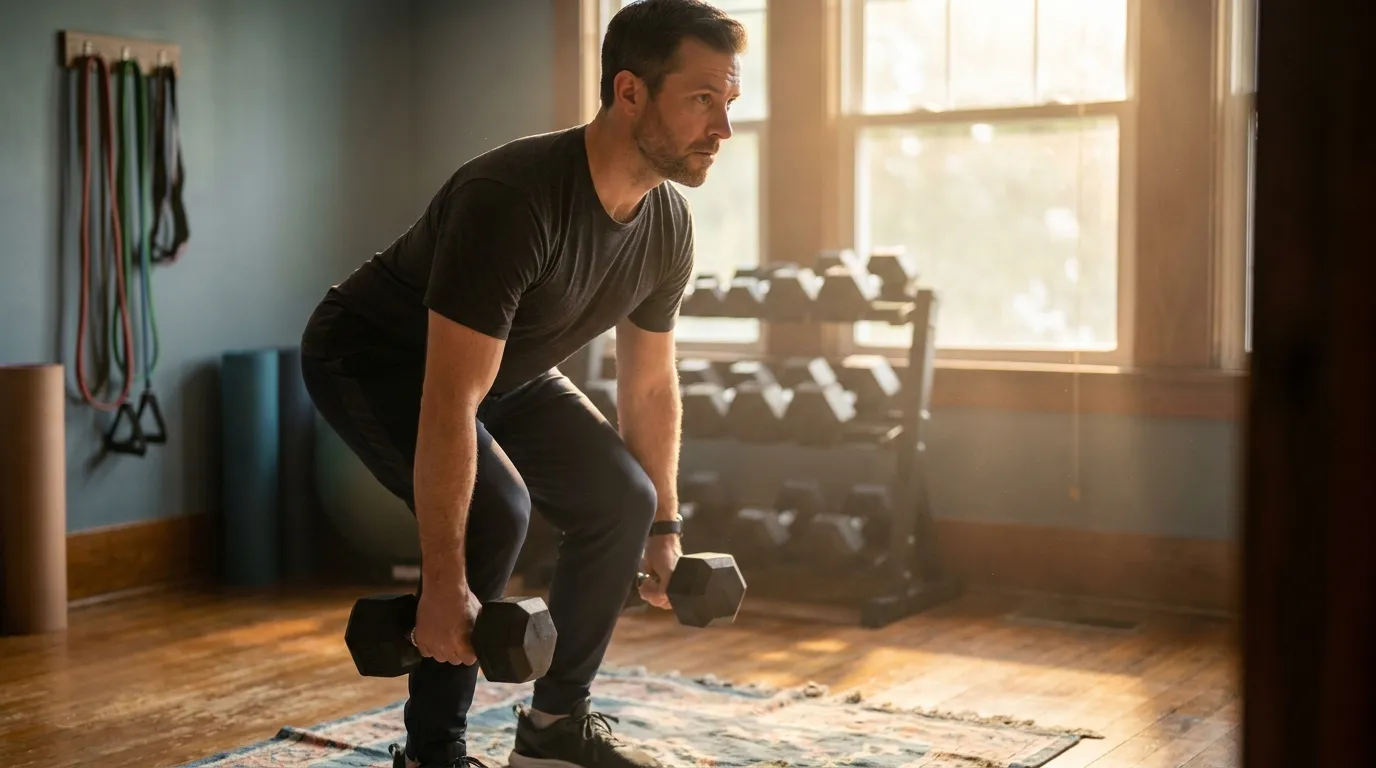
3. Romanian Deadlift
Hold dumbbells in front of your thighs. Keep a slight bend in your knees, then push your hips back. Lower until you feel a good stretch in your hamstrings, then stand tall again. You’ll really feel it.
Why it works: it’s one of the best hinge moves for building glutes and hamstrings.
4. Staggered-Stance Romanian Deadlift
Place one foot a little back, like a kickstand. Most of your weight stays on the front leg, so it gives you a good single-leg challenge without the full balance work.
5. Single-Leg Romanian Deadlift
Hold one or two dumbbells, then hinge on one leg, slow and steady. It builds glute strength and balance, and you’ll also feel more control through your hips.
6. Goblet Squat
Hold one dumbbell at chest level. Sit back and down, then stand up. A deep goblet squat works your glutes really well, and you’ll feel it even more if you keep tension and use a full range.
7. Dumbbell Sumo Squat
Take a wider stance, a bit past shoulder-width, and turn your toes slightly out. Then hold the dumbbell between your legs. You’ll really feel it in your inner thighs and glutes.
8. Bulgarian Split Squat
Place your back foot on a stable chair or couch. Hold dumbbells at your sides, lower yourself slowly, then push back up through your front leg, you’ll really feel it.
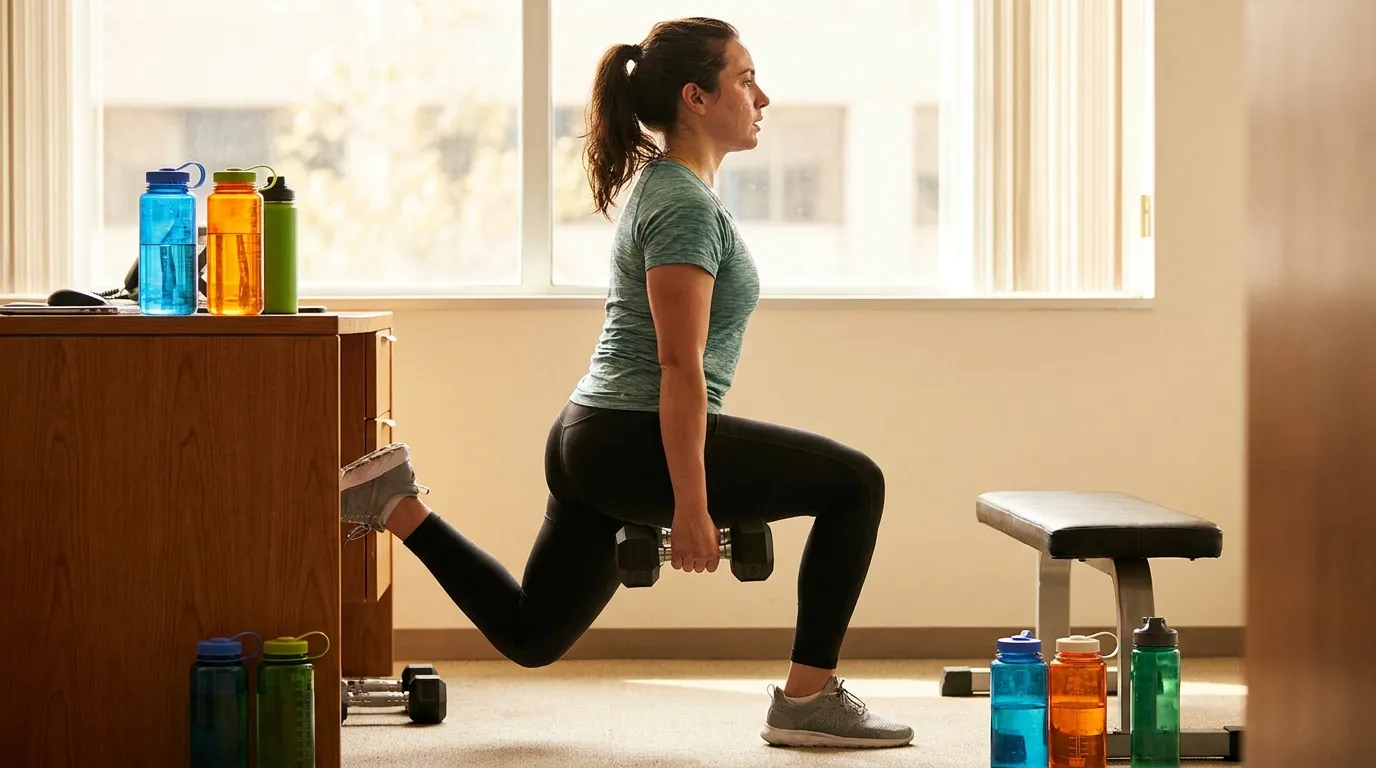
9. Reverse Lunge
Step back, lower with control, then come back up to standing nice and steady. For lots of people, it feels easier on the knees than forward lunges, but it still works the glutes hard, and you’ll feel it.
10. Walking Lunge
Take long, controlled steps. A bit longer stride also brings in more glute work, which honestly helps.
11. Curtsy Lunge
Step one leg back and across, nice and slow. It works the glute medius and adds variety. Move carefully and stay pain-free, so don’t force it.
12. Step-Up With Dumbbells
Use a stable bench, stair, or solid platform, not anything shaky. Step up through your whole foot, then stand tall at the top, you’ll really feel it.
13. Dumbbell Frog Pump
Lie down with the soles of your feet together and your knees out, even if it feels a bit awkward at first. Set a dumbbell on your hips, then push up. Keep the reps short, and your glutes will really feel it.
14. Quadruped Dumbbell Kickback
On your hands and knees, place a light dumbbell behind one knee. Then press the sole of your foot upward, yeah, it can feel a little awkward at first. But it works really well if you keep the movement controlled.
15. Standing Dumbbell Lateral Lunge
Step out to one side, sit into the hip, then push back to center. It’s a simple move, and a good one. It trains the glutes in the frontal plane, which can help movement feel better over time.
For better lower-body balance, pairing glute work with upper-body training can also help. A strong backside supports pulling patterns. This guide to dumbbell lat exercises can fit nicely into a home routine.
Best Dumbbell Glute Workouts for Mass, Shape, and Strength
Different goals need slightly different setups. The exercises can stay the same, sure, but reps, rest, and exercise order change too, and you’ll really feel it.
For mass
For big moves like hip thrusts, RDLs, Bulgarian split squats, and sumo squats, use 3 to 4 sets of 8 to 12 reps, they’re great basics. Rest 60 to 90 seconds between sets. For the best results, focus on adding a little weight, doing more reps, or improving control over time.
For shape
A mix of moderate and higher reps works really well here. For example, do 10 to 15 reps on bridges, then 15 to 25 on squats, frog pumps, or kickbacks. That creates lots of local glute tension, so you’ll feel it, and it can help you feel the muscle better.
For strength
When you can, use more weight on hip thrusts, RDLs, split squats, and other big basic lifts. Keep most sets in the 5 to 8 rep range, rest a little longer between sets, and stay strict with your form.
A quick comparison makes this easier to see:
| Goal | Best rep range | Top exercise choices |
|---|---|---|
| Mass | 8-12 | Hip thrust, RDL, Bulgarian split squat |
| Shape | 10-25 | Glute bridge, frog pump, kickback |
| Strength | 5-8 | Hip thrust, RDL, step-up |
If long work hours are part of the week, shorter sessions often fit better and feel more manageable. Two focused 30-minute glute workouts, plus a few short movement breaks, may be more realistic than saving everything for one long weekend session. That usually leads to a plan you can stick with across a busy workweek.
A Sample Dumbbell Glute Workout Plan for Busy Home Office Workers
Let’s keep this practical. If work has you sitting most of the day, your training plan should support your energy instead of leaving you totally wiped out. Real life still matters.
The best routine fits around meetings, deadlines, and the usual day-to-day stuff, because that’s what the week really looks like. It should also feel easy to stick with. Here’s a simple weekly setup:
Option A: Two glute days
Day 1: Strength focus
Start with hip thrust, RDL, and Bulgarian split squat, a really good combo. Then add step-up and frog pump, and you’ll really feel it.
Day 2: Shape and volume focus
Glute bridge, goblet squat, and reverse lunge are good picks here. Finish with kickback and lateral lunge for a nice ending.
Option B: Three shorter sessions
Session 1: Hip thrust, RDL, frog pump, glute bridge
Session 2: Goblet squat, reverse lunge
Session 3: Split squat, step-up, kickback
A 20-minute lunch session can be a good answer if energy is low after work. Another simple option is breaking the workout into exercise snacks: hip thrusts and bridges in the morning, lunges later, and squats at another time in the day. That fits really well with the mission of My Exercise Snacks. For many people, short bursts of movement are just easier to stick with than waiting for one perfect workout window that never really shows up.
Here’s a simple example. Picture a remote worker sitting from 8 a.m. to 5 p.m. with only a few short breaks. After four weeks of two glute sessions and a handful of standing breaks each day, they might notice less hip tightness, climbing stairs feels easier, and they pay more attention to posture. It does not replace medical care, though. It just shows how focused strength work may help with day-to-day comfort.
Common Mistakes That Limit Dumbbell Glute Workout Progress
Lots of people do a dumbbell glute workout and still barely feel their glutes. The problem usually isn’t effort, though. It’s the setup, and that’s often what gets people stuck.
Mistake 1: Going too light forever
High reps can help, they really can. But your muscles still need a real challenge. If the weight never goes up, growth can stall, and you’ll feel it.
Mistake 2: Turning every move into a back exercise
If you arch too much on thrusts or hinges, your lower back can take over fast. Keep your ribs down and drive the movement from your hips, not your back.
Mistake 3: Rushing reps
Momentum can hide weak spots, it really can. Slow, controlled reps are better than fast, sloppy ones, and you’ll feel it.
Mistake 4: Only using the same pattern
Hip thrusts are great, but by themselves they’re not enough. Add hinges and squats too. Split squats help as well, along with some single-leg work.
Mistake 5: Ignoring recovery
Glutes grow between workouts, not just during them. Sleep, food, and rest all matter. Walking and simply moving more during the day help too.
If work leaves you mentally tired, training does not need to be intense every time. On some days, a lighter movement session still counts, and that is completely fine. It still helps you make progress. If stress is part of the issue, these quick desk workouts for stress relief can help you stay active without adding more pressure.
How to Progress When You Only Have Light Dumbbells
A full dumbbell rack at home would be nice, but you do not need one. Light weights can still help build strong glutes if you make the muscles work harder in other ways, and yes, that really works.
Start by adding more time under tension. Lower for three seconds, pause, then lift. Adding reps helps too. Going from 10 reps to 18 clean, solid reps still counts as real progress. Unilateral training is another good option. Split squats, single-leg bridges, staggered RDLs, and similar moves can make a light dumbbell feel surprisingly heavy because one side has to do more of the work, and that usually gets obvious pretty fast.
Pauses at the hardest part help too. A small change can shift the feel of a set a lot. Hold the top of a hip thrust for two full seconds. Pause at the bottom of a squat. 1.5 reps also work: come up halfway, go back down, then stand all the way up. These methods are simple and useful.
For desk workers, this is especially helpful because home workouts need to be efficient. Fancy tools are not required. Smart progression and real effort are what matter here. Even with only light dumbbells, there is still plenty of room to keep progressing.
Frequently Asked Questions
How often should I do a dumbbell glute workout?
Most people do well with 2 to 3 glute workouts per week. That gives you enough training to build strength and muscle while still allowing recovery. If you are very sore, start with 2 days.
Can I build bigger glutes with only dumbbells at home?
Yes. You can build size with dumbbells if you train hard, use good form, and keep progressing over time. Hip thrusts, RDLs, split squats, and lunges are especially effective.
What is the best dumbbell glute workout for beginners?
A simple beginner workout can include glute bridges, goblet squats, Romanian deadlifts, reverse lunges, and frog pumps. Start with 2 to 3 sets per exercise and focus on control before adding more weight.
Why do I feel glute exercises in my legs more than my glutes?
This usually comes from stance, range, and body position. Try pushing through your heel, slowing down the rep, and using a slight forward lean on split squats and lunges. Glute activation often improves with practice.
How long does it take to see results from glute training?
Many people notice better muscle awareness and less stiffness within 2 to 4 weeks. Visible muscle changes usually take longer, often 6 to 12 weeks or more, depending on your effort, nutrition, and recovery.
Extra Tips for Better Results and Less Sitting Damage
Your dumbbell glute workout usually works better when what happens between workouts changes too. Stand during calls, walk for two minutes every hour, and do a few bodyweight squats before lunch, or just get up and move more during the day. These small habits help balance out the effects of sitting and keep your hips from getting stiff again.
Strength training and movement breaks work well together here. One helps build muscle, and the other gives you more chances to use it during the day.
It helps to think in layers: lift a few times per week, move a little every day, and be patient. That kind of plan is usually easier for desk workers to stick with over time.
Put Your Dumbbell Glute Workout Into Practice
Better glute size, shape, and strength do not require a perfect gym or a huge chunk of free time. A focused dumbbell glute workout, a few smart exercises, and the habit of doing them regularly are enough. For desk workers, the benefits go beyond muscle. Stronger glutes can support easier movement, stronger hips, better posture, and fewer aches from sitting too long, and those changes are often easy to notice pretty quickly.
Here are the main points:
- Train glutes 2 to 3 times per week
- Focus on hip thrusts, RDLs, squats, split squats, and lunges
- Use progressive overload, even with light dumbbells
- Move during the day so your glutes don’t switch off between workouts
- Choose a routine that fits your work schedule
Keep it simple at first. Pick five exercises from this list and do them this week. After that, track your reps and add a small bit of progress next week. That regular effort adds up over time, helping you build the glutes and lower-body strength you want. The best dumbbell glute workout is the one that fits your life and feels easy to stick with week after week.