How to relieve hip and lower back pain with exercise snacks
Long uninterrupted hours at your desk, whether you’re surrounded by office noise or tucked into a quiet corner at home, can slowly lead to that nagging ache in your hips or a tight pull in your lower back. To relieve hip and lower back pain, it’s important to address this right away. It creeps in gradually, often without you noticing, and research often links long stretches of sitting to exactly these kinds of discomfort.
The good news? You don’t need to completely change your workouts or move in with the physio to start feeling better. One helpful method is something called “exercise snacks.” These are short, purposeful bursts of movement sprinkled throughout your day, like stretching while your coffee brews or doing a few squats before lunch is ready. They’re quick, easy to remember, and studies show they can actually help relieve hip and lower back pain.
We’ll look at why these mini-moves work so well for easing hip and back tightness, share tips for fitting them naturally into your day, and give clear examples so they become a regular habit.
Why Sitting Hurts Your Hips and Back and How to Relieve Hip and Lower Back Pain
Spend hours in a chair and your hips stay stuck in that bent position. Over time, hip flexors get used to being shortened, glutes go almost completely idle, and blood flow slows way down. Your lower back often ends up paying the price, spinal discs carry more strain while core muscles quietly stop doing their job. Keep this up day after day without much movement, and you’ll likely see your strength drop, flexibility shrink, and muscle balance shift in ways that feel uncomfortable. Sometimes it’s just mild stiffness; other times it turns into stubborn, hard-to-ignore pain.
People who sit at desks a lot often say their joints feel almost “rusted,” moving reluctantly and with less range.
A 2025 Griffith University study found 62% of office-based employees reported lower back discomfort, with long sitting hours named as the main cause (Source).
We found that even two minutes of movement every 30 minutes significantly reduced reports of lower back pain among office workers.
Short breaks work like a reset, muscles wake back up, spine pressure eases, blood flow improves, and oxygen plus nutrients reach tissues faster, helping them repair before small aches become bigger problems.
What Are Exercise Snacks to Relieve Hip and Lower Back Pain?
Exercise snacks are quick bursts of movement, usually lasting 15 to 60 seconds, that fit easily into your daily routine. They’re short enough to do while waiting for a file to load or the kettle to boil, and they don’t need special equipment or a trip to the gym. For example doing a few squats by your desk, stretching while chatting near the coffee machine, or lightly marching in place as the microwave counts down. The idea is simple: keep your body moving without having to change your whole schedule.
CNN Health reports that 15, 30‑second exercise snacks, done three times a day, often help people who sit for long periods feel less stiff and more at ease (Source).
Short, frequent bouts of movement can be as effective as longer workouts for improving musculoskeletal health, especially for people stuck at desks all day.
These tiny movements focus on spots that often get tense, like hips, lower back, and shoulders, helping muscles stay active and joints flexible. They can also boost energy and lift your mood, making that pile of emails feel a little less overwhelming.
How Exercise Snacks Relieve Hip and Lower Back Pain
Relief can happen pretty quickly, thanks to four main effects that often work together:
1. Better Circulation, Even a short stretch or small movement pushes fresh blood into muscles and joints, easing that “sat too long” stiffness. This extra flow carries oxygen and nutrients right to sore spots in the hips or lower back, helping them start to heal and calm irritation.
2. Muscle Wake-Up, Quick bursts of movement get your glutes, core, and small hip stabilizers working again. Sitting for hours can make them lazy, but once they’re active, they help avoid muscle imbalances and keep you from slumping into that usual desk posture.
3. Joint Mobility, Gentle, active stretches help hips and spine move more freely. When tissues stay flexible, there’s often less strain and fewer “ugh, my back hurts” moments.
4. Posture Reset, Movement reminds your body how to stand or sit tall, easing pressure on the lower back, especially during long desk sessions.
The American Chiropractic Association says back pain is the top cause of work-related disability, costing U.S. employers about $12 billion each year.
| Cause | Impact | Annual Cost |
|---|---|---|
| Work-related back pain | Reduced productivity | $12B |
| Prolonged sitting | Muscle stiffness | N/A |
With pain eased, it’s simpler to concentrate, stress drops, and small regular movements help keep energy up, making long workdays feel much less exhausting.
Simple Exercise Snacks You Can Try to Relieve Hip and Lower Back Pain
Got a free minute between emails or while a file loads? That’s a great time for a quick move to wake up your muscles without losing focus.
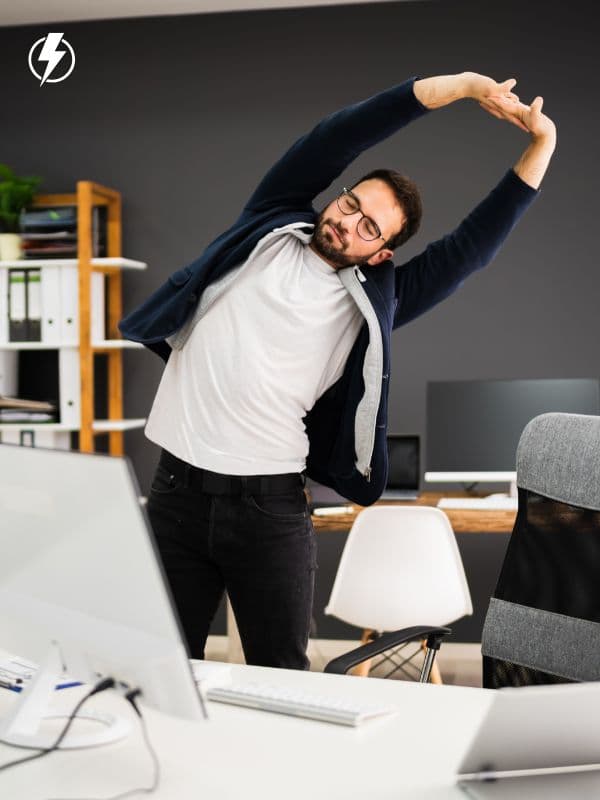
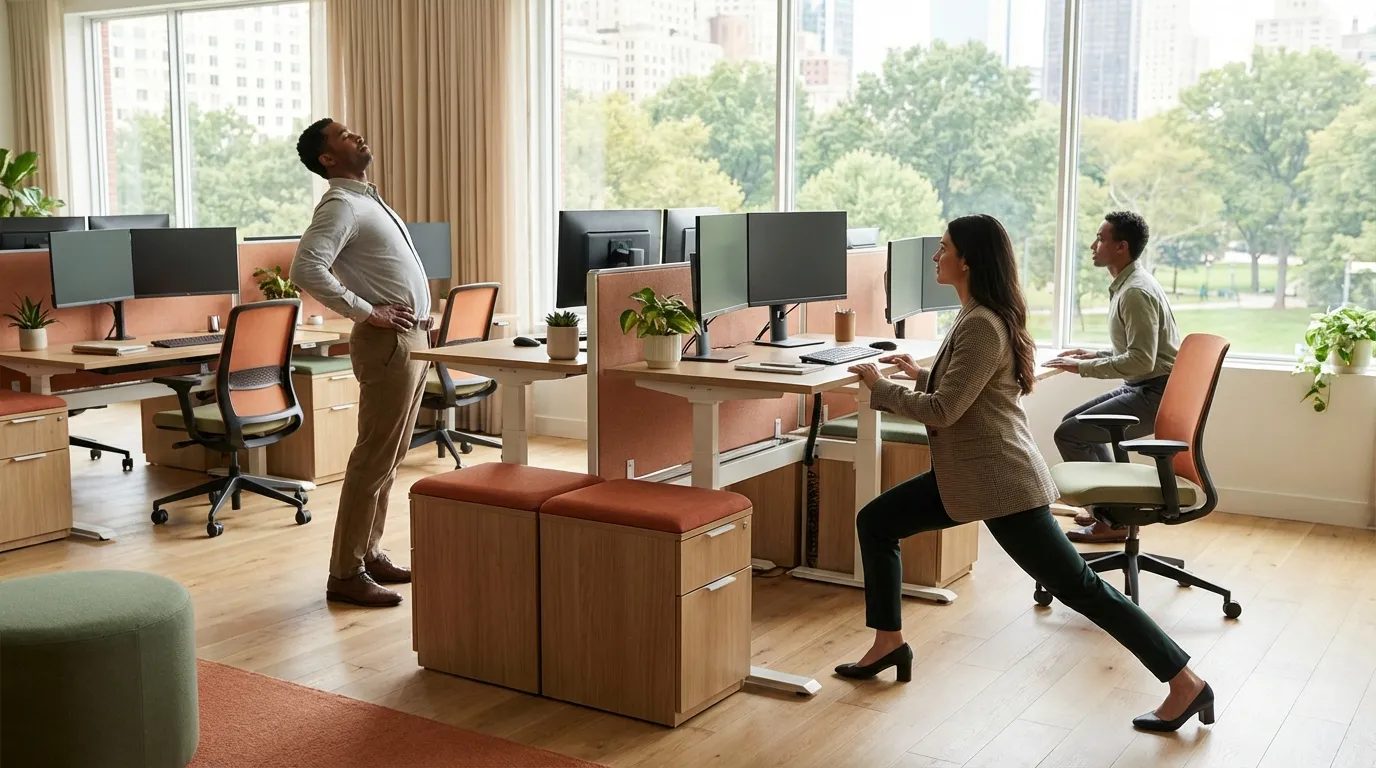
Hip Flexor Stretch, Step one foot back, stand tall, and gently push your hips forward until you feel a light stretch in the front of your hip. Hold for 20 seconds on each side. This one feels especially good after sitting for a long time, when your hips start to feel stiff.
Glute Squeeze, If you’re sitting, you’re ready. Squeeze your glutes for a slow count of three, then relax. Do this 15 times. It’s an easy way to wake up muscles that tend to switch off during long desk work.
Cat-Cow Spinal Mobilization, Place your hands on your desk or just stand. Slowly arch your back, then round it inward. Keep going for about 30 seconds. It’s a simple way to ease tension in your spine and lower back.
Standing Back Extensions, Put your hands on your hips, lean back a little, then return upright. Ten reps. Helps counter that forward hunch from computer use.
Mini Squats, Stand up, bend your knees slightly, then rise again. Do 15 reps to get blood flowing, keep legs strong, and loosen up tightness.
More ideas here: 10 Stretches to Prevent Back Pain at Your Desk.
Integrating Exercise Snacks Into Your Workday to Relieve Hip and Lower Back Pain
Real change often comes when small actions become consistent and turn into habits. A simple trick is to set a reminder, every 30 or 60 minutes, to get up and move, because it’s easy to stay stuck in your chair without noticing. Our app at My Exercise Snacks allows you to set exactly this kind of reminders. Other simple things you can do: stretch while your coffee brews, walk a quick lap around the office after finishing a batch of emails. These small things add up over time.
Dr. Kelly Starrett from The Ready State points out that sitting for hours can cause stiffness a single gym visit won’t fix. His tip: sprinkle quick bursts of movement into your day to keep hips loose and your back more comfortable.
Ever felt how standing during calls changes your mood? Try stretching before a meeting, or slipping in lunges while files load, even if it gets a few curious looks. Roll your shoulders mid-read. Before long, these moments become part of your routine, and moving feels as normal as checking your phone.
Success Stories from Workplace Wellness Programs That Relieve Hip and Lower Back Pain
Some companies are quietly working short “exercise snacks” into daily routines. One mid‑sized tech company tried two‑minute stretch or movement breaks every hour, even when deadlines were tight. After about three months, surveys showed back pain complaints dropped by roughly 40%. Afternoons changed noticeably too, energy stayed steady well past 3 p.m., a time when many usually start battling that heavy, post‑lunch slump.
| Company | Pain Reduction | Timeframe |
|---|---|---|
| Tech Firm | 40% | 3 months |
| Marketing Agency | 25% | 2 months |
The benefits weren’t just physical. These mini‑breaks often gave coworkers a chance to connect, sharing quick chats, small jokes, or updates they might have missed otherwise. That relaxed, easy rhythm made teamwork feel more natural and less forced.
Overall, both the numbers and the mood show this: adding regular movement into the workday can lift morale, keep focus longer, and help teams work together more easily. For more approaches, see 5 Science-Backed Benefits of Movement Breaks.
Overcoming Barriers to Movement at Work to Relieve Hip and Lower Back Pain
A lot of people, maybe you at some point, feel awkward about moving around while on the job. Sometimes it’s because the workspace feels tight, or the day’s tasks stack up so quickly that breaks vanish without notice. A helpful way forward is to make small changes that fit easily into your day:
- Start with easy, subtle movements that flow with your work
- Look for gaps in the shared calendar where quick breaks can fit
- Ask a couple of coworkers to join in so it becomes a group habit and feels less awkward
- Make it playful with little challenges so it feels more like fun than exercise
Quick bits of movement mixed with ergonomic changes, like sit-stand desks, can help make activity feel normal. If you like privacy, light desk stretches are a good option. Employers can help too, by adding wellness spaces or simply encouraging staff to stand, stretch, and take short breaks.
Tools and Resources to Support Your Routine to Relieve Hip and Lower Back Pain
Fitness trackers like My Exercise Snacks can give gentle reminders to stand, stretch, or take a quick walk, and those little prompts often help more than you’d think. Some apps lead you through short, desk-friendly routines that fit into a few spare minutes, while others turn break time into fun challenges, making the pause feel more like a game than a chore.
Wearables don’t just count steps; they show patterns and progress, helping you notice how your habits change over time. Keeping a printed stretch guide near your screen is an easy way to remember moves you enjoy. And when you’re feeling fidgety, watching a short video can inspire a new go-to exercise you’ll want to repeat.
Common Questions to Relieve Hip and Lower Back Pain
Got questions? (probably yes)
How often should I do exercise snacks to relieve hip and lower back pain?
Aiming to move every 30 minutes is great, but stretching it to an hour can be easier when things get busy. Even super short bursts, around 15 to 30 seconds, can noticeably boost your energy. The key is sticking with it, since those small sessions often build into changes you’ll notice as time goes on.
Do I need special equipment for exercise snacks to relieve hip and lower back pain?
Nope. These short workouts usually use your own body weight, so they work well in your living room or outside in the sun. Some folks like adding light resistance bands for stretching, small dumbbells for strength, or even water bottles or cans for extra weight. These easy tools store quickly and are ready in seconds, so you don’t need big machines or a tricky setup.
They work well with your usual workout routine, the one you actually stick to most days, but they won’t replace those longer, more intense sessions. Think of exercise snacks as quick, energetic bursts that give you a lift and help keep your strength up between your bigger, scheduled workouts.
Will my coworkers think it’s strange to relieve hip and lower back pain with exercise snacks?
In many offices today, short movement breaks usually go unnoticed, especially once everyone’s had their coffee. A small shoulder or neck stretch can help you start, and people often get used to it fast. You could even ask a few coworkers to join, since keeping the habit is easier when more than one person is involved.
Can exercise snacks help with other aches and also relieve hip and lower back pain?
Yes, they often can, especially for stubborn spots like a stiff neck, tense shoulders, or achy legs. Even a short burst of movement, just a minute or two, boosts blood flow and makes stretching or shifting position easier. These small breaks can also naturally lead to better posture or a more relaxed stance, which over time may mean less strain and fewer sudden aches appearing during the day.