stress management with the PPLUL split
TLDR; The article describes the PPLUL split, Push, Pull, Legs, Upper, Lower, as a flexible five-day routine. It works each muscle group about twice a week and often fits desk-based schedules better than longer, less organized plans, which is a nice bonus. For people who sit a lot, that kind of structure will usually help more than a routine that feels all over the place.
For people working at home or in an office, it can help with strength, posture, energy, and even workplace stress. That said, it really depends on keeping workouts moderate, paying attention to recovery, and making mobility work part of the plan without making it complicated. In most cases, that is what keeps the routine useful instead of just adding fatigue.
A practical setup uses 45 to 60 minute sessions built mostly around compound lifts. It also includes two rest or lighter days, plus short movement breaks during the day like walks, stretches, or band work, and even a quick break can help.
The main advice is to avoid too much volume, lower intensity during stressful weeks, track effort and recovery in a simple way, and choose a routine that a person can actually stick with. If not, it usually will not help much.
If you spend most of the day sitting, a workout plan really needs to do two things well: build strength and fit into daily life, which is often the harder part. That helps explain why the PPLUL split gets so much attention. It gives you structure without asking for hours of training every day, which is a big plus for stress management and recovery. For home office and desk workers, that usually makes a real difference. Long meetings, stiff hips, neck tension, and low energy can make exercise feel tough to start, especially after a full workday.
The good news is that the right training split can help with more than muscle. It can also support stress management, posture, and steadier energy. In that way, a smart routine can become part of workplace wellness and workplace stress management, not just fitness. In this guide, you’ll learn what the PPLUL split is, who it usually works best for, and how to build a practical pplul split plan. It also explains how to pair the plan with short movement breaks during the workday, like a quick walk, a few stretches, or simply standing up between tasks. Along the way, it covers mistakes to avoid, a simple weekly schedule, and tips that often make the routine easier to stick with when work keeps you at a desk.
What the PPLUL split really means
PPLUL stands for Push, Pull, Legs, Upper, Lower. It’s a five-day training split. Each day focuses on a movement pattern or body area, which lets you train hard without working the same muscles on back-to-back days, and that usually helps more than people think. Push days train the chest, shoulders, and triceps. Pull days focus on the back and biceps. Legs train the lower body. Upper combines pushing and pulling for the upper body. Lower puts the focus back on the legs, glutes, and core support.
A big reason this setup works well is that each muscle group gets trained about twice per week. That’s a pretty solid rhythm. That kind of training frequency is often linked to good strength and muscle results when recovery is in a good place. For desk workers, it can also feel easier to stick with than full-body sessions, especially when a long workday already leaves them drained.
That does not mean workouts are useless. Not at all. It just means the exercise plan should usually fit how much movement happens during the day.
| Split Day | Main Focus | Desk Worker Benefit |
|---|---|---|
| Push | Chest, shoulders, triceps | Counters rounded shoulder weakness |
| Pull | Back, rear shoulders, biceps | Supports posture and upper-back strength |
| Legs | Quads, hamstrings, glutes | Helps offset long sitting |
| Upper | Balanced upper-body work | Builds strength without overdoing one area |
| Lower | Legs, glutes, core | Improves lower-body support for daily sitting |
That balance is why many people see the PPLUL split plan as practical instead of extreme.
Why desk workers often do well with this plan
Desk jobs usually come with a pretty familiar set of problems: tight hips, weak glutes, an upper back that feels worn out all the time, and a forward head position from too much screen time. There’s mental fatigue too. So a good workout split should help with those issues instead of piling on more strain, which is often the last thing busy desk workers need.
That’s a big reason the PPLUL split works so well. It gives enough weekly volume to keep progress going, while still keeping each workout focused. Most sessions can stay in the 45 to 60 minute range, which is usually much easier for busy professionals to stick with than long gym workouts that feel random or tough to fit into the week. It also makes recovery easier to place where it works best. If Wednesday is packed with meetings, for example, that can simply become a rest day or a mobility day, which is a pretty practical trade-off.
This can also help with workplace stress. Exercise can support mood, lower stress, and improve sleep quality. But when a routine is hard to follow, it often just feels like one more demand on an already full plate. That’s not very helpful. When the plan feels clear and repeatable, it can add some structure to the week and make everyday demands feel a little easier to handle, especially during busier stretches.
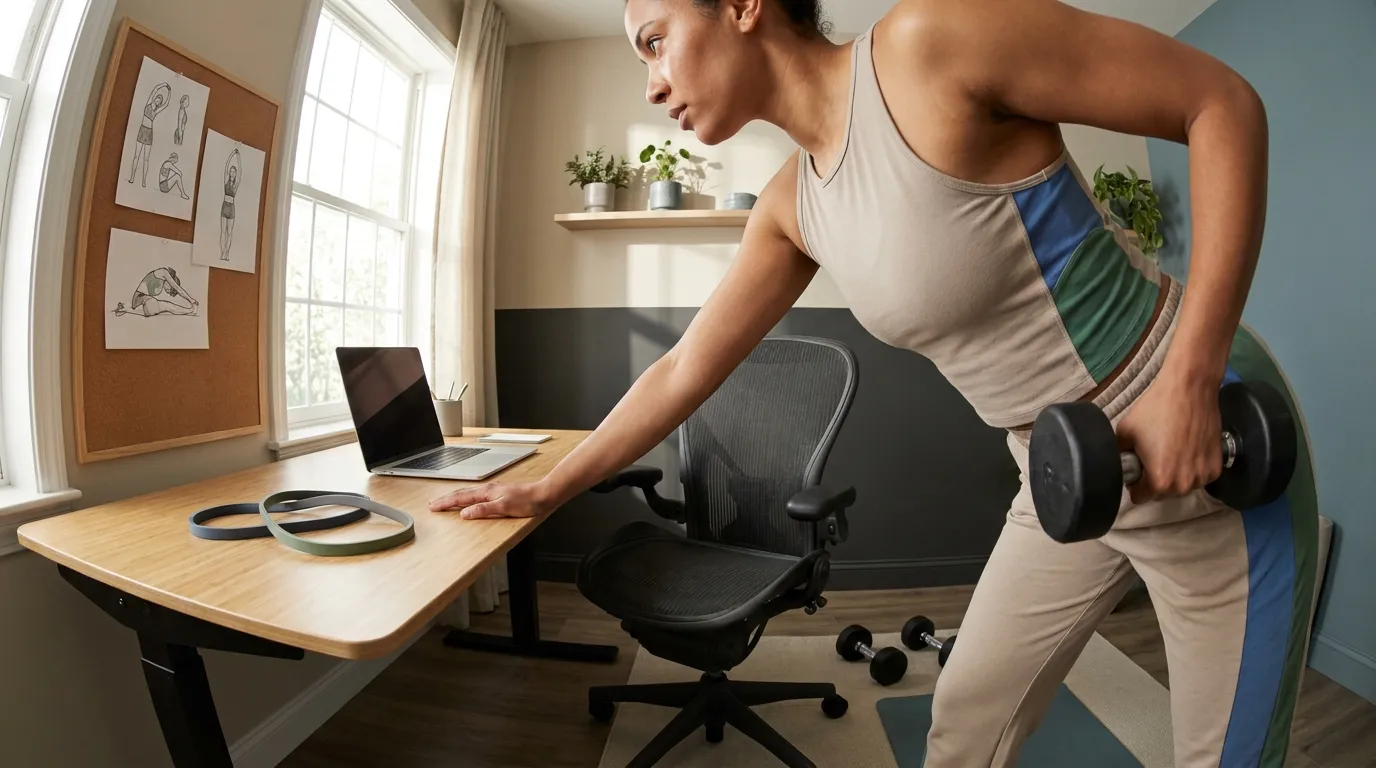
For people working from home, the PPLUL split also goes well with short movement breaks. The main workout might happen before work, after work, or even at lunch. During the day, you can add exercise snacks like bodyweight squats, band pull-aparts, desk stretches, or a 5-minute walk without making it complicated. And if you want ideas for those quick movement breaks, we covered that here: Stress Management for Busy Professionals: Quick Exercise Snacks.
The best PPLUL split plan for home office and desk workers
The best plan for desk workers probably isn’t the toughest one. It’s usually the version you can recover from and actually stick with, which often matters more here. For most people who sit at a desk all day, a moderate approach works best. Simple. That usually means 4 to 6 exercises per session, mostly compound lifts, with some mobility work and core training included so it’s not just more sitting.
Sample weekly schedule
Monday: Push
Bench press or push-ups, incline dumbbell press, overhead press, lateral raise, and triceps pushdown.
Tuesday: Pull
A row variation, lat pulldown or pull-up assist, face pull, rear delt raise, and biceps curl.
Wednesday: Rest or mobility
Walk, stretch the hips, add some thoracic rotation work, plus neck and shoulder mobility.
Thursday: Legs
Squat or goblet squat, Romanian deadlift, split squat, calf raise, and plank.
Friday: Upper
Dumbbell bench, seated row, incline press, pulldown, side raise, and curl or triceps work.
Saturday: Lower
Deadlift variation or leg press, lunge, hamstring curl, glute bridge, and core stability work.
Sunday: Rest
One nice thing about this setup is that it gives you two rest-focused days, which can be especially helpful at the beginning. That can make a real difference while your body is still getting used to training after long stretches of sitting. Beginners can usually start with 2 to 3 sets per exercise and aim for about 8 to 12 reps on most movements. Intermediate lifters can add a fourth set to the main lifts.
For desk workers, one useful adjustment is adding a bit of posture support on pull and upper days. Face pulls and rows often help a lot, and rear shoulder work is usually more useful than people expect. That can be especially helpful when chest and front-delt tightness starts showing up after a lot of computer time. If you want a broader look at how this split is set up, it’s covered here: The Complete PPLUL (Push Pull Legs Upper Lower) Split Guide.
How to combine the split with stress management and workplace wellness
This is where a lot of people miss the bigger picture. A training split can help, but it won’t undo 8 to 10 hours of sitting. People usually get better results when workouts fit the flow of the workday instead of fighting against it, which is often the real issue. That’s especially true for anyone spending most of the day at a desk.
It usually helps to start with a couple of simple habits and build from there. Stand up every 30 to 60 minutes. You’ll probably notice that a quick walk to refill your water, or even 10 bodyweight squats, still makes a difference. Think about mobility work that matches the aches that show up after desk time. Hip flexor stretches, chest openers, and a little upper-back rotation can help a lot. During high-stress weeks, it also makes sense to keep workout intensity realistic, because work stress often makes recovery harder. Really harder. In most cases, pushing through anyway doesn’t do much, even if it feels productive at the time.
Stress management habits that support recovery
A useful part of stress management is recognizing when work pressure is affecting training quality. Some weeks are simply more demanding than others. During those periods, shorter workouts, lighter accessory work, or extra sleep may help more than trying to force personal records in the gym.
People also tend to underestimate how much recovery habits matter. A consistent bedtime, a few walks during the day, and reduced screen time before sleep can support both performance and stress management without making the plan feel complicated.
A small real-world example shows what this can look like. Imagine a remote project manager named Lena. She lifts five days a week using a pplul split plan. On paper, it looks great. But she also spends six hours in meetings, and during deadlines she sleeps badly. She used to push hard in every workout. Then her shoulders started aching and her energy dropped. After changing the plan to two hard days, two moderate days, one lighter lower-body day, and adding 5-minute movement breaks, she felt better and stayed more consistent. That’s a workplace wellness win, and also a fitness win.
What tends to matter most here is consistency, not punishment. That’s usually what helps someone keep training while managing stress in a way that actually works day to day. Mindfulness at Work: Integrating Movement for Stress Relief connects exercise with practical stress relief during the workday.
Common mistakes that make the PPLUL split harder than it needs to be
One of the biggest mistakes is copying a bodybuilder plan that doesn’t really fit your life. Desk workers usually move less during the day, deal with more stiffness, and carry more mental fatigue than they realize at first, and that can catch up with you. Because of that, recovery often looks different. Sometimes very different, honestly.
Skipping mobility work is another common problem. When someone jumps straight into pressing and squatting with tight hips or rounded shoulders, form will probably start falling apart pretty quickly. Even a short warm-up can help a lot here. A simple 5 minutes of brisk walking, some hip mobility work, band pull-aparts, and bodyweight squats before training is often enough. Nothing fancy, just enough to loosen things up.
Doing too much volume causes problems too. If sleep is poor and work stress is high, it usually makes more sense to drop one or two accessory exercises and keep the main lifts. In most cases, a simpler plan that someone can actually follow works better than chasing a perfect one.
Small adjustments that improve long-term consistency
Additionally, people often get better results when they leave a little energy in reserve instead of treating every session like a test. That approach can support stress management because it reduces the cycle of overtraining, soreness, and skipped workouts.
Moreover, scheduling workouts around the most demanding workdays can help a lot. A lighter lower-body session after a difficult meeting-heavy day may be more realistic than trying to force a very hard workout when energy is already low.
A lot of people also forget that managing workplace stress includes real rest. Your workout plan should support your work life, not make it harder by adding even more fatigue.
Tools and simple methods to make the plan stick
You do not need fancy equipment to stay on track with a good pplul split plan. A bench, dumbbells, resistance bands, or even a basic gym setup can do the job, which is a relief for most people. What usually helps more is tracking things clearly and staying consistent with the routine over time.
A simple notes app or spreadsheet is often enough for logging exercises, sets, reps, and even your energy level. Keeping it simple makes it more likely that the habit will stick. It also helps to rate each workout from 1 to 5 for effort. If those effort scores stay high while sleep keeps getting worse, that can be a sign that a lighter week may help. In this case, that is a practical way to manage stress before burnout starts building and before workouts begin to feel off.
Wearables can also be useful, especially when they track heart rate, sleep trends, recovery patterns, and similar signals. They are not perfect, but they can make it easier to notice connections between work stress and how ready someone feels to train that day. If that sounds helpful, Stress-Tracking Wearables for Workplace Wellness explains practical ways to use them.
For people who want more support during the workday, platforms like My Exercise Snacks work well because they focus on short, realistic movement strategies for office workers. That can make it easier to connect formal workouts with workplace wellness habits built during the day.
It can also help to build routines around the work schedule instead of trying to force a perfect fitness plan every week. Some people train before work because evenings feel too unpredictable. Others prefer lunch workouts because they help break up long sitting periods. Either option can work well when the routine feels realistic enough to repeat.
For broader ideas around workplace wellness structure and recovery habits, Wellness Programs: Designing a 2025 Workplace Plan for Stress offers examples that connect movement, recovery, and sustainable work habits.
Frequently Asked Questions
Is the PPLUL split good for beginners?
Yes, if the exercise list is kept simple. Beginners should use fewer exercises, moderate weights, and at least two rest or light days each week. The split works best when you focus on form and consistency first.
How long should a PPLUL workout take?
For most desk workers, 45 to 60 minutes is enough. If you are doing more than that regularly, you may have too much volume. Shorter sessions are often easier to recover from and stick with.
Can the PPLUL split help with stress management?
Yes. Regular strength training can support mood, sleep, and energy, which all help with stress management. The key is not making the plan so intense that it adds pressure to your week.
What if I only have four days to train?
You can rotate the split instead of forcing all five days into one week. For example, do Push, Pull, Legs, rest, Upper, then start Lower the next week. Progress can still be very strong with this approach.
How can I make this plan work while working from home?
Pair your main workouts with short movement breaks during the day. That might mean a 5-minute walk between calls, band work after lunch, or quick stretches after long sitting blocks. My Exercise Snacks is one example of a resource built around these short workplace movement habits.
Do I need special equipment for a good pplul split plan?
No. Dumbbells, bands, and a bench can cover most movements well. If you want more ideas for building small, personalized movement sessions around your job, the approach used by My Exercise Snacks can help you fill the gaps between formal workouts.
Put the plan to work this week
The PPLUL split is popular for a reason: it’s organized, flexible, and works well. For home office and desk workers, it can do more than help build muscle. It can also help with posture, ease stiffness in the neck, shoulders, and lower back, improve energy, and fit into a more practical workplace wellness routine. Paired with movement breaks, realistic recovery, and simple tracking that doesn’t turn into a project of its own, it may also help with workplace stress management in a way that often works better in real life.
If you’re just getting started, keep it simple. Very simple. Use basic exercises, focus on good form, and leave enough room for recovery. It also helps to add short walks and a little mobility work during the day, so the workouts aren’t expected to fix everything on their own, because they usually won’t.
A routine doesn’t need to look perfect online to be useful. The one that usually works best is the one that fits your body, your schedule, and your job. In most cases, starting with one week, then adjusting based on energy and stress, is the better approach. A smart pplul split plan should help you feel stronger at work and outside of it.