Active Office Ideas for 2025: Innovative Workplace Movement
TLDR; The article explains how active offices in 2025 focus on weaving regular movement into the workday rather than relying on gyms or occasional workouts. It highlights simple design choices for home and office setups, role-specific “exercise snacks,” and the strong link between movement, productivity, and mental health. Emerging trends include flexible furniture, movement-friendly tech, and employer support for remote workers. The key takeaway is that small, frequent bouts of activity—supported by the right tools and workplace culture—can significantly reduce sedentary risks and improve wellbeing without disrupting work.
In 2025, the idea of an active office has changed in a way that feels practical rather than idealistic. Instead of depending on gym memberships or a weekly yoga class, the focus is now on shaping the workday itself so it supports movement from morning to evening. For desk‑based and home office workers, this shift matters, especially as work stays screen‑heavy and mostly sedentary. Long hours of sitting, back‑to‑back calls, limited built‑in movement, and few natural breaks from the screen still define many workdays (you’ve likely experienced this). It’s a familiar routine, and even with wider awareness of workplace wellness, the gap between intention and action often remains.
What’s different now is the attention on small movements, flexibility when energy drops in the mid‑afternoon, and allowing time to recover between tasks rather than saving rest for the end of the day. These approaches tend to work best when they’re built into daily workflows, not added as extra items on a to‑do list.
This shift matters even more for remote and hybrid workers. Many no longer have walking meetings, daily commutes, shared wellness programs, or the casual movement that comes with traditional offices (those small moments often add up). When movement is deliberately built into a home office setup, physical activity becomes part of how work gets done instead of another obligation. With that in mind, this article looks at realistic ways to support workplace wellness through movement in 2025: why micro‑movement supports daily health, what active home offices look like in real homes, how different roles fit short bursts of activity into busy schedules, and which current trends are shaping physical activity at work today.
Why Active Office Spaces Matter More Than Ever
Sedentary work has quietly become one of the biggest health challenges modern professionals face, and it’s something many people recognize from their own routines. According to Shortlister, the global workplace wellness market is expected to reach $94.6 billion by 2026, showing that organizations are taking employee health more seriously. Even so, participation in traditional wellness programs often stays between 20 and 40 percent, based on research from the RAND Corporation. In my view, this gap usually points to a simple reality: wellness efforts tend to work better when movement is part of the workday itself, not an optional add-on that’s easy to skip. When moving requires less effort, there are fewer reasons to avoid it, which often leads to better follow-through where many programs fall short.
| Metric | Value | Year |
|---|---|---|
| Global workplace wellness market size | $94.6 billion | 2026 |
| Wellness program participation rate | 20, 40% | 2025 |
| Employee engagement when wellbeing is supported | 3× higher | 2025 |
Long hours of sitting are closely linked to posture problems, poor circulation, and higher stress levels over time, especially for desk-based workers, and this is widely recognized. Research summarized by the American College of Sports Medicine suggests that shorter, more frequent movement breaks often work better than longer workouts done less often. This is where the active office makes a real difference. By rethinking how and where work happens, organizations reduce the effort needed to move, such as placing shared tools farther away or making standing and walking the default. Healthier habits become part of daily routines with little extra thought, which matters on busy days. RAND Corporation data also shows that workspace design and easy access to movement usually do more to increase daily activity than financial incentives alone.
Designing an Active Home Office for Daily Movement
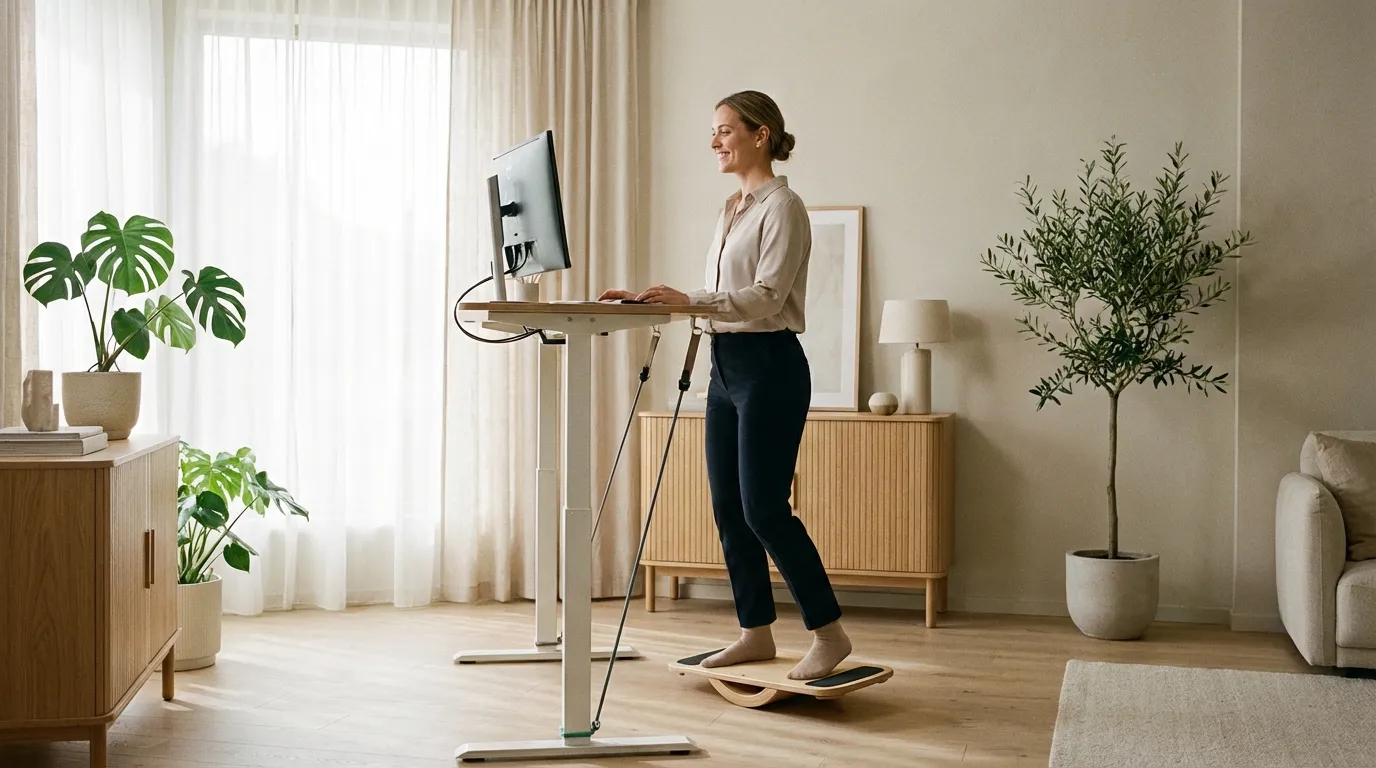
An active home office rarely depends on extra square footage or expensive equipment. It usually comes down to design choices that gently encourage movement without breaking concentration, which is often harder to achieve than it sounds. For people working from home, this often starts with rethinking the usual desk-first setup. Adjustable desks, for example, make it easier to move between sitting and standing during the day, often every hour or two instead of in long stretches. It may seem like a small change, but that flexibility makes a real difference. Under-desk options like compact pedals or balance boards can also support light movement during simpler tasks such as email or administrative work, when full focus isn’t required.
Furniture helps, but visual and environmental cues can matter just as much. Keeping a stretch mat within arm’s reach or resistance bands next to the desk removes barriers to short activity breaks. There’s no setup process to talk yourself into. According to the American College of Sports Medicine’s 2026 fitness trends report, wearable technology ranks as the top global fitness trend because it helps people move more consistently. Smartwatches and fitness trackers can remind users to stand up or take short walks each hour, often at moments that would otherwise pass unnoticed. Over time, these small nudges can turn into steadier routines with minimal effort.
Lighting and layout also influence how much movement fits into the workday. Biophilic design elements, such as plants or access to natural light, are linked to lower stress and slightly more unplanned movement, subtle but meaningful effects. Even small layout adjustments can help. Placing a printer or water bottle across the room adds steps that build up naturally. For a more structured approach, this is discussed further in Physical Activity: Personalized Micro-Exercise Plans for Workplace Health, which connects movement ideas with individual needs and work styles, a practical next step in my view.
Exercise Snacks by Job Role: Real-World Applications
A common gap in workplace wellness content, in my view, is advice that actually reflects different job roles. Cognitive and physical demands vary widely, you might be coding for hours, handling customer requests, or moving between planning sessions, and guidance that ignores those differences often misses the mark. Context usually matters more than most guidelines admit. Exercise snacks, short, two‑to‑five‑minute bursts of movement, can be adjusted to these daily realities without disrupting work. That flexibility is often why they work across teams. They’re designed to be simple and tend to work best when they’re not overthought.
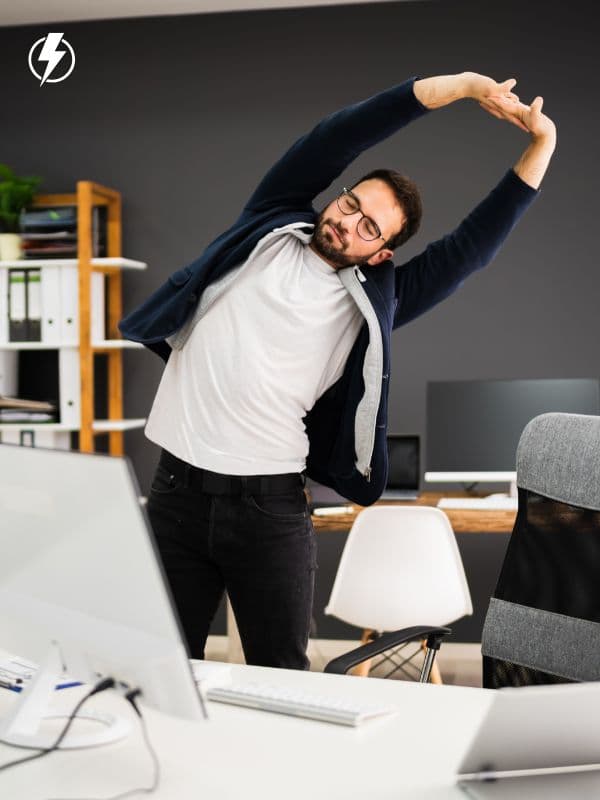
In deep‑focus roles like programming or writing, mobility‑focused snacks often fit more naturally. Brief posture resets paired with neck mobility can ease stiffness, while a few standing hip‑opening movements help offset long periods of sitting without breaking concentration. By contrast, roles packed with frequent meetings often benefit from more energizing options. Basic bodyweight movements such as squats or marching in place can raise energy between calls, with short flexibility work added when time allows. No equipment and no setup usually make it easier for people to join in.
Organizations are also beginning to track the effects of these small habits. Data shared by Meditopia shows that companies with strong wellbeing strategies report up to 11 percent lower turnover, along with higher engagement across teams, numbers with clear, practical meaning.
| Wellbeing Outcome | Impact |
|---|---|
| Reduction in sick days | 1.5 days per employee annually |
| Lower employee turnover | Up to 11% |
| Improved stress management | >90% report positive impact |
Common missteps include doing too much too soon or scheduling movement breaks that feel forced. An active office culture, in my view, is usually built on repeatable habits rather than high‑effort workouts. That approach reflects the long‑term thinking described in The Long-Term Health Benefits of Desk Exercises, where consistency is often what makes the difference.
The Mental Health Connection to Workplace Movement
One of the most noticeable effects of an active office is how it affects the mind before the body. Movement often shapes focus, mood, and how long someone can stay engaged, something many remote workers recognize after long days at home. As stress and burnout keep rising, mental health has become a core part of workplace wellness instead of a side issue. The University of Illinois’ 2026 Workplace Wellbeing Report shows this link clearly: 61 percent of U.S. workers are classified as languishing. That number is difficult to ignore and points to a broad lack of engagement and fulfillment, which often overlaps with low levels of daily movement. In many situations, physical activity and mental health are closely connected, not separate concerns.
Flourishers are more likely to take breaks for rest and restoration such as going outside to reset (43 percent vs. 34 percent) or use physical activity to manage stress (40 percent vs. 29 percent).
The data points to practical takeaways rather than theory. Movement often functions as a usable way to manage stress. Short walks at home or simple, breathing-based stretches at a desk can help reset attention and mood without much effort. For home office workers, these small habits also help create clearer separation between work and personal time, which improves balance. Wearables and stress-tracking tools can add helpful awareness during long workdays, a topic explored further in Stress-Tracking Wearables for Workplace Wellness.
Future Trends Shaping Active Offices in 2025
What stands out most is how active office design is shifting from a nice-to-have to basic infrastructure, and the change feels practical rather than cosmetic. Active recovery zones, once mostly found in corporate headquarters, are now often appearing at home as stretch corners or quiet areas for short movement breaks, usually adjusted to fit whatever space is available. This shift suggests the idea is no longer niche and is becoming expected. Employers, in my view, are responding by offering home office stipends for ergonomic chairs, sit-stand desks, and simple movement tools, likely because physical activity is often linked to productivity and reduced long-term health costs.
The older adult population will soon be the largest in U.S. history and will require qualified exercise professionals to provide safe and effective exercise for this group of people.
All of this points to the need for movement options that are accessible and safe across ages and abilities, which isn’t always simple. Micro-movement design, paired with wearable-guided activity and virtual coaching, supports this direction. According to the American College of Sports Medicine, these approaches tend to work especially well for desk-based workers who benefit from flexible options instead of rigid programs.
Practical Tools and Resources to Get Started
Turning ideas into daily habits often comes down to simple systems. A helpful place to begin is a quick review of the workday, which usually takes only a few minutes. You’ll often notice that energy drops or stiffness shows up mid‑afternoon or after long calls, and those moments are worth noticing. Rather than generic fixes, pair them with specific exercise snacks: light stretching after extended meetings, or a brief posture reset during deep focus (nothing fancy). Fitness trackers can manage reminders, while calendar blocks help protect short movement breaks. There’s rarely a need for a full reset. Small, repeatable actions that fit into existing workflows tend to last longer.
For organizations or team leaders, structured resources cut down on guesswork and simplify rollout. Guides like Creating a Comprehensive Workplace Wellness Program describe frameworks that scale from a single home office to distributed teams. In most cases, the goal is to keep movement optional so deadlines stay intact and work continues as usual.
Frequently Asked Questions
What is an active office?
An active office is a work environment built to encourage regular physical activity. In practice, it means more movement throughout the day. It includes movement-friendly furniture, short exercise breaks, and habits that reduce long periods of sitting for desk and home office workers during the workday (you too).
How much physical activity do desk workers need during the workday?
Many experts suggest taking movement breaks every 30, 60 minutes, which is often realistic for desk jobs. Two to five minutes of light activity can improve circulation and focus during the workday, showing that small efforts matter.
Research suggests brief movement breaks often support energy and attention, and stress is usually handled better at work, likely because of movement. From my experience, workers who add physical activity stay engaged, which lowers burnout risk and supports steady energy and focus.
What equipment is best for a home active office?
Adjustable desks, resistance bands, a supportive chair you like, and a fitness tracker are good places to start, in my view. Often, it works better to choose equipment that fits your real space and supports movement you’ll do every day.
How can companies support active offices for remote workers?
For remote teams, companies can offer wellness stipends tied to virtual tools and encourage flexible movement breaks during the workday. When leaders clearly support this, physical activity feels acceptable during work hours across teams.
Putting Active Office Ideas Into Practice
Built into the day, an active office in 2025 works best when movement is part of routine tasks, not a separate goal. What if staying active at work didn’t require major changes? Often, it’s simpler than it sounds. When a workspace is redesigned and short exercise snacks are added, physical activity becomes part of how work gets done, not something saved for after hours. No dramatic shifts. For home office and desk workers, this mindset can support health and focus, helping maintain productivity within a set schedule.