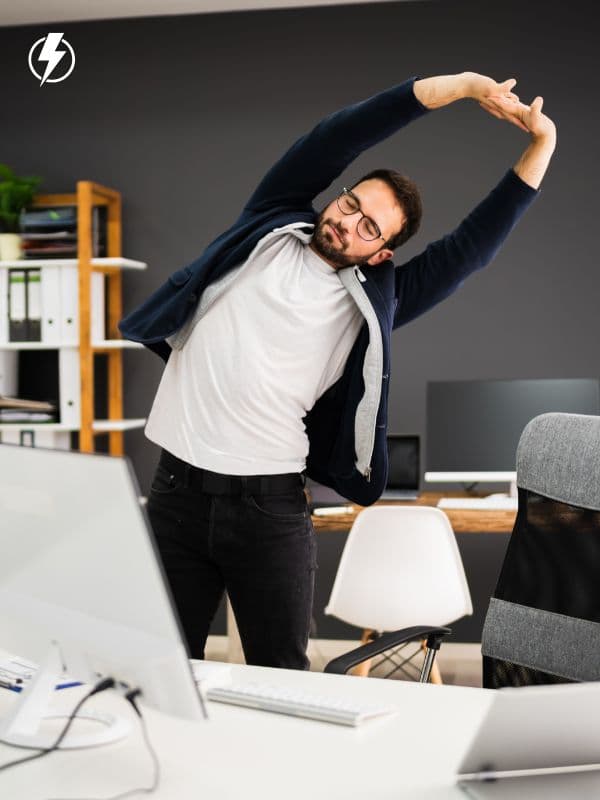
Are there specific exercises or routines to reduce work fatigue?
Work fatigue sneaks up on many home office and desk workers. At first, everything feels normal. You sit down, open your inbox, start replying to emails, and then it creeps in. Your body feels heavy. Your thinking slows down. Coffee helps for a short while, then stops doing much after the first or second cup. This kind of tired usually isn’t only about sleep. It often comes from staying in one position too long, slightly off posture, staring at a screen nonstop, and mental overload stacking up. And it tends to build quietly through the morning or afternoon, which is why it’s so hard to notice early. If this sounds familiar, incorporating reduce work fatigue exercises early in your day can help prevent that slow energy drain.
Here’s the interesting part: easing work fatigue doesn’t mean hitting the gym, buying special gear, or setting aside an hour. Research shows that short, low‑effort movement often works best for desk workers and that even five minutes can make a real difference, especially on busy days when you might otherwise be sitting all day long. These small movements increase blood flow, help the brain wake up, and reduce tension in common problem areas like the neck and hips, keeping you fit and healthy. They can also help with stress, support mental health, and fit into daily routines without feeling like one more thing to do. No pressure. No sweat.
This guide explains how work fatigue builds during the day and what actually helps. You’ll find exercises that fit real workdays, quick movement breaks you can do beside your desk, posture‑friendly routines, short home‑office workouts, most of which you can do with our free app, and of course we will show you evidence‑based habits that make sticking with them easier. Helpful tools and common energy‑draining mistakes are covered too, the quiet habits that add up.
If you work at a desk and want more energy without burning out, this article is made for that. Practical, proven, and easy to stick with on busy days.
Why desk work creates so much fatigue
Work fatigue isn’t just that sleepy feeling at the end of the day, it usually builds from a mix of physical strain, mental load, emotional pressure, and a low‑level background stress. Desk jobs often pile all of these on at the same time and long stretches of sitting, very little muscle use, eyes locked on a screen, and a brain that rarely gets a real break are common. For many people, this setup runs almost nonstop, everyday of the year.
When these factors hit together, the tiredness can feel heavier than expected. It doesn’t always fade after logging off, and a good night’s sleep doesn’t instantly fix it.
Research helps explain why this happens. Office workers spend 65 to 75 percent of the workday sitting, which slows circulation and limits how much oxygen reaches the muscles and the brain. Gallup reports that 49 percent of workers experience daily work stress (Source). Even when the body isn’t moving much, stress still pulls energy in the background. You may not notice it in the moment, but the drain adds up over time.
During long desk sessions, the body usually goes through a few predictable changes:
- Blood flow slows, especially in the legs and hips
- Posture muscles get tired from holding one position too long, even if it feels fine at first
- Breathing often becomes shallow and stays high in the chest
- Brain alertness drops after extended focus, sometimes all at once
Decision fatigue is another piece that’s easy to miss. Desk work often means nonstop small choices, frequent task switching, and long periods of focus without real pauses. This kind of mental effort uses up glucose and other brain fuel. As a result, people can feel physically wiped out by the end of the day, even though they barely moved.
When this pattern repeats day after day, the nervous system can stay slightly stressed, keeping cortisol higher than normal. Over time, that mix of stillness and mental strain shows up as stiffness, headaches, eye strain, and mental fog. The National Alliance on Mental Illness reports that 52 percent of employees felt burned out in the past year (Source), and burnout often shows up right alongside ongoing fatigue.
Why low‑intensity movement works better than hard workouts
It can be hard to believe, but pushing through a brutal workout usually isn’t the answer when you already feel drained, which is a problem because many of us think feeling tired means they should work out harder, and that idea sounds good on paper. In real life, it often backfires (and you see it all the time). Long hours of sitting, deadlines, and constant screen use already put stress on the body. Adding an intense workout on top of that can push things in the wrong direction. Low‑intensity movement, done often and without pressure, usually works better for everyday energy. It’s not exciting, and it can feel a bit boring, but it tends to get results.
Researchers from the University of Georgia found that low‑intensity exercise reduced fatigue by 57 percent after six weeks in sedentary adults (Source). They looked at simple activities like walking, easy stretching, and light resistance with bands or bodyweight. Nothing extreme. Nothing that leaves someone glued to the couch afterward.
This works because it gently nudges the body toward rest‑and‑restore instead of staying stuck in fight‑or‑flight, as opposed to hard workouts which raise cortisol and need real recovery, which can make the 2, 4 p.m. crash worse on workdays. Gentle movement usually does the opposite and it refreshes your body and makes it easier to get back to tasks with steadier focus and less burnout, which is what most people actually want.
| Type of movement | Energy effect | Best use case |
|---|---|---|
| Low‑intensity movement | Boosts energy | During workday |
| Moderate exercise | Neutral | After work |
| High‑intensity exercise | Can increase fatigue | Rest days or weekends |
Low‑intensity exercises help by:
- Improving blood flow to the legs, back, and shoulders without adding extra stress
- Lightly using muscles so the body wakes up instead of shutting down
- Lifting mood and focus during long desk hours (you often notice it fast)
- Building habits that are easier to keep, even on busy days
That’s why workouts meant to fight fatigue don’t look like typical gym plans. They’re short, simple, and realistic to repeat most days, even when motivation is low.
The science behind exercise snacks and energy
One of the more practical ideas for dealing with work fatigue is what researchers often call exercise snacks. These are short bursts of movement spread across the day, nothing fancy or gym‑style. Most last three to five minutes, sometimes even less. You’re not blocking off a full workout or moving meetings around, which is usually why this approach works better for busy schedules. That simplicity is a big reason people stick with it, at least from what I’ve seen.
Johnson & Johnson looked at sedentary workers and found clear benefits when people added brief activity breaks. Energy levels and alertness often went up, and work wasn’t interrupted in any meaningful way. There were no odd scheduling issues and no routines to track, which really matters when the day already feels packed.
While the effects of daily 30 minutes of exercise are well-documented to increase energy and improve overall health and wellbeing, this study provides evidence that brief microbursts of activity throughout the day also improve mood and reduce fatigue and food cravings, which together may help improve adherence to healthy behaviors including those related to weight management.
From a body perspective, these short movement breaks create muscle contractions that help move blood and lymphatic fluid through the body. That circulation helps deliver nutrients and clear waste, something many people don’t think about. Even small movements can increase brain‑derived neurotrophic factor (BDNF), which is connected to focus, learning, and mental clarity. People tend to notice this most during mentally demanding tasks, like long meetings or heavy thinking days.
This is especially useful for people working from home. Long, protected breaks usually aren’t realistic, but short ones slide easily between calls. A few minutes each hour adds up and usually doesn’t hurt productivity. In many cases, it helps.
Research in Sage Journals found that hourly resistance exercise breaks reduced mental fatigue after four hours of desk work (Source).
Here’s what an exercise snack can look like:
- 20 bodyweight squats
- 30 seconds of wall push‑ups
- Standing hip circles (slow and controlled)
- Shoulder rolls mixed with chest openers
A simple daily routine to reduce work fatigue
You don’t need a complicated plan, those usually fall apart fast. Simple routines are easy to remember, quick to repeat, and they fit real workdays like yours. Less fuss, less overthinking.
This is a full‑day setup made for desk workers, screens, chairs, and all. It stays simple on purpose, so it’s easier to stick with.
The goal isn’t peak fitness or perfect workouts. To me, it’s about keeping fatigue lower as the day goes on. Each part aims at common energy dips and posture slumps, especially in the mid‑afternoon.
Morning activation reduce work fatigue exercises
The best part is how fast this helps the body wake up, usually without feeling rushed. Five to seven minutes of easy movement is manageable, even if you just got out of bed. It often tells the brain the workday has started. Why stay stiff when a quick reset can make the rest of the morning feel easier? I think it helps people turn on in a more natural way.
- You might start by marching in place for one minute
- Arm circles followed by relaxed shoulder rolls
- A gentle forward fold with bent knees
- Light, slow torso twists
Morning movement can help joints move more smoothly and ease stiffness from sleep, which is why many people notice better posture later, like sitting taller in the first meeting.
Hourly movement snacks
Every 50 to 60 minutes, you’ll often feel better if you stand up, even on long days. Setting a timer can help if you forget.
- 10 chair squats
- 10 desk push‑ups
- 30 seconds of calf raises
- A quick walk
I’ve found this cuts down on fatigue late morning and afternoon, helping energy stay more even instead of dropping later. For more ideas, check out Stress Relief Techniques: Quick Desk Workouts 2025.
Midday posture reset
Around lunch is a good time to check your posture and loosen up, and it often helps with very little effort. Nothing hard, this usually takes just a few minutes.
- Chest stretch at a wall
- Seated spinal twist (slow)
- Neck side stretch
- Quick shoulder rolls
We also shared more on posture and mental energy here: Boosting Mental Health with Posture Exercises at Work, with a simple workday example.
Afternoon brain wake‑up reduce work fatigue exercises
That mid‑afternoon slump hits right when focus counts (you know the feeling). Coffee helps a bit, but light movement usually works longer to reset.
- Two minutes of brisk walking
- Jumping jacks
- Step‑outs at desk
- Deep breaths with arm raises
If stress makes the crash worse, this guide helps reset a 2 p.m. meeting: Stress Relief Techniques: Quick Desk Workouts 2025.
Exercises that target common fatigue zones
When tension eases in these areas, the nervous system often sends calming signals, and you’ll usually feel a small boost in energy. Work fatigue often shows up in familiar spots, neck, shoulders, lower back, and hips (you’ve probably felt it there). Focusing on these areas can improve comfort and make it easier to stay focused, since, I think, fatigue often starts in specific spots before spreading.
Neck and shoulders reduce work fatigue exercises
- Shoulder shrugs (easy)
- Slow neck circles
- Light band pull-aparts
- Desk side bends
These moves help desk headaches and tiredness (I think), and can help posture and blood flow.
Lower back and hips
- Standing hip flexor stretch
- Glute bridges (slow and controlled)
- Seated figure‑four stretch (on a chair)
- Gentle hip hinge
Tight hips often lead to low‑back fatigue for desk workers; long sitting shortens hip flexors, you feel it after hours, and it’s very common.
Legs and circulation reduce work fatigue exercises
- Calf raises
- Mini lunges
- March in place
- Heel‑toe rocks (at your desk, probably)
That heavy, sluggish feeling often hits late in the day, usually around 3, 5pm. Better leg circulation can help reduce overall tiredness, especially if you sit for long stretches. Occupational health researchers, often trusted for desk‑work advice, say short, resistance‑based breaks can reduce discomfort and sleepiness when you’re seated (Source). For more on the long-term benefits, see The Long-Term Health Benefits of Desk Exercises: A Comprehensive Guide for Workplace Wellness.
Using tools and reminders to stay consistent
The hard part usually isn’t knowing what to do; it’s remembering on packed days. That’s where tools help, calendars, checklists, things like that, especially when schedules get noisy. I think consistency often beats excitement here. Reminders lighten the mental load and cut choices, so busy workdays mean less juggling.
Timers and prompts
- Phone alarms still do the job
- Calendar reminders often fit routines well
- Computer pop-ups grab attention
- Smartwatch buzzes are handy usually
Fitness trackers and wearables
Stress messing with sleep is common. According to Insightful, 82 percent of workers say stress disrupts their sleep, which is why moving your body often helps most on tougher days (Source). Many fitness trackers do this well by suggesting a quick desk stretch after long sitting, linking movement to right now instead of far-off goals you tend to ignore.
Simple tracking
Consistency matters more than detailed logs. A quick check-in is enough. Did you move this hour, even a bit? Stretch twice today, one fast round still counts. Keep it easy.
Common mistakes that increase fatigue
Even with good intentions, fatigue can sneak in when things go wrong (it happens). Without care, it slips in. Learning common mistakes helps avoid setbacks, so movement stays useful (I think) and you don’t overdo it.
Doing too much at once
When everything is packed into one day, soreness and burnout often show up.
It builds up, so progress usually comes from smaller steps.
Over time.
Ignoring posture
But exercising without posture awareness builds bad habits; you don’t sit tall, stand evenly, move with control, or stay steady.
Skipping recovery
Skipping recovery drains energy faster than most people think, since tight muscles don’t reset by themselves. Stretching and breathing can help strength more than many expect, especially at a desk. Wonder how these habits help your health? It’s explained here: The Long‑Term Health Benefits of Desk Exercises. Think quick stretches between meetings.
A short guided movement break you can follow
Watching movement as it happens often makes it easier to get started. Seeing it in real time usually takes away hesitation. A guided video removes guesswork, keeps you following along with the screen, and helps on low-energy days.
These guided breaks reduce mental effort. Figuring out what exercises to do is often the hardest part on busy, stressful afternoons.
Using a video once or twice a day can reset shoulders, hips, and breathing, and often helps the mind calm down, even in just five minutes.
Frequently Asked Questions
How often should I do exercises to combat fatigue at work?
If you work at a desk, short movement breaks tend to help the most, about every 50 to 60 minutes. I’ve found that doing small movements throughout the day works better than one long workout. Many people feel better in three to five minutes, easing stiffness and helping focus, like a quick stretch between emails.
Can exercise snacks really replace full workouts?
Exercise snacks fit easily into busy days and can help with fatigue. Still, they don’t replace full workouts when goals matter, like building strength (that part’s clear). On packed workdays, you usually can’t skip longer sessions; the sweet spot is mixing snacks into your normal routine.
What if I am too tired to exercise?
But it often means your body wants gentle movement, like a short walk, not total rest; many people find easy exercise actually boosts their energy.
Most fatigue exercises are safe for adults. If you have medical conditions or ongoing pain, take it slow and check with a pro. What really matters is how your body feels afterward?
How long before I notice results?
Research shows tiredness often eases in four to six weeks when you move most days. Many people feel better within a week, especially if they stick with daily walks.
Putting it all into daily practice
Feeling worn out at work usually doesn’t mean someone is lazy or lacks motivation. Most of the time, it’s just a sign the body needs a bit more movement during the day, which is very common with desk jobs. The good news is that the right exercises and simple routines can change how work feels, even if the workload stays the same. It’s not magic. It’s basic support that slowly adds up.
Rather than treating movement like another task on your list, it helps to see it as part of how the workday already runs. Meetings, emails, and breaks are built in, so adding short movement moments often fits right in. Even 30, 60 seconds can help. These quick breaks usually protect energy and focus as the day goes on, without needing hard workouts.
Some patterns show up often:
- Low‑intensity movement often works best for desk fatigue
- Short, frequent exercise snacks usually beat long workouts during work hours
- Posture and mobility often matter more than strength alone
- Being consistent usually matters more than pushing hard
Why not try one or two reduce work fatigue exercises today? Keep it simple. Pair movement with something you already do, like standing during a call (I do this a lot). Move gently, make it easy to repeat, and over time these small actions help support energy, focus, mood, and long‑term health.
For more desk‑friendly ideas, My Exercise Snacks shares routines that fit real workdays.