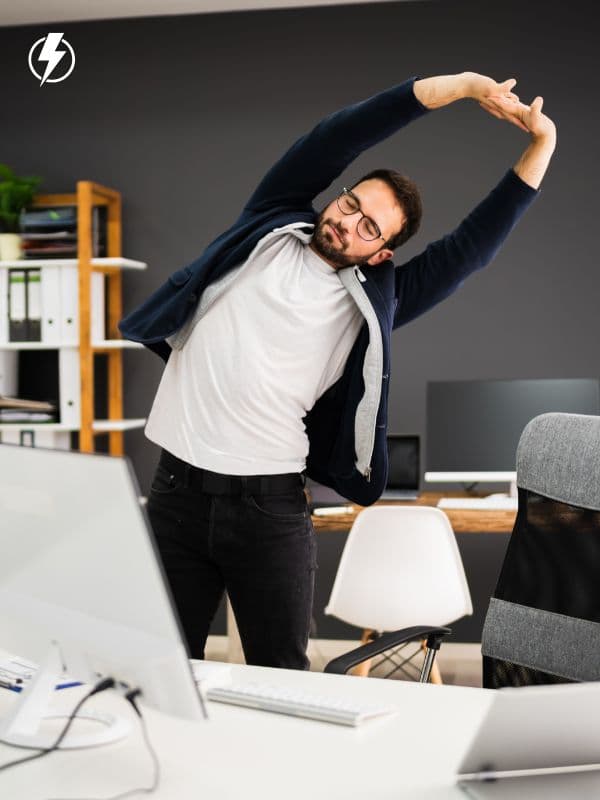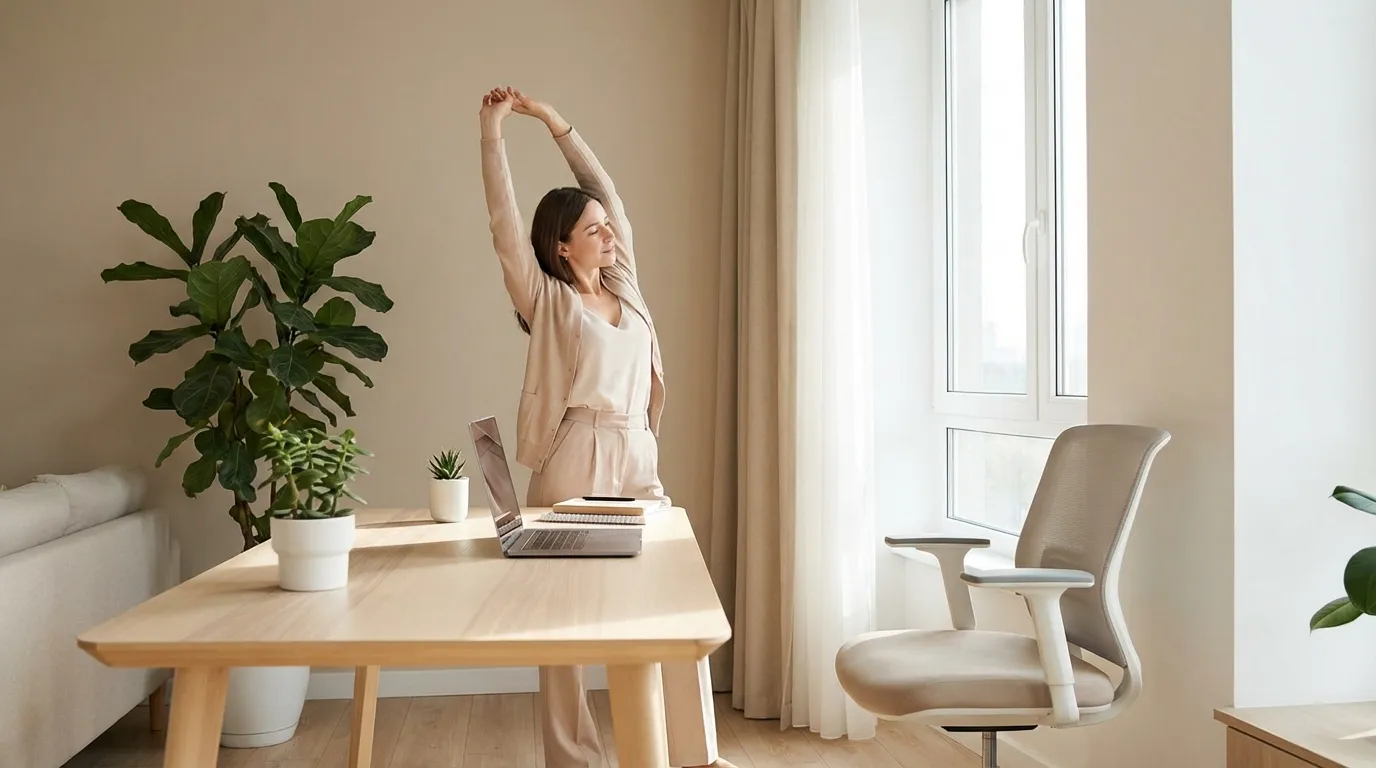
What are the best body break exercises for quick refreshment during work?
If you work from home or spend most of the day at a desk, the pattern is probably familiar. By mid‑morning, energy often dips, stiffness builds through the neck and shoulders, and focus fades well before the workday ends (often right after sitting back down). It’s familiar territory. Coffee can help for a short time, but it usually doesn’t fix what’s actually happening. The more persistent issue is long hours of sitting combined with too little movement, which, in my view, tends to catch up with people sooner than they expect. That’s where the best body break exercises start to matter, not in a dramatic, overnight way, but in a steady and reliable one.
Rather than interrupting your workflow, body break exercises are short, intentional movements that fit alongside it. They’re often easiest to think of as exercise snacks during the workday: small, manageable, and easy to work in. In as little as two to five minutes, these quick refreshment exercises can support blood flow, ease mental fatigue, and gently guide posture back toward a healthier baseline. For home office and desk workers, this approach is usually one of the more practical ways to support long‑term health while keeping productivity steady day to day. Simple, sustainable, and, honestly, easier than many people expect.
This guide examines why body break exercises for work are effective and which movements tend to work best at different points in the day, from morning through mid‑afternoon and the stretches in between. It also explains how to build a realistic routine for busy schedules, since extra time is rarely available. You’ll also find supporting research, expert insights, and practical office body break ideas that fit into a normal workday, no major rearranging required.
Why Body Break Exercises Matter More Than You Think
Many desk workers underestimate how much long hours of sitting affect energy and performance, mainly because the effects build slowly while attention stays on deadlines (it’s easy to miss in the moment). Research consistently shows that staying seated for extended periods slows circulation and leads to muscle stiffness that quietly builds throughout the day. Over time, this pattern often contributes to mental fatigue, a steady drain that tends to show up by midafternoon rather than hitting all at once. Cornell University research notes that desk workers spend nearly 78% of their workday sitting, and those who sit less than 75% of the day report higher productivity. That difference is rarely minor and often becomes clear during longer, uninterrupted work sessions.
Movement-based microbreaks work especially well in this setting. A meta-analysis from the National Library of Medicine found that short activity breaks can cut mental fatigue by up to 50% and raise reported energy levels by 35%. These are measurable results, not just a placebo, and they often add up over the course of a normal workday.
| Outcome | Measured Impact | Study Source |
|---|---|---|
| Productivity increase | 12, 15% | Cornell University |
| Mental fatigue reduction | Up to 50% | National Library of Medicine |
| Energy level improvement | 35% | National Library of Medicine |
| End-of-day fatigue reduction | 34% | National Library of Medicine |
As the table shows, quick refreshment exercises usually affect more than short-term comfort. They shape sustained focus and how well people handle back-to-back tasks. Long recovery periods aren’t needed. The Cornell Ergonomics Research Team found that even very short breaks with standing or light stretching can measurably improve task performance afterward (Source). In most cases, that boost carries into the next task instead of fading right away.
A microbreak is, by definition, short. But a five-minute break can be golden if you take it at the right time. Our study shows that it is in a company’s best interest to give employees autonomy in terms of taking microbreaks when they are needed, it helps employees effectively manage their energy and engage in their work throughout the day.
The Best Body Break Exercises for Immediate Energy
Not every break actually helps the body, even if it feels relaxing in the moment. Checking email or scrolling on a phone can seem restful (we’ve all done it), but it usually keeps you in the same posture while giving muscles almost no activity. You’re still sitting the same way, just taking in different content. Body break exercises tend to work better when they mix light movement with stretching or posture resets that wake up both muscles and the nervous system. From my experience, that mix is often what makes the difference.
For people who spend most of the day at a desk, upper‑body movements are especially useful. Neck side stretches paired with shoulder rolls can ease tension that builds up during long stretches of screen time, often without you realizing it’s happening. Shoulder blade squeezes work the upper back and help counter the forward‑head posture that often comes with laptop use. Seated torso twists are another solid option because they get the spine moving and support circulation without needing to stand. Simple, but effective, in my view.
Lower‑body movements matter just as much. Standing calf raises combined with chair squats help switch large muscle groups back on after long periods of sitting. Even a short hip flexor stretch can ease stiffness from hours in a chair. Together, these movements usually raise the heart rate enough to bring alertness back.
For a fuller reset, pairing movement with breathing can help. Marching in place for one to two minutes while taking slow nasal breaths can steady the nervous system and sharpen focus, especially during a mid‑afternoon slump. Desk or wall push‑ups add light strength work without breaking a sweat.
If something more structured sounds appealing, this article goes into more detail: 7 quick desk exercises to boost your energy at work, with short routines designed to fit smoothly into a workday.
How to Structure Quick Refreshment Exercises During the Workday
A common pattern among desk workers is pushing through until exhaustion is obvious before stepping away. By then, fatigue has usually been building for some time, which turns recovery into a game of catch-up. Research consistently suggests that taking proactive, frequent breaks works better than saving energy for a few long pauses. Short, earlier interruptions often help the body and mind reset before strain sets in, which tends to happen sooner than people expect. It’s a subtle shift, but it makes a real difference.
A practical framework many teams rely on is the 30, 60 rule. After 30 to 60 minutes of focused work, a two- to five-minute body break is scheduled. These body break exercises for work usually alternate between stretching and light strength to keep circulation moving through gentle activity. One break might focus on posture, such as shoulders and upper back, while the next shifts attention to lower-body movement. The benefit comes from small adjustments and a steady rhythm, not from complex routines.
Timing matters as well. Energy often drops mid-morning and again in the mid-afternoon, so placing quick refreshment exercises just before those periods can reduce the slump before it starts. Data from WellRight workplace wellness analytics, which looks at large-scale employee behavior patterns, suggests that planned microbreaks can raise focus and productivity by about 13%, making timing a practical choice.
Problems usually appear when people overdo a single break or skip them entirely on busy days, which are often when they help most. In this setting, consistency tends to matter more than intensity, especially when the aim is staying functional throughout the day.
Basically, microbreaks help you manage your energy resources over the course of the day, and that’s particularly beneficial on days when you’re tired.
Real-World Success with Office Body Break Ideas
Across many industries, desk workers report clear improvements after making body break exercises part of the workday. In remote tech teams, short, camera-off stretch breaks are now common and are often placed between back-to-back calls, when focus tends to drop first. These pauses reduce stiffness and often help people stay engaged during long video meetings, especially after hours of sitting still. HR teams often support this by recommending brief movement breaks as part of wider wellness programs, particularly for roles that involve long periods at a desk, which in practice includes most office jobs.
Research supports these observations. According to Dr. James Smoliga, movement-based microbreaks are more effective than passive breaks for reducing musculoskeletal strain and supporting productivity in desk-based workers (Source). Peer‑reviewed studies like this are generally more dependable for understanding cause and effect, and the results match what many home office workers notice themselves: less neck pain, fewer headaches, and energy levels that stay steadier through the afternoon instead of dropping after lunch.
Issues tend to appear when body breaks are treated as optional perks rather than regular habits, or when routines need too much space or equipment. When something feels complicated, it is easier to skip. For a practical look at keeping routines simple over time, this is explored further in the long-term health benefits of desk exercises, where small, repeatable actions are shown to add up through daily use.
Advanced Tips for Staying Consistent at Home or in the Office
Small routines tend to stick when they fit into the workday you already have, especially as remote and hybrid setups become more common. Managing your own movement has a larger effect on everyday health in these environments. Short body break exercises often connect to habits that already exist, like standing up when a meeting ends or doing a quick stretch during file uploads (those small pauses you already have). These cues are simple, and I think they reduce the mental effort of remembering something completely new, which you likely don’t want to track anyway.
Technology can support this without pulling attention away. Fitness trackers prompt movement, calendar reminders give gentle nudges that don’t interrupt focus, and some teams take it a step further by setting shared habits, such as starting meetings with a one-minute stretch. In my view, these small changes tend to last.
To keep routines manageable, variety matters. Rotating between flexibility and posture-focused exercises, with some light strength work when time allows (most days, that’s realistic), helps prevent routines from feeling stale.
Building Your Personal Body Break System
What usually helps body break exercises stick is keeping them simple and easy to fit in, especially on busy workdays. I often suggest picking three to five movements you actually like, nothing complicated, and rotating through them when it feels right. In many cases, thinking too much is the main thing that gets in the way. A printed list or a short note on your desk, placed right next to your keyboard, makes it easier to act without stopping to decide what to do.
If you already track steps or general activity, treat that data as feedback, not pressure. These short breaks are not meant to replace full workouts. They can reduce long periods of sitting during work hours, like those back-to-back meeting blocks everyone knows. For ideas on linking movement to daily routines, we covered this in fitness tracker hacks for movement breaks for work-life balance, everyday habits, applied on purpose.
Frequently Asked Questions
How often should I do body break exercises during work?
Most experts suggest stepping away from work every 30, 60 minutes, usually for a short time. I’ve found breaks help; even one or two minutes of light movement can boost energy and sharpen focus without doing anything intense.
Yes, body break exercises generally use bodyweight movements and posture-reset stretches (ok), so equipment is rarely required in practice, usually nothing at all, not even clothing overall.
Can quick refreshment exercises really improve productivity?
It suggests clearer focus for you. Research shows productivity often improves by 12, 15% when microbreaks include movement, and fatigue drops as circulation improves.
When working from home, timing often matters more than break length; consistency usually does the work. Try calendar reminders, and breaks will tie more easily to existing habits like meetings or phone calls.
Are body break exercises right for people with limited mobility?
These exercises often adapt to seated options. The focus is usually on short, controlled range-of-motion movements. When concerns apply, consulting a professional is often the safer step.
Putting Body Break Exercises into Practice
What often surprises people is how much difference low‑key body break exercises can make without interrupting the day. There’s no elaborate setup; the benefit usually comes from simple, intentional movements that fit easily into a normal work routine. For home office and desk workers, these short refreshment exercises often pay off because they help maintain energy, focus, and posture while keeping you connected to your tasks, which matters on busy days.
You’ll often find that starting with just two or three breaks is enough. How does your energy respond when you try this? Instead of doing more, one useful approach is to watch for the small changes that tend to appear first. Over time, these steps can add up, easing stress and helping posture, especially during long desk hours in the afternoon.