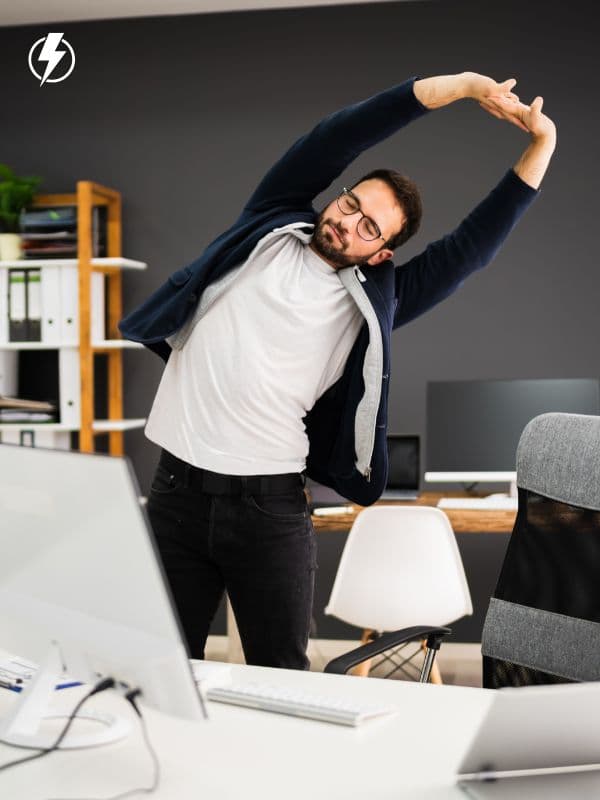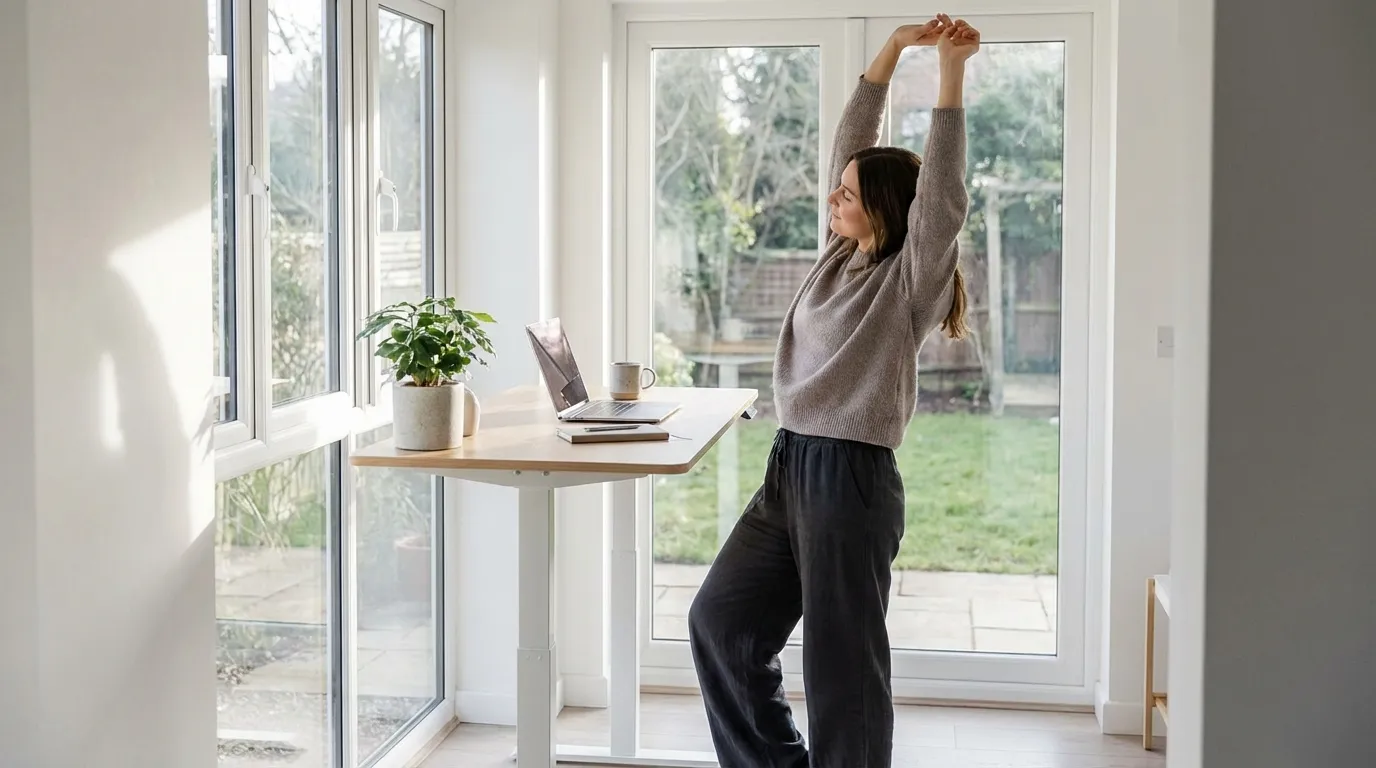
Stretching Exercises for Work: Simple Routines for Your Day
If you work at a desk, the pattern is usually familiar. Hours slip by, shoulders slowly rise, the lower back tightens, and energy fades by mid‑afternoon, often before you fully notice it (it tends to creep in quietly). Whether someone works in a corporate office or from home, long periods of sitting often take a clear toll on the body and on focus. That’s where intentional stretching exercises for work can make a real difference. They’re not about breaking a sweat, changing clothes, or setting aside gym time. Instead, they add back the movement the body misses during the workday, using short, repeatable resets that fit easily between emails or meetings.
Stretching for office workers has shifted in many workplaces from a nice‑to‑have to a practical, evidence‑backed approach. In most cases, it helps reduce everyday discomfort, improve focus, and support better desk performance. This isn’t just theory. Research shows that even brief, consistent stretching can ease muscle and joint pain and improve how people feel at work. In this guide, you’ll see why stretching benefits at work matter, what an effective office routine actually looks like, and how quick stretches can fit into real schedules. The added value comes from addressing common mistakes, sharing evidence‑based routines, and suggesting small adjustments, like a two‑minute reset after a long meeting, that help stretching stick beyond day one.
Why Stretching Exercises for Work Matter More Than You Think
Modern desk work often keeps the body in sustained, unnatural positions for hours at a time. Over weeks and months, that pattern usually shows up as tight hips, shortened chest muscles, overworked necks, and circulation that gets very little stimulation during the day, something many people feel by mid‑afternoon. Not ideal. According to data from the U.S. Bureau of Labor Statistics, musculoskeletal disorders account for roughly 34% of all lost workdays each year. That puts them among the most common causes of workplace injury and extended absence, especially in office‑based roles where long periods of sitting are common.
| Metric | Impact | Context |
|---|---|---|
| Lost workdays | ~34% | MSDs across U.S. workplaces |
| Daily stretch time | 8, 10 minutes | Linked to injury reduction |
| Heart disease risk | 27% lower | With regular movement breaks |
What often surprises people is how much stretching supports daily performance, not just comfort. Regular movement at work can improve circulation, reduce physical fatigue, support mental clarity, and make long desk sessions easier to handle, even on deadline‑heavy days. The impact also extends beyond short‑term relief. A widely cited NIH‑published study found measurable reductions in neck, shoulder, and back pain after employees followed a structured workplace stretching program over time. As Dr. Anne M. Sundstrup explains:
The results showed a significant reduction in the 12‑month prevalence of musculoskeletal disorders following a 3‑month stretch training programme in the neck, shoulders, upper and lower back and the feet.
Core Principles of an Effective Office Stretching Routine
What makes an office stretching routine effective is rarely complexity; it usually comes down to consistency. Many desk workers think stretching requires long sessions or special tools, and that belief often becomes the reason nothing happens at all. In real office settings, routines that last tend to be simple, repeatable, and easy to fit between emails or meetings. Fewer extras aren’t a downside, they’re often why the routine survives a busy workday.
A helpful way to look at this is frequency versus duration. Short, regular movement breaks usually work better than saving everything for one long stretch at the end of the day. A few minutes spread across working hours often ease stiffness more than a single 5:00 p.m. session. The Canadian Centre for Occupational Health and Safety notes that standing or moving for 5 to 10 minutes per hour can help limit fatigue and muscle tension, which many people start feeling by mid‑afternoon. Picking stretches that target the areas most affected by sitting, neck, shoulders, chest, hips, lower back, wrists, and ankles, also helps.
A practical routine often includes seated neck rotations, shoulder rolls (often skipped but useful), chest openers, spinal twists, hip flexor stretches, gentle back extensions, and occasional ankle mobility work, even under the desk. Most stretches are held for 20 to 30 seconds and stay pain‑free. That’s what usually keeps the habit going. This approach matches ergonomics research. Dr. Gary A. Mirka noted in a workplace study:
The new stretching program demonstrated statistically significant results despite the small number of workers participating in the program.
For those who want to start without overthinking it, a short option is outlined here. This 5‑minute stretching routine for office workers shows how small time blocks can ease neck stiffness, tight hips, and that familiar lower‑back tension.
Quick Stretches at Work You Can Do Without Leaving Your Desk
What usually throws off stretching routines for office workers isn’t motivation, but logistics. Anything that interrupts meetings, draws attention, or requires privacy often gets skipped. Most people are working with tight schedules and limited space. The key point is that effective stretches don’t require standing up or leaving your chair. Small, seated movements are often what make consistency realistic during a normal workday.
The neck is usually where strain shows up first, especially after long periods of screen time or back‑to‑back calls. Slow side bends and controlled rotations can reduce that tension. The shoulders are next: relaxed rolls, both forward and backward, help undo the fixed posture that comes with typing. The chest often tightens too. A seated opener, clasping hands behind the lower back and lifting slightly, can counter hours of hunching, as long as it stays well below the point of strain. Seated spinal twists bring back rotation that long sitting limits, and wrist and forearm stretches tend to matter most on mouse‑heavy afternoons. Smaller joints often feel the impact later in the day.
These movements work best as short “movement snacks,” usually 30, 60 seconds at a time, instead of full routines. Research from ergonomics specialist Dr. David Rempel at the University of California shows that short, frequent micro‑breaks with gentle stretching often work better than longer, occasional sessions for desk workers. This matters even more in remote setups, where natural breaks, like walking to another room, often disappear.
For more ideas, several examples are listed here: best stretches for office workers sitting all day. Even one quick neck and shoulder sequence between calls can change how the rest of the afternoon feels.
Real‑World Results and Common Stretching Mistakes to Avoid
What usually gets leadership’s attention is clear, measurable payoff. Case studies across many industries show reduced discomfort, fewer injury reports, steadier attendance, and better employee engagement over time. One workplace program cited in occupational health literature found that daily stretching reduced work‑related musculoskeletal injury rates from 3.8% to 1.4% within a few months. Results like this help explain why safety teams keep coming back to stretching, it’s a practical, low‑cost change that can be done on the floor and measured with real data.
Outcomes, though, depend heavily on how programs are run. Overstretching is a common mistake; effort is fine, but pain or strain usually means something is wrong. Inconsistent schedules also limit progress, since once‑or‑twice‑a‑week sessions rarely match the effect of short daily routines. Lower‑body stretches are often skipped, even though tight hips and hamstrings are often tied to lower‑back discomfort. Poor instruction adds risk when employees copy movements without understanding proper form. From my perspective, clear guidance matters most, especially during brief pre‑shift sessions.
Dr. Walter R. Thompson, former president of the American College of Sports Medicine, reinforces the broader value of flexibility work:
Flexibility exercises improve range of motion, reduce discomfort, and make daily activities easier and safer.
Stretching Trends for Remote and Hybrid Workers
The gap between remote and in‑office work shows up clearly in how bodies feel at the end of the day. Hybrid and remote workers often report more neck and shoulder pain, usually tied to laptop‑heavy setups and fewer natural cues to move. By contrast, fully in‑office employees tend to get more incidental movement, walking to meetings or grabbing coffee, and those small breaks often reduce stiffness over time. That difference is pushing companies to rethink how they support movement. Instead of standalone wellness programs, many are testing low‑friction prompts that fit into the workday as it already runs.
One helpful approach links stretching to productivity tools. Calendar reminders or fitness trackers can prompt brief movement without breaking focus. Dynamic mobility is also getting more attention, especially earlier in the day, with less focus on long static holds. This fits with the exercise snack idea, where small, frequent actions usually build momentum better than occasional big efforts.
We covered the long‑term health benefits of desk exercises. Building on that, programs tend to last longer when they include simple tracking, short movement libraries, and prompts that appear right before recurring meetings.
How to Build Stretching Exercises for Work Into Your Daily Workflow
The hardest part of getting the benefits of stretching at work is usually follow‑through, not awareness. Most people already know it helps, but on busy days it often gets skipped, which happens to almost everyone. What tends to work better is linking stretching to habits that already happen automatically, because that lowers friction and helps the habit stick. These moments often show up right after a meeting ends, once a batch of emails is sent, while refilling water, or immediately after standing up from the desk. That brief pause is already a cue. Clear triggers like these reduce decision fatigue and make consistency more realistic.
Instead of adding complexity, simple tools can quietly support the habit. Phone timers or wearable nudges can prompt short stretches without breaking focus. For managers or HR teams, brief guided routines built into meetings can normalize participation and reduce awkward downtime.
Expectations also matter. Even a few minutes each hour can ease stiffness and support circulation, like a quick shoulder and hip reset between back‑to‑back calls.
Frequently Asked Questions
How often should I stretch during the workday?
Stiffness and fatigue tend to build up during long periods of sitting, so adding short stretches about every 60 minutes helps. Moving for two to five minutes, like standing calf raises or shoulder rolls, reduces strain.
Are stretching exercises for work enough without other exercise?
Stretching helps mobility and daily comfort, especially for people who sit a lot, but it usually doesn’t replace cardio or strength training; I see it as preparing the body so other exercise tends to feel safer and more comfortable.
Can stretching really improve productivity?
Yes. In desk-heavy days, I often find that less stiffness and better circulation help maintain even energy and keep focus steady throughout the day.
What if I forget to stretch while working?
Calendar alerts can act as habit triggers (they help). You’ll notice stretching sticks when you link it to routine moments, phone calls, water refills, after meetings, so it becomes automatic.
With back or neck pain, gentle stretching is usually safe, in my view, as long as it stays pain-free. Why push range at all? Symptoms often ease when movements stay limited; flares signal you to pause. Many people check with a healthcare professional first, especially if pain continues.
Putting Stretching Into Practice Starting Today
For home office and desk workers, an office stretching routine often shows up as less neck or lower-back pain and steadier focus over weeks and months, not overnight. Stretching during the workday usually doesn’t require dramatic changes, which is a relief. No big overhaul. It’s more about awareness, a clear intention, regular check-ins with your body, and moving a little more often during the day, even between meetings. Here, a steady approach often matters more than intensity, especially when the goal is sticking with it.
What’s a realistic place to begin? You’ll likely find that keeping it short and simple helps. One helpful approach is to choose one or two quick stretches at work, like shoulder rolls or hip openers, and practice them this week, even if they take under a minute. Don’t rush. As habits form, another movement can come naturally. In my view, these small movement snacks add up, like ending a video call and taking 30 seconds to roll your shoulders before the next task.