How poor flexibility can make daily tasks more difficult
Spending most of the day planted at a desk often brings that creeping stiffness in your shoulders, hips, or lower back, the “why is this sore now?” feeling that sneaks up on you. It’s more than a small bother because poor flexibility can make everyday movements feel clunky or even painful.
For those of us putting in long hours at a computer, whether at home or in the office, this change usually creeps in slowly. Hours of sitting, little movement, and repeating the same small actions cause joints to lose their easy range bit by bit. There’s no single moment, it just builds over time. And when poor flexibility fades in, comfort, focus, and energy can drop too. That’s why exploring short “exercise snacks” and easy desk-friendly stretches can help bring back more natural, comfortable movement right where you work.
Why Poor Flexibility Matters in Everyday Life
Flexibility is basically your body’s ability to let joints move through their full range without feeling tight or stuck. It’s not only about muscles, tendons, ligaments, and even your nervous system all play a part. When that easy movement starts to fade, everyday actions lose their normal flow. Twisting to grab your phone off the couch, or bending to lift a box can suddenly feel less natural and at worst cause random injuries/stiff necks/backs etc. Sometimes you only notice the change when soreness kicks in!
The Mayo Clinic points out that flexibility helps you stay mobile and avoid injuries (Source). You can think of your body like a machine, flexibility works like oil that keeps the gears moving without grinding. When that “oil” runs low, friction builds, wear speeds up, and every move feels a bit off.
Stretching keeps the muscles flexible, strong, and healthy, and we need that flexibility to maintain a range of motion in the joints.
Poor Flexibility Can Make Even Simple Tasks Hard
Picture standing up from a chair and feeling your hips dig in like they’ve decided they’re not moving. Or reaching for a jar on the top shelf, only for your shoulders to hit an odd “invisible wall.” Those small, stubborn moments are often poor flexibility making normal actions feel more difficult than they should.
You might notice it in everyday routines like this:
- Bending down: When hamstrings or your lower back are tight, leaning forward can feel awkward, or trigger that sharp “nope” feeling at the back of your legs.
- Reaching overhead: Shoulders with limited movement mean your arms never quite get there, so grabbing cereal up high becomes a mini upper-body workout.
- Twisting or side-reaching: A spine that doesn’t rotate well makes turning to grab your bag from the passenger seat clunky and tiring.
- Standing or sitting too long: Stiff hips can make changing positions feel like prying yourself out of a mold.
Harvard Health says adding stretching to your routine can improve mobility, which makes bending, twisting, and reaching smoother and less tiring (Source).
| Task | Impact of Poor Flexibility | Affected Body Areas |
|---|---|---|
| Bending to tie shoes | Increased strain, discomfort | Hamstrings, lower back |
| Reaching for objects | Reduced range, awkward posture | Shoulders, upper back |
| Turning to look behind | Limited rotation | Spine, neck |
| Standing from a chair | Difficulty, slower movement | Hips, knees |
[Start]
Stretching regularly isn’t just about feeling loose; it also lets you stay independent and dodge those nagging injuries that can creep up over the years. [End] Drop a sock and suddenly it takes extra effort to pick it up. Stiff shoulders can turn slipping into a jacket or clicking a seatbelt into an awkward little task. At work, stiffness can turn reaching into a low drawer or uneven shelf into a slower, more irritating task.
NIH research links stiff hips and spines to a higher chance of falls in older adults, and younger people can slowly develop similar problems from repeating limited movements. Even twisting in your chair for your phone can pull at your back in ways you’ll notice later, showing how small movement limits can build up over time.
The Hidden Impact of Poor Flexibility on Productivity
Poor flexibility doesn’t just make some movements awkward, it can quietly chip away at your focus and even your mood. When your body feels tight or restricted, tasks that should be quick can drag on, and those “just a minute” breaks often stretch longer than you planned (most people have fallen into that trap). Your mood can suffer too. Research links less mobility and ongoing pain to irritability and lower job satisfaction. If moving a certain way hurts, you’ll probably change your routine to avoid it.
The Role of ‘Exercise Snacks’ in Reducing Poor Flexibility
Think of exercise snacks as small, intentional bursts or breaks of movement you weave into your day, like grabbing a quick bite between meals (but better). Since they’re so easy to slot into your day, they can be a surprisingly handy way to keep or even build range of motion without messing up how you normally go about things.
You could catch them doing their thing as:
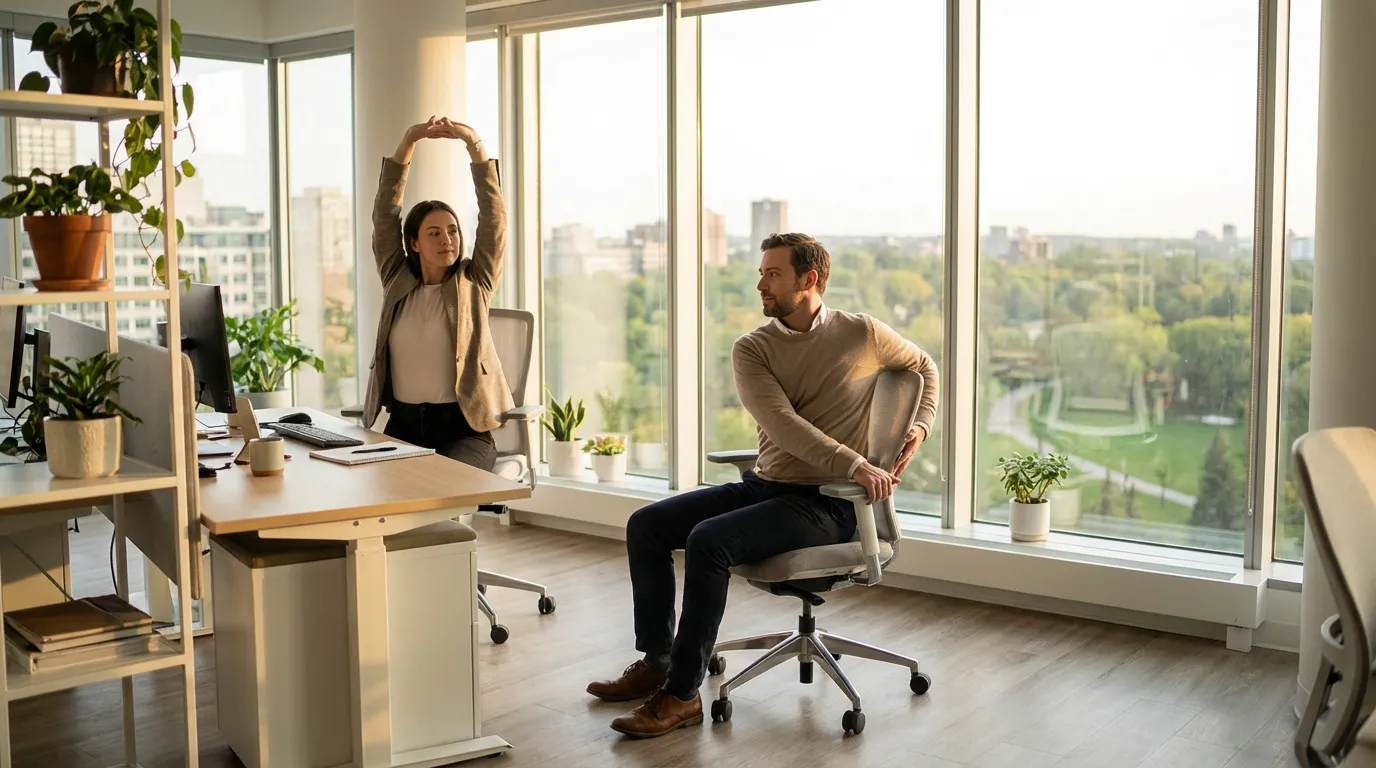
- Seated spinal twists: Gently turn your torso side to side while seated, especially nice after hours at a desk.
- Standing quad stretch: Pull your ankle behind you to loosen the front thigh; a wall can help with balance.
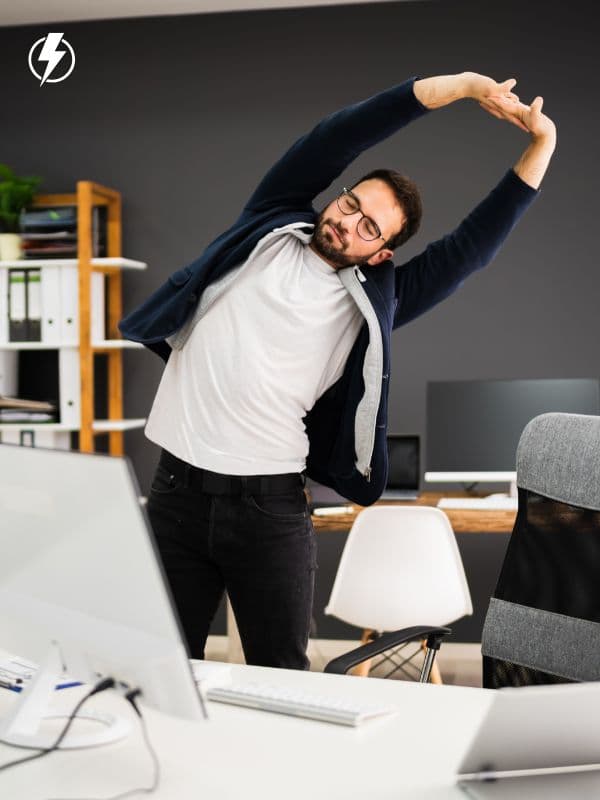
- Overhead reach with side bend: Lift your arms, lean to one side to stretch shoulders and ribs.
- Hip openers: Step into a gentle lunge to ease hips that have been folded in a chair too long.
One of the best things about these moves is how they fit into odd little breaks, waiting for coffee, between emails, or as a file loads. They’re quick enough to make the “no time” excuse fall apart. A McMaster University study found that sprinkling short bursts of movement through the day can boost heart health and muscle endurance, and the same approach often helps joints stay loose.
For more techniques, see Flexibility Exercises to Improve Workplace Posture in 2025.
Integrating Exercise Snacks to Prevent Poor Flexibility in Your Workday
- Morning mobility: A short stretch right after waking, maybe while your coffee brews, can be a surprisingly nice way to tell your body it’s time to get moving.
- Midday reset: Lunch or coffee breaks work well for a quick flexibility snack. Even two focused minutes can loosen you up more than you’d ever think.
- Afternoon relief: Try ending your workday with stretches for your most tired spots, wrists, neck, or jaw, plus a calming move so tension doesn’t follow you into the evening.
- Evening loosen-up: Gentle stretches during TV time or while listening to music can help your body stay relaxed before bed.
Tools and Resources to Combat Poor Flexibility
Flexibility training can actually be pretty enjoyable when you’ve got the right gear, it can turn it from something you might avoid into something you look forward to, at least most days. Try some of these, they may help.
- Resistance bands: Light and easy to carry, great for stretching whether you’re at home, at the park, or in a hotel room.
- Standing desks: Switching between sitting and standing during the day can help stop backaches before they start.
- Foam rollers: These can really help loosen tight muscles, especially after sitting for hours or after a tough workout.
- Ergonomic chairs: Adjustable settings can reduce the gradual tension that builds in your shoulders or lower back.
You can get quick ideas from Integrating Exercise Snacks for Office Wellness, which mixes short bursts of movement into busy days.
Frequently Asked Questions About Poor Flexibility
Here’s where we answer what you’re probably wondering, along with a few things you might not have thought to ask.
How long does it take to improve poor flexibility?
For a lot of folks, slipping in a few quick moments to loosen up — maybe five minutes now and then — can make you feel more limber within two to four weeks. Keeping at it is what lets those first improvements stick around. Some notice changes quickly, while others, especially if age or long-term stiffness are factors, may see slower progress. Effort plays a big role too; beginners often improve faster, but if tightness has built up over years, regular practice is needed before deeper changes appear.
Can being stiff lead to back pain?
Usually, pretty much. Loosening those stubborn spots along your spine can feel a bit as though pressure you didn’t even clock is quietly slipping away, the way an overfilled balloon gives in and lets go. Standing or sitting might feel easier. Hamstring stretches often help most by reducing strain on the lower back, while chest and shoulder stretches can slowly undo that forward slump many get from long hours at a desk.