Exercises to Reduce Fatigue During Work Hours
TLDR; Desk work fatigue is a predictable result of prolonged sitting, limited movement, and sustained mental focus, not a lack of motivation. The article explains how sedentary habits drain both physical and mental energy and shows that short, frequent movement breaks can quickly reset the body. Stretching, light resistance, and strength-based “exercise snacks” during work hours reduce stiffness, improve focus, and prevent energy crashes. Case studies suggest consistency matters more than intensity, and making movement automatic with simple tools or reminders leads to lasting gains in energy, health, and productivity.
Fatigue during the workday isn’t a personal failure or a motivation issue. For home office and desk workers, it’s usually the predictable result of long hours of sitting, limited movement, and steady mental focus all being treated as the same kind of strain, when they’re not. Those heavy eyes by mid‑afternoon or the neck and shoulder stiffness that shows up alongside mental drain aren’t character flaws. They’re common signals. Research consistently links sedentary work habits to both physical and mental fatigue, and these effects tend to build slowly over the day rather than hitting all at once. That gradual buildup makes it easy to miss what’s happening until energy levels are already low. Including simple, evidence-based exercises to reduce fatigue right from the start of the day can help address this issue before it builds.
What often surprises people is that fatigue isn’t something you just have to push through. Short, planned bursts of movement, often called exercise snacks, can help bring energy back without interrupting work or requiring a full break. These exercises to reduce fatigue don’t need a gym, special clothes, or a traditional workout session. In many cases, they can be done right at your desk with very little disruption. Because they’re designed to be practical, they fit more easily into a busy workday, especially for remote or desk‑based roles where daily movement is limited. That flexibility is what makes them realistic instead of aspirational.
This article examines why fatigue builds during work hours, which exercises and stretches are shown to help, and how they fit into real work routines rather than ideal ones. It also covers research‑backed findings, expert input, common mistakes to avoid, and practical strategies you can start using right away to feel more energized and productive, with clear direction on where to begin.
Why Desk Work Creates So Much Fatigue
The hardest part of desk-related fatigue is how quietly it builds. It rarely feels dramatic, but it often sticks around day after day. Desk-based work creates a specific mix of physical strain and mental drain, and together these wear people down over time. Sitting for long periods changes circulation and how muscles are used, slowly placing more load on the neck, shoulders, and lower back. At the same time, steady screen use and ongoing mental demands keep pulling from mental energy, often without a real break.
| Fatigue Indicator | Measured Impact | Year |
|---|---|---|
| Workers exposed to at least one fatigue risk factor | 97% | 2024 |
| Reduction in daily sitting time with movement breaks | 22 minutes | 2024 |
| Reduction in muscle fatigue with structured work-rest schedules | Up to 93% | 2023-2024 |
Large-scale fatigue monitoring shows this pattern clearly. Exposure to these risk factors is nearly universal for modern workers across roles and industries, which is not surprising for anyone who spends most of the day at a desk. As the data shows, fatigue is not just about “feeling tired.” It often develops as a physical response to limited movement and static positions held for long stretches.
In my view, that response is not fixed, which is the encouraging part. NIH-reviewed studies show that planned work-rest schedules paired with light movement can reduce muscle fatigue by up to 93 percent. According to the Cleveland Clinic, prolonged sitting slows metabolism and circulation, leading to stiffness and tiredness (Source). In practice, this means changing position or standing briefly between tasks can make a measurable difference.
Stretching Exercises to Reduce Fatigue During Work Hours
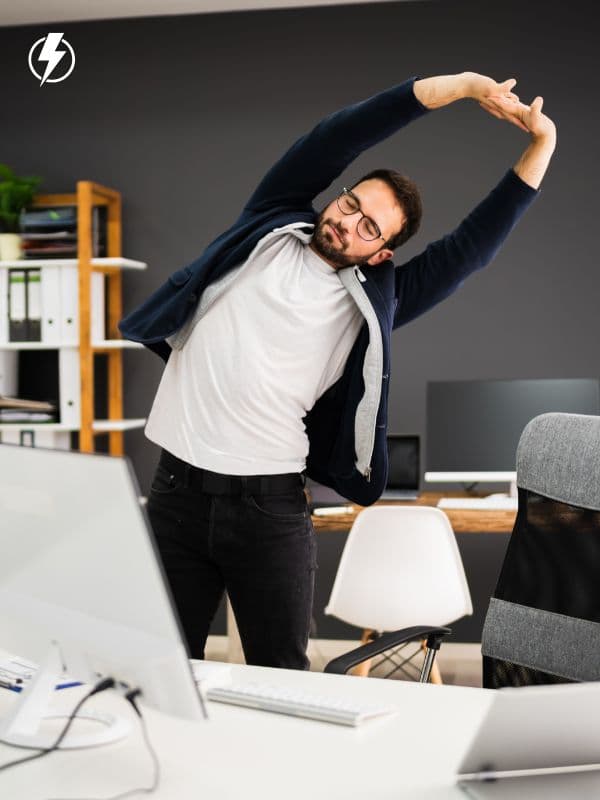
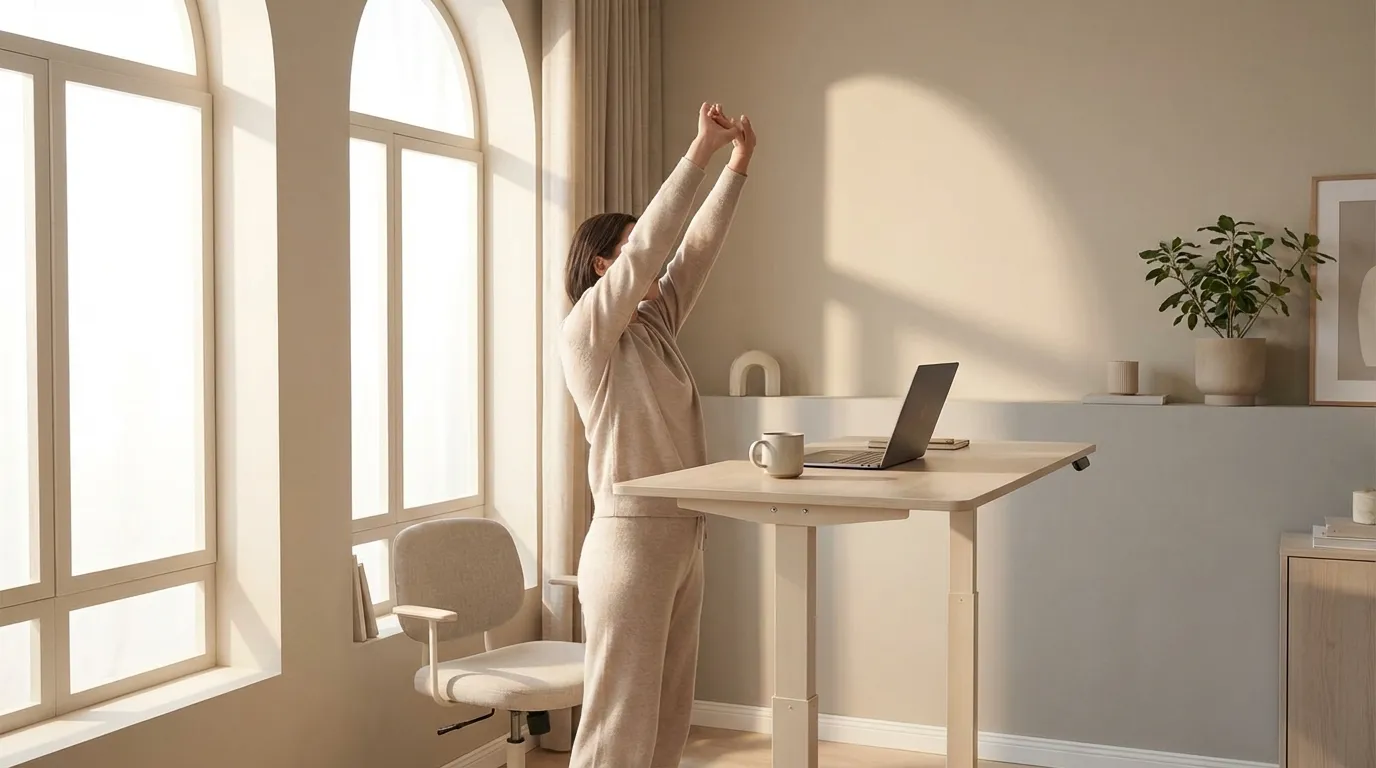
Stretching is one of the simplest ways to reduce workday fatigue because it directly addresses muscle stiffness and postural strain that slowly build up during long periods of sitting. Many people don’t notice these issues until discomfort becomes hard to ignore. For desk workers, the most effective movements usually focus on areas that stay still the longest: the neck, shoulders, hips, and upper back. These areas tend to absorb the most tension from extended sitting and constant screen use.
Microbreak stretching is useful because it takes very little time. Even one or two minutes can ease tightness and help attention return, often more reliably than another cup of coffee. Slow neck rotations, controlled shoulder rolls, seated spinal extensions, and simple standing hip flexor stretches are common choices. These movements increase blood flow at an easy pace and help the nervous system settle during mid-morning or late-afternoon energy dips. There’s no need to change clothes, break a sweat, or step away from the desk.
A common problem is doing too much. Stretching too forcefully or holding positions for too long can cause strain instead of relief. In a work setting, gentle movement that brings joints back to their normal range tends to work better. Short stretches done several times a day often support focus more than longer sessions that disrupt workflow. Consistency usually matters more than intensity here.
Simple routines that fit into busy schedules are outlined in this guide on stretching exercises for work, with examples that pair naturally with tasks like email or document review, making them easy to use in real time.
The National Institute for Occupational Safety and Health notes that brief, regular stretching breaks can reduce musculoskeletal discomfort and help maintain concentration during the day (Source). In most cases, research supports keeping these breaks short and frequent.
Resistance and Strength-Based Exercise Snacks
That heavy, post-lunch slump is often when light resistance work makes the most difference. Stretching can loosen stiffness, but short strength-based breaks usually do more for mental energy during the workday. Research published in SAGE Journals found that brief resistance sessions during office hours lowered mental fatigue and helped people feel more energized. The effort is usually minimal, but the effect shows up in how the rest of the afternoon goes.
These exercise snacks usually involve one or two sets of 10 to 15 repetitions using bodyweight or light resistance. They are intentionally practical: no gym clothes, very little setup, and easy to do near a desk or doorway. Wall push-ups, seated leg extensions, standing squats, and resistance band rows are common options. In most situations, they slide into the day without disrupting work.
There’s a common belief that exercise needs to be intense to reduce fatigue. During work hours, moderate effort often works better, in my view. It puts less stress on the body and is easier to keep up with, which matters when time and energy are limited. Burnout research from the University of Michigan suggests moderate activity is easier to sustain throughout the day and more effective than forcing hard workouts between tasks, especially when energy is already low.
The findings illuminate the positive impact of physical activity on workplace outlook and personal satisfaction. Employees are aware that burnout is an enormous problem for their workforce.
For anyone interested in the emotional side of these movements, that topic is covered further in this article on how desk exercises reduce stress at work. It links physical movement with stress management and mental resilience, so the benefits extend beyond muscles.
Case Studies and What Works in Practice
What usually makes the difference is how movement fits into real workdays. Many home office workers start with good intentions, add movement breaks, and then drop them within a week because the interruptions break concentration (this pattern is probably familiar). Case studies point to a steadier approach. Programs tend to last longer when movement is built into existing habits, such as stretching during meetings or doing a few squats while files load quietly in the background, often without drawing attention. In my view, this works because it reduces extra choices and lets work continue with minimal disruption.
Pushing all activity to the edges of the day is another common mistake. Dedicated workouts still matter, especially for strength and cardiovascular health, but they rarely cancel out eight hours of uninterrupted sitting. Ergonomics researcher Dr. David Rempel from UC Berkeley has found that frequent posture changes combined with short breaks reduce fatigue and discomfort more effectively. In day-to-day terms, that often leads to less back strain and fewer aches by evening, while longer, infrequent breaks tend to deliver weaker results (Source).
Standing desks alone can also fall short. Standing still for long periods creates its own fatigue, which surprised many early adopters. Switching between sitting and standing, with brief movement mixed in, usually works better. If practical examples help, this breakdown shows what workers actually stick with: best body break exercises for quick workday refreshment.
Long-Term Energy with Health and Productivity Benefits
Research from NIHR Evidence shows that movement interventions paired with sit-stand strategies can cut daily sitting time by more than an hour, and in most cases this change matches reduced lower back pain and better overall well-being (Source). Beyond quick relief, regular use of exercises to reduce fatigue usually supports long-term health in practical, workday-specific ways. Movement during work hours, even brief, planned breaks, often helps protect joints, steady desk posture, and make walking or reaching feel easier. Over time, these small shifts tend to add up, and that’s worth paying attention to. They also support mental health and emotional resilience without feeling forced or disruptive, which you’d likely notice if it were. The effect remains gradual, but daily comfort and end-of-day energy often reflect it. A practical outcome, in my view.
We don't need to engage in crazy amounts of activity to see benefits. Feeling the pressure to do so may actually cause a negative impact.
Tools and Strategies to Make Movement Automatic
What often trips people up isn’t knowing what to do, but getting it to actually happen. That’s where simple tools prove useful. Calendar reminders or fitness and productivity apps with built-in break prompts can help movement fit into the workday flow, especially mid-morning and mid-afternoon, instead of being saved for “good” days. They matter most during long stretches at a desk, when routines tend to slip. Even low-tech options can last when short exercises are tied to habits you already have, like standing up after calls, which can feel awkward at first.
What stands out is how common this has become at work. HR teams and managers are adding exercise snacks to wellness programs because they’re inclusive, low-cost, and easy to explain. For individuals, two or three movement breaks a day is often enough to see benefits without feeling like too much. Small starts usually last.
Rather than overthinking it, try a simple rule: every 30 to 60 minutes, stand up and do a quick stretch or strength move. Over time, it often feels automatic, like standing after a meeting. For more structured guidance, see Are there specific exercises or routines to reduce work fatigue?.
Frequently Asked Questions (FAQs)
How often should I do exercises to reduce fatigue during work hours?
Research generally suggests breaks every 30, 60 minutes. Over time, one or two minutes of stretching or light resistance can help reduce fatigue without being intense. Short movements work well here, and consistency often matters more than duration.
Stretching often reduces stiffness and discomfort and feels good. Adding light strength or resistance work can bring mental focus and noticeable physical energy across the workday and work hours, you feel it.
Are these exercises safe to do while working from home?
Yes, exercise snacks are generally low risk and work in small spaces for most people. Staying within a comfortable range helps; there’s no need to push into pain, ease off when something hurts.
Equipment often isn’t necessary, in my view. Without gear, bodyweight exercises and stretches usually work well; resistance bands can help slightly change routines when they’re available.
Some people feel less stiffness and clearer focus within days; posture and energy often improve after several weeks of steady practice, in most cases. Timelines usually vary, depending on the person.
Putting Energy Back Into Your Workday
One interesting point is that desk work doesn’t have to slowly drain your energy. With the right exercises to reduce fatigue, many people can protect focus and energy at their desk while also supporting long‑term health, without giving up productivity, which is usually the main concern. No extremes are needed. Consistency tends to matter more here, while intensity usually plays a much smaller part than people expect in this kind of environment.
Small steps often fit best into a busy day. A useful approach is to keep things simple instead of aiming for a full routine. Do you really need more than that to get started? Start small by choosing one stretch and one resistance exercise, then do them twice today. Tomorrow, repeat the same thing. Over time, these exercise snacks often become part of your routine and influence how you work during the day, rather than pulling you away when focus matters.
At My Exercise Snacks, the goal is to help home office and desk workers feel better while they’re working, not after burnout sets in, which is often too late. It’s a different approach, built around how people actually work, starting with one stretch and one resistance exercise, done twice today.