Work-Life Balance in Hybrid Workplace Wellness
TLDR; Hybrid work has blurred boundaries and increased sedentary time, making wellness a business necessity rather than a perk. The article argues that small, frequent “movement snacks” integrated into the workday can significantly improve physical health, focus, and energy—even for people who already exercise outside work. Effective hybrid wellness programs are flexible, inclusive, and designed to work across home and office settings, but they must avoid pitfalls like one-size-fits-all initiatives or poor leadership buy-in. Real-world results show that well-designed programs can boost productivity and engagement, especially when supported by simple tools, clear norms, and consistent habits employees can actually sustain.
The idea of work-life balance is changing as hybrid work becomes the norm and rarely stays in one place. When workdays are split between home offices and corporate desks, long hours of sitting and blurred boundaries are common, and most professionals have felt the strain. From my perspective, this shift has often turned wellness from a “nice to have” perk into something much closer to a business and personal need. For desk workers in particular, the issue is usually not a lack of awareness. It is the practical problem of how to move more without breaking focus or slowing productivity, especially on days packed with meetings.
This is where hybrid workplace wellness fits in. Instead of treating movement as a separate task, it looks at ways to build activity into how people already work, no matter where they log in. Whether emails are answered at a kitchen table or tasks unfold at a traditional desk, small and intentional moments of movement can support energy and focus, often becoming noticeable by mid‑afternoon. With this in mind, this article examines practical movement strategies for remote and in‑office teams, based on current research, everyday workplace situations, proven wellness program structures, and observations drawn from how work actually unfolds day to day.
Why Hybrid Work Demands a New Work-Life Balance Mindset
Hybrid work is now the norm for most knowledge workers, yet many wellness strategies haven’t kept pace with how people actually work each day. Global data suggests about 64% of knowledge workers use hybrid models, while 87% of organizations report having formal wellness initiatives. Even so, many employees feel disconnected from these programs, especially when their time is split between home and office, routines shift week to week, and expectations don’t stay consistent. In my view, that disconnect usually explains why participation fades over time.
| Metric | Value | Source |
|---|---|---|
| Hybrid knowledge workers | 64% | Forbes / Circles |
| Organizations with wellness initiatives | 87% | Hirex |
| Productivity increase from embedded wellbeing | Up to 20% | WellSteps |
The table shows that companies are investing real money and attention into wellness. Results, however, depend on whether these initiatives match real working patterns instead of ideal schedules that rarely hold up, such as Monday-to-Friday, desk-bound assumptions. Josh Bersin, a well-known HR analyst, often points out that hybrid work needs intentional design. Office-only programs tend to fall short when teams don’t rethink how and when support shows up, and that gap is often the main issue.
Hybrid work is no longer an experiment, it’s the default operating model, and employee well-being must be designed around that reality.
For desk workers, this shift usually means moving away from one-off wellness events toward consistent, movement-based habits that work anywhere, at home, in the office, or in between. Short, regular activity can help manage stress, reduce physical strain, and support a healthier work-life balance across a hybrid week, which helps simple, repeatable actions stick.
Movement Snacks: Small Actions With Big Impact
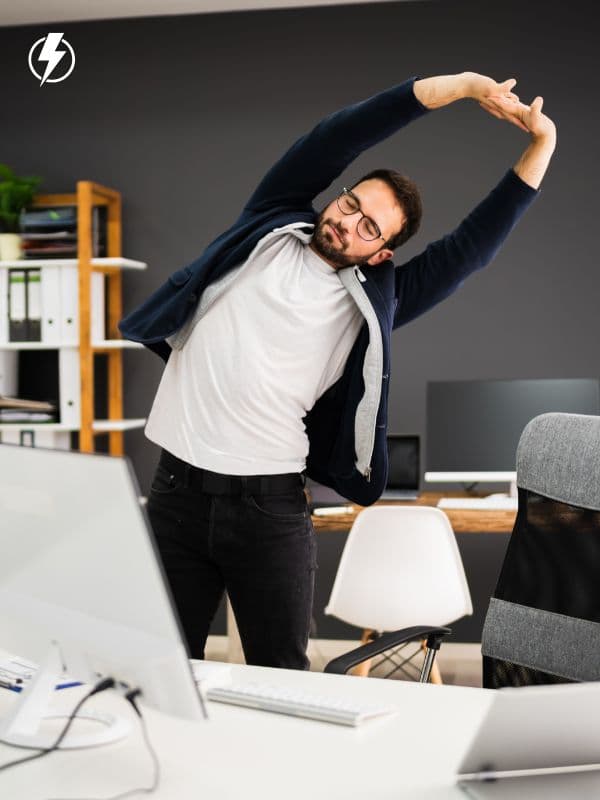
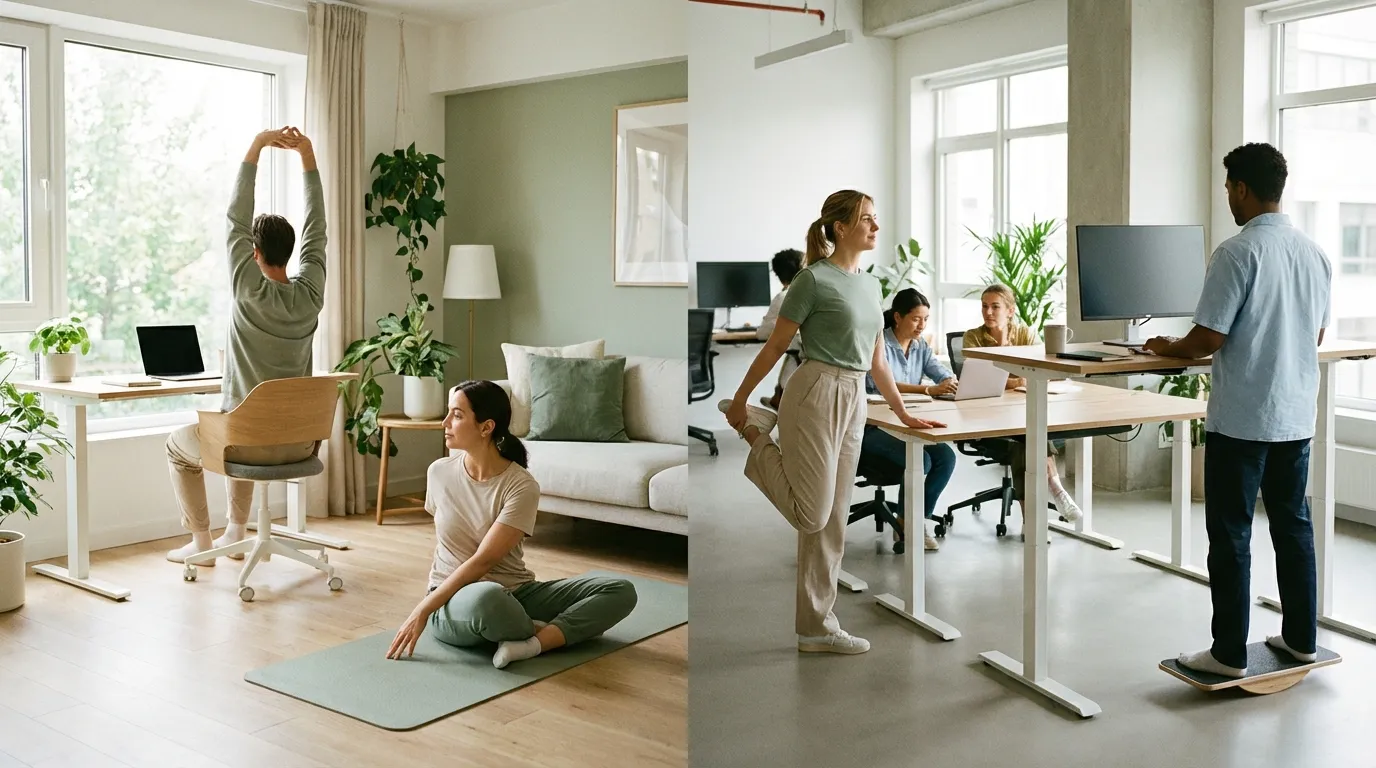
In hybrid workplace wellness, one idea that often works well is the use of movement snacks, brief, intentional bursts of activity that usually last two to five minutes and fit between tasks, often right after a meeting ends. Because they’re short, they don’t require gym clothes or blocked calendar time, and they can be done at a desk in normal workwear. That ease of use helps them feel realistic instead of disruptive.
Rather than relying on one long workout, research often shows that frequent movement supports circulation and cognitive performance, with posture improvements typically appearing over time. Remote workers also often report higher participation in wellness efforts. This is usually tied to flexibility: being able to take a short break when the schedule allows, instead of waiting for a fixed class time or location that rarely fits.
| Worker Type | Regular Wellness Participation |
|---|---|
| Remote workers | 91.5% |
| On-site workers | 81.5% |
Common movement snacks include standing hip openers between meetings, desk-based posture resets, or taking a quick walk during a phone call when timing allows, even a short hallway loop can be enough. These are simple, practical options that people tend to keep doing. Related ideas appear in Effective Tips for Maintaining Work-Life Balance Through Movement.
Designing Wellness Programs That Support Work-Life Balance Everywhere
For HR leaders and managers, the main challenge is building wellness programs that feel fair to both remote and in‑office employees, and that balance is often harder than it sounds. A strong hybrid approach shifts focus away from location and toward how people actually work each day. Participation is usually shaped by clear guidelines and leaders setting the example, not by policy alone. Consistency is often what makes the difference, because it creates shared expectations across home offices and shared spaces without making wellness feel watched or enforced.
Instead of starting with activities, one useful approach is to examine shared pressure points across the workday. Long meetings and deadline‑heavy afternoons often create natural opportunities for short movement breaks, something many teams already notice. Opening meetings with a one‑minute mobility reset, or encouraging camera‑off stretch breaks during longer sessions, can lower resistance so participation feels easier rather than forced.
Dr. Laura Putnam, a workplace wellbeing researcher, points to the performance link between movement and mental health, a practical connection that is often missed.
Movement, flexibility, and mental health support are now core components of performance, not perks.
Well‑designed programs also address barriers like limited time and self‑consciousness. Choice matters most here. Offering optional, low‑intensity activities alongside asynchronous resources lets employees participate in ways that feel comfortable and self‑directed, such as joining a brief stretch at the start of a weekly team meeting.
Real-World Results and Common Pitfalls
The clearest takeaway from recent case studies is that consistent movement strategies deliver measurable results. The impact shows up in hard data, not just in morale surveys. For many leaders, engagement is the main benchmark. Research from Meditopia for Work shows that employees who take part in wellbeing programs are three times more likely to feel engaged. The same research often points to an average drop of 1.5 sick days per employee each year. In some organizations, turnover has fallen by as much as 11% when wellness becomes part of daily routines and expectations, rather than occasional, stand-alone events.
What stands out is that these outcomes usually come from simple, repeatable systems that support regular physical activity. They are not flashy and are rarely designed to impress. Issues tend to appear when companies rely on short-term campaigns or overly complex fitness challenges. A common mistake is launching a once-a-year wellness push with no follow-up. Another is assuming that sharing health information alone will change behavior, which often doesn’t hold up in real workplace settings.
Experts like Dr. Jeffrey Pfeffer from Stanford have pointed out that sedentary work environments significantly raise long-term health risks. This makes ongoing movement a necessity, not a perk. Many successful teams respond by setting clear, practical expectations. Employees might be encouraged to stand, shift position, or stretch every 30 to 60 minutes. Curious how that holds up over time? We explored that here: The Long-Term Health Benefits of Desk Exercises.
Tools, Trends, and the Future of Hybrid Wellness
Hybrid workplace wellness is moving toward more personalized support, often shaped by smarter use of data instead of broad perks. Fitness trackers and virtual ergonomic assessments, usually delivered through integrated platforms, help employees understand how they move and where small changes can improve comfort during the day, often between meetings. Shortlister, which is widely used for employer benefit adoption data, reports that virtual ergonomic support has grown by more than 90% over the past five years. This increase points to a wider focus on posture and everyday movement needs, especially for desk-heavy roles.
Instead of leading with gym discounts, future-focused organizations are redesigning systems. Health guidance is increasingly built into workflows and onboarding, where habits often form early, and performance conversations are starting to include wellbeing. Trends reported by Wellhub, known for tracking usage patterns, and TriNet, which focuses on HR policy changes, suggest movement snacks in meetings and more equal access to resources will continue through 2026. The shift is gradual, but its effects are becoming easier to see.
For desk workers, this often means more support paired with clearer personal responsibility. Tools tend to work best when people actually use them, which is why simple reminders or calendar prompts, sometimes paired with wearable nudges, help movement fit into the workday. Over time, it feels less like an extra task and more like part of how work gets done.
Common Questions (likely)
How often should I take movement breaks during a hybrid workday?
During a hybrid workday, light breaks matter more than how long they last. Many experts recommend brief movement every 30, 60 minutes. One or two minutes to stand, stretch, or walk (nothing intense) can reduce stiffness and improve focus without interrupting workflow.
Are movement snacks effective if I already exercise outside work?
Yes. Regular workouts matter, but they often don’t fully offset the risks of long periods of sitting. Movement snacks support circulation and posture during the workday, even on busy days, because they’re easy to fit into a routine you already follow.
Please share the exact section you want rewritten. After it’s added here, the rewrite can move forward from that point, and the process will continue as the user requested.
What helps most? Lead by example. Offering options and making movement normal, supported by flexible resources, gives employees choice. Participation is usually voluntary and not forced in practice.
Do wellness programs really improve productivity?
Yes, usually when programs are designed thoughtfully. Research shows employees enrolled in wellness programs are more engaged, get more done, take fewer sick days, and are less likely to leave.
Putting Hybrid Wellness Into Practice
What often makes hybrid workplace wellness work is accepting imperfection. Radical change isn’t the goal, and no one needs to get it right every day, pressure like that backfires. The focus stays on realistic movement strategies that support health and performance across settings, whether work happens at home or in the office. When teams introduce movement snacks and inclusive wellness programs, desk workers find practical ways to care for their bodies and minds over time.
Instead of trying to do everything at once, consider how small “small” can be. One approach is choosing one or two health tips to try this week, like standing during calls or adding a quick stretch between tasks. Over time, those actions build on each other, helping movement feel normal during the workday rather than a distraction.
Ultimately, hybrid workplace wellness is about sustaining healthy habits that reinforce long-term work-life balance. For more ideas on integrating health into daily routines, explore Creating a Culture of Wellness: Corporate Health Benefits and Fitness Tracker Hacks: Movement Breaks for Work-Life Balance.