Leg Press Alternative: Best Options and Full Guide
TLDR; This guide explains that desk workers often need more than just a machine swap. Usually, they need leg exercises that help ease stiffness, support better posture through the hips and lower back, and break up long periods of sitting, which honestly can add up fast. Pretty simple.
Good leg press alternatives include goblet squats, Bulgarian split squats, reverse lunges, step-ups, wall sits, glute bridges, calf raises, and band-based options. The best choice depends on available space, training level, and how the joints feel, especially the knees in most cases. That part matters.
It also suggests short exercise snacks during the workday, like quick sets of squats or wall sits, so movement fits in without interrupting work too much. A simple routine can include two lower-body sessions each week, then gradually add load or slow the tempo over time, using exercises that feel realistic to keep doing at home.
If you work from home or spend most of the day at a desk, your legs and hips probably are not doing as much as they could. Long hours of sitting often leave the glutes sleepy, the hips tight, and the lower body feeling weaker than it should. That is a big reason so many home office workers start looking for a practical Leg Press Alternative. A leg press machine can absolutely help build strong quads and glutes, but most people do not have one at home. And even if they do, it is not the only way to train.
For desk workers, the best leg press alternatives do more than work the legs. They can also help relieve some of the stiffness that usually builds up after sitting so long. That matters even more when many desk workers stay seated for large parts of the day, which probably sounds familiar. Some reports say desk workers may sit 6 to 10 hours per day (Whole Strength Physical Therapy). Research also shows adults should aim for at least 150 minutes of moderate activity per week plus muscle-strengthening work on 2 days per week (PMC). That is a good reminder here.
So this guide is not just a simple list of exercises. It gives you a thorough plan for replacing the leg press at home, in a small office, or even between meetings. It covers the best no-equipment moves, dumbbell options, band exercises, and lower-back-friendly choices, along with quick exercise snacks you can fit into the day. If you want stronger legs, better posture, more daily movement, and less stiffness from sitting, you are in the right place.
Why desk workers need a smart Leg Press Alternative
A good Leg Press Alternative should train the same main lower-body muscles as the machine: quads, glutes, hamstrings, and calves. But for desk workers, strength usually isn’t the only goal. Moving better matters too. Sitting for long periods teaches the body to stay bent at the hips and to rely on the lower body less than it should. Over time, that can affect posture, comfort, and even day-to-day energy. For people who sit at a desk most of the day, that’s a real issue.
Research on people who sit a lot helps explain why this matters. One study reported a 12-month prevalence of lower back discomfort at 52% and knee discomfort at 23% among long-duration sitters (International Journal of Community Medicine and Public Health). Another review found that workplace sitting is linked with musculoskeletal complaints, and that replacing some sitting time with movement can help (Sedentary Behaviour Research Network). In this context, the pattern is pretty obvious.
| Measure | Value | Source Year/Context |
|---|---|---|
| Desk worker sitting time | 6 to 10 hours/day | Desk worker estimate |
| Lower back complaints in long-duration sitters | 52% | 12-month prevalence |
| Knee complaints in long-duration sitters | 23% | 12-month prevalence |
| Recommended muscle-strengthening frequency | At least 2 days/week | Adult activity guidance |
That’s why the best replacement usually isn’t just one exercise. More often, it’s a mix of squat patterns, split-stance work, hip-dominant training, and stability work, which is often especially useful for desk workers. The result is not only more strength, but also support for balance, flexibility exercises, posture exercises, and the kind of physical activity the body often misses during a long seated workday.
What makes a good Leg Press Alternative replacement
Not every lower-body exercise works well as a leg press substitute. A good replacement needs to cover a few important basics. First, it should let you challenge your legs enough to build strength. It also needs to be simple enough to do safely at home, which honestly matters a lot. And it should fit your space, your schedule, and your energy level, especially if you’re squeezing in a quick set between emails.
The leg press is popular because it feels stable. You sit down, brace your back, and push with both legs. The setup is simple, and that often feels easier than using free weights. Still, standing movements often come with extra benefits and can make your body stronger in ways that carry over more naturally into everyday life. They train your core, and they can help with balance, which is a nice bonus. For desk workers, that matters because the goal is not just stronger legs. It is also moving better and feeling better after long hours of sitting.
A strong Leg Press Alternative usually falls into one of these groups:
Bilateral squat patterns
These usually include bodyweight squats, goblet squats, and wall squats (the common ones). Both legs work together, and they’ll probably feel most like the machine-based push pattern.
Unilateral moves
These include Bulgarian split squats, reverse lunges, step-ups, and other common moves. Each leg works on its own, so you’re usually training both sides more evenly. That can help with side-to-side weakness that often comes from sitting.
Hip-dominant patterns
Glute bridges and hip thrusts work the glutes and hamstrings. They’re really useful, especially for desk workers, since long hours of sitting often leave the glutes less active.
Isometric options
Wall sits are simple and effective, and they’re usually easy to fit into short work breaks, which I think helps.
The best Leg Press Alternative exercises for home office workers
If a short list is most helpful, these are probably the best options for desk workers: goblet squats, Bulgarian split squats, reverse lunges, step-ups, wall sits, glute bridges, calf raises, plus resistance-band leg extensions or leg press variations. They’re easy to do, which often helps, and simple to fit into the day.
Goblet squat
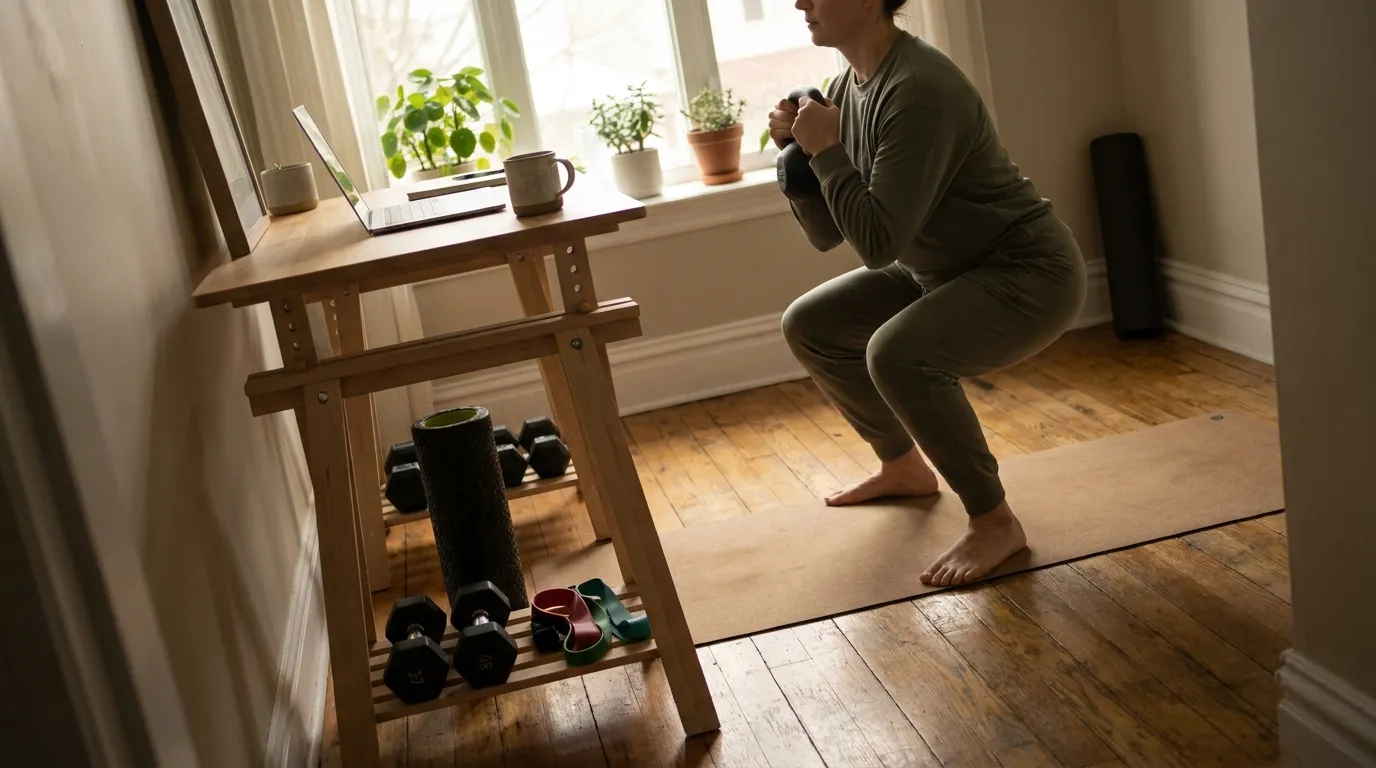
This is probably one of the best all-around choices. Hold a dumbbell or kettlebell at your chest, then squat down with control, nice and steady. It’s simple, but still very effective. It works your quads and glutes, and it can help you stay more upright through your chest and torso, which is helpful if you sit a lot and want better posture.
Bulgarian split squat
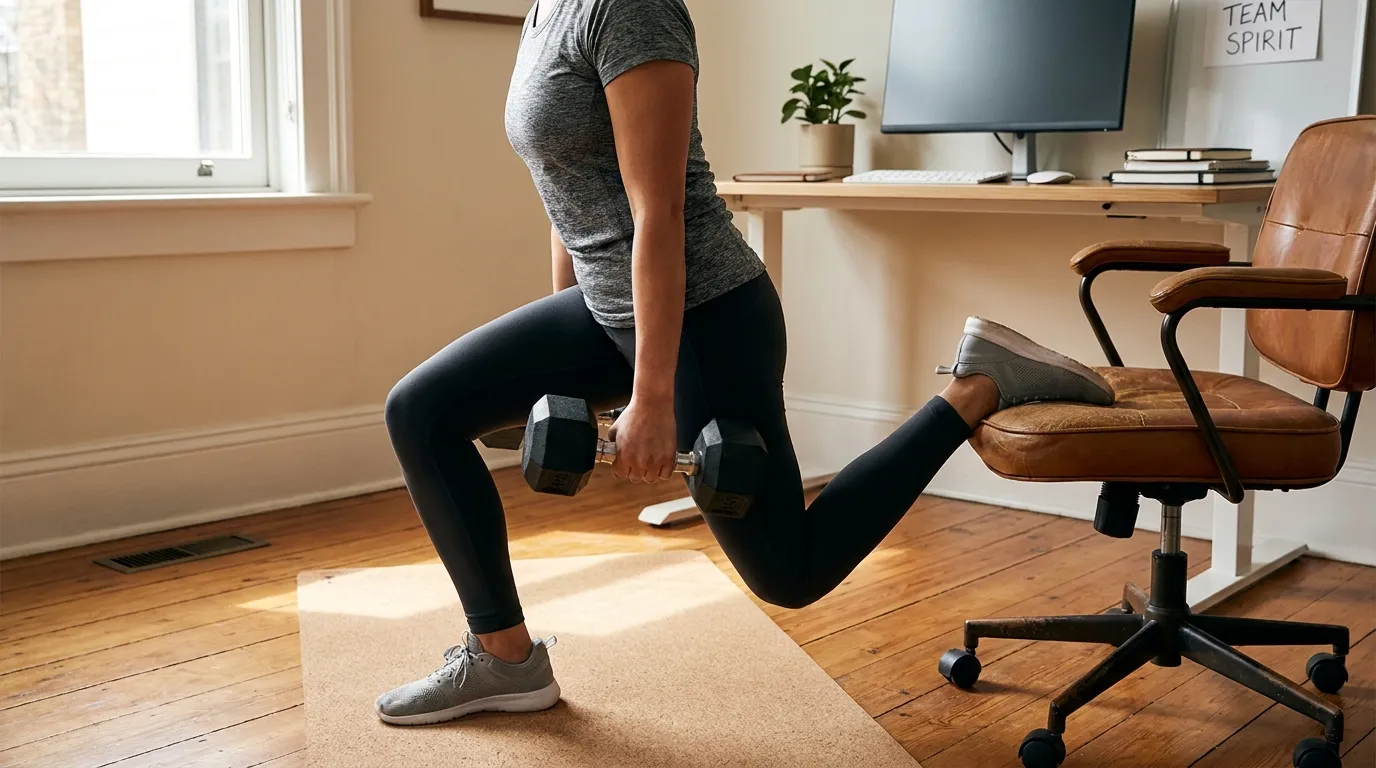
This is usually one of the toughest and best options. With your back foot on a chair or bench, it gets harder fast, while the front leg does most of the work. It’s tough, honestly, but it builds real strength in a small space and can work really well instead of heavy leg press work.
Reverse lunge
A reverse lunge is often easier on your knees than a forward lunge for most people. It helps build strength and improve control, and beginners usually find it easier to learn too, I think.
Step-up
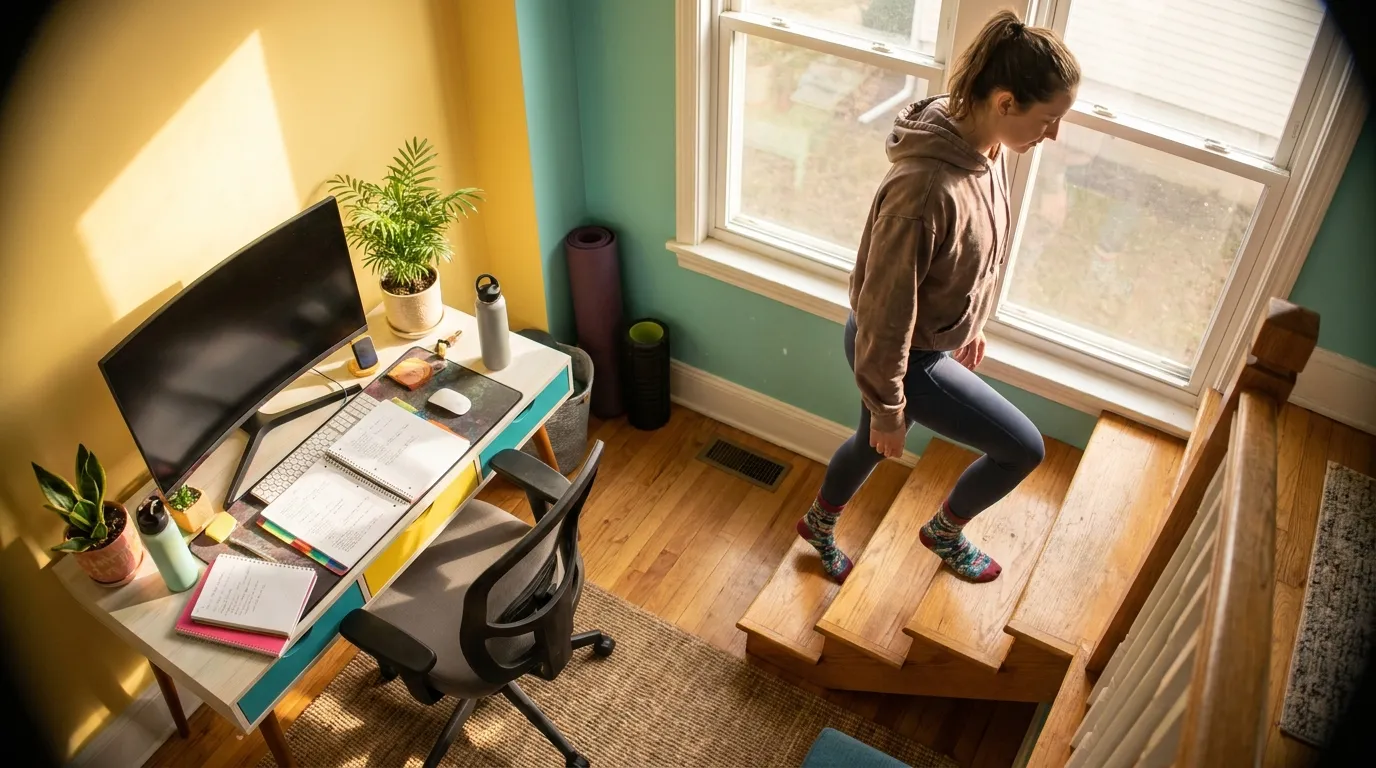
Use a stable step, stair, or sturdy platform, not anything wobbly. Step-ups feel practical because they train a real-life movement like climbing stairs. They work your quads and glutes, and they can also help with single-leg balance.
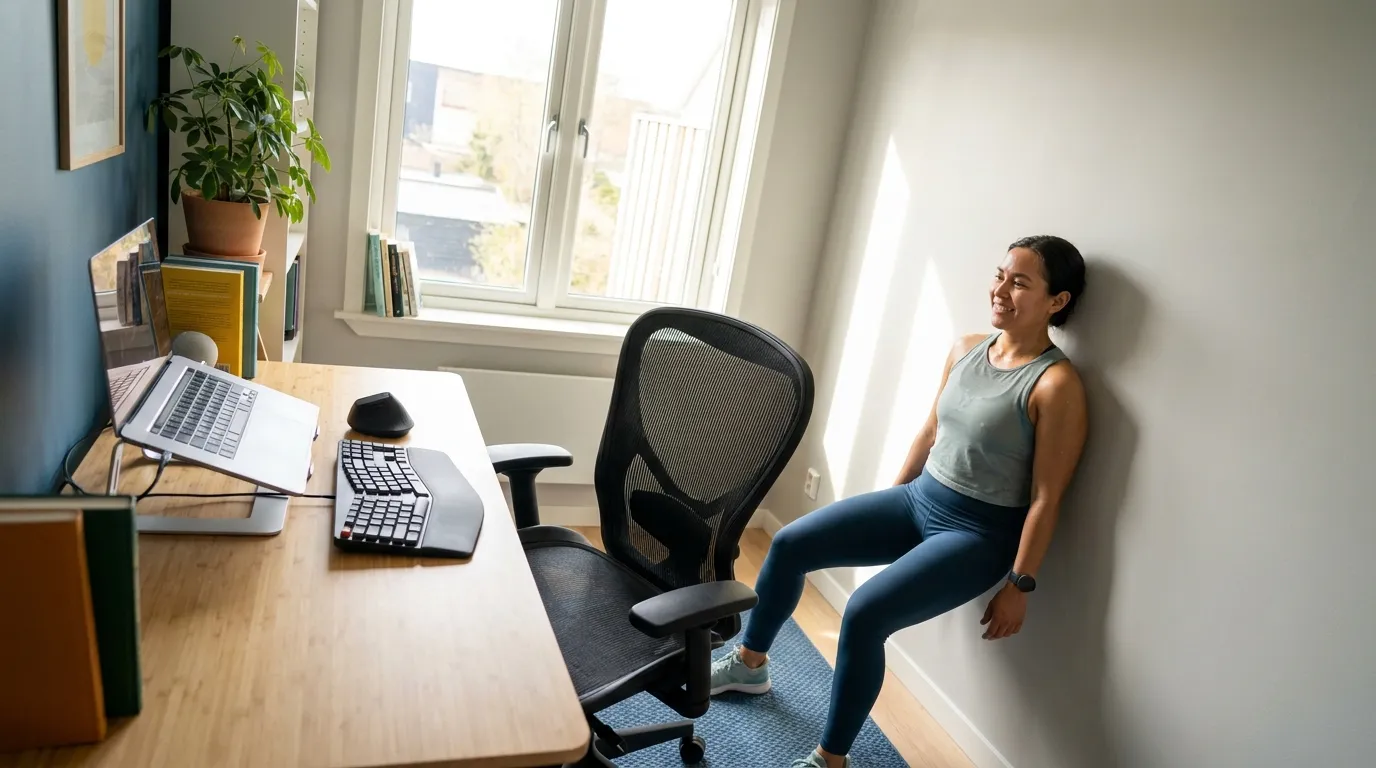
Wall sit
This works really well for work breaks, even right at your desk. It really burns your quads, and Jarrod Nobbe said, “The wall sit is a quadriceps burner and a great substitute for the leg press.” (Boostcamp)
The wall sit is a quadriceps burner and can be a great substitute for the leg press.
Glute bridge
Glute bridges are often more helpful than people expect. If the hips feel tight and the backside feels weak after sitting, which happens a lot, they can help bring back hip extension. In many cases, that also helps posture and lower-body comfort.
How to choose the right Leg Press Alternative for your body and workspace
The toughest exercise usually isn’t the best fit. A better choice is the one you can do with good form, come back to regularly, and recover from without messing up the rest of your workday, which matters more than many people think. It sounds simple, but here it really does matter. That’s why the right Leg Press Alternative depends on your setup, your joints, and your current training level.
For beginners, bodyweight squats, wall sits, glute bridges, and step-ups to a low step are often good starting points. They help build a solid base without needing much skill or much equipment. Got dumbbells at home? Goblet squats and reverse lunges usually work well as the next step. And if you want more of a challenge but don’t have much space, Bulgarian split squats are probably one of the best options.
If your lower back feels sensitive, it often helps to choose movements that keep your body more upright and controlled. Wall sits, supported split squats, and glute bridges are good places to begin. If your knees are the main issue, it usually helps to shorten the range of motion at first and focus on reverse lunges or box squats to a chair. Is balance the bigger problem? Using a wall, desk, or chair for support can make a real difference.
For home office workers, the amount of time you have matters almost as much as the exercise itself. That’s where exercise snacks can be really useful. A quick set of 8 to 12 goblet squats, a 20- to 30-second wall sit, or 10 step-ups per leg can all fit into about two minutes. These short movement breaks usually add up across the day. Deborah Rohm Young said it clearly: “Sit less, move more,” (American Heart Association).
Sit less, move more,
If you want a bigger weekly plan built around these exercises, a split routine can help. We covered that here: The Complete PPLUL (Push Pull Legs Upper Lower) Split Guide.
No-equipment and band Leg Press Alternative options for tiny spaces
A lot of desk workers look for a Leg Press Alternative because there just isn’t space for a machine in a home office, an apartment corner, or next to the desk. The good part is simple: bodyweight exercises, along with one resistance band, can still do a lot, which makes them especially useful in small spaces.
For most people, no-equipment options are usually the easiest way to start. Bodyweight squats fit easily beside a desk, while wall sits only need a wall and reverse lunges only need a little floor space. Glute bridges work well on a mat, rug, or carpet. Calf raises also fit naturally into the day, like during a phone call or while waiting for coffee, which often makes them the easiest one to add without changing much.
If a little more resistance is needed, bands can add it without taking up more room. Seated band leg extensions can work the quads more directly, and a banded squat can make regular bodyweight work feel much harder. Some people also use a floor-based band leg press variation by lying on their back and pressing into the band, though it still doesn’t feel like as strong a substitute as split squats or goblet squats, in my view.
Recent home-training guides still recommend bands as a top workaround for people who want to avoid a large machine (Healthline; Garage Gym Reviews). That makes sense. Bands are affordable, easy to carry, and simple to keep in a drawer.
A simple tiny-space circuit looks like this:
Two-round desk-break circuit
- 12 bodyweight squats
- 20-second wall sit
- 10 reverse lunges per leg
- 15 glute bridges
- 20 calf raises
This usually takes about 5 to 7 minutes, so it’s nice and quick. It can help with flexibility and posture, and may also ease stress while building leg strength. It’s simple, but still helpful, especially after sitting for a while.
Before-and-after examples showing Leg Press Alternative results for busy desk workers
The real value of a Leg Press Alternative often shows up in daily life, not just during workouts. Think about a home office worker named Sam. Before he adds short lower-body exercise breaks, he sits from 8 a.m. to 5 p.m. with only a lunch break, which is pretty normal for a lot of desk jobs. By the end of the day, his hips feel stiff, his lower back feels tight, and even walking up the stairs to another floor feels more difficult than it should.
Now picture Sam adding a few mini breaks throughout the day. At 10 a.m., he does a wall sit with calf raises. At 1 p.m., he adds goblet squats, then later fits in glute bridges. By 4 p.m., he’s doing step-ups on the stairs, nothing complicated at all. None of these quick sessions lasts more than five minutes, so the routine feels doable. After a few weeks, he notices his legs feel stronger, getting up from the desk feels easier, and he finishes the day with less stiffness.
That pattern also fits broader workplace movement research. One systematic review found that sit-stand desk interventions reduced sitting time by 4.8 minutes per hour to 99.9 minutes per day (PMC). Another intervention for home workers paired a height-adjustable desk with online training and reduced sedentary time by 206 minutes per day (ACOEM). So when people make space for movement during the day, the total change can end up being bigger than expected.
Researchers have also noted that replacing sitting with active behavior may help lower pain risk. One study summary explained it this way: “The detrimental effects of prolonged sitting time on musculoskeletal pain, particularly pain at multiple sites among desk-based workers can be minimised by displacing portions of time spent sitting with physically active behaviour, such as intermittent standing and stepping (walking).” (Sedentary Behaviour Research Network)
That helps explain why lower-body strength work matters outside fitness too. For desk workers, it may support better work-life balance and longer-term health benefits, which may also make it easier to keep up over time.
Advanced Leg Press Alternative methods to make exercises harder without a machine
A machine makes it really easy to add load. At home, though, you can still make progress, you just need a different approach, and it’s often simpler than people think. That’s where a lot of people get stuck. They start with bodyweight squats, but if the movement doesn’t get harder over time, progress often stalls.
Here are the easiest, most practical ways to keep making progress:
Add load
Hold a dumbbell, kettlebell, backpack, or loaded tote bag, whatever you’ve got. Goblet squats usually work very well here, I think. Split squats are good too.
Slow the lowering phase
Try taking 3 to 4 seconds as you lower into the squat or lunge, it’s pretty simple, really. That extra time under tension often makes even lighter weights feel tougher, which is usually the point.
Pause at the bottom
At the hardest point, pause for 1 to 2 seconds, it really helps. This works especially well for goblet squats, wall sits, and, I think, step-ups. Small change, often a big difference.
Increase range of motion
If your mobility allows and it feels okay, use a deeper squat. In split squats, slightly raising the front foot will likely make your leg work harder. A simple change, I think.
Train one leg at a time
Step-ups and Bulgarian split squats work so well because unilateral training makes things feel harder fast, and they really do not mess around. Current fitness guidance keeps pointing to unilateral work as a top trend in leg press replacement, which makes sense here. It usually feels practical, challenging, and easy to set up without much equipment (Athlean-X). For desk workers, this kind of training can also help with balance and body awareness, which often fade after years of sitting for most of the day.
Another useful tip is to keep a simple log, nothing fancy. Write down reps, load, and how the move felt. That often makes consistency easier. A fitness tracker can help, but even a sticky note usually does the job.
Common problems with Leg Press Alternative exercises and how to fix them
A Leg Press Alternative only really helps if it doesn’t leave you feeling frustrated all the time, which is fair. Lots of desk workers usually run into the same few issues pretty often here.
‘My knees hurt when I squat’
A box squat to a chair often helps. Try sitting back a bit more, keep your feet planted, and at first don’t squat as deep. It’s a small change, but it will likely help. Reverse lunges or wall sits may also feel better than deep squats.
‘I feel it in my back, not my legs’
If you feel it in your back instead of your legs, bracing your stomach and keeping your chest tall usually helps. A good place to start is glute bridges first. Then try supported split squats. With weight, keep it close to your body, probably in front.
‘I have no time’
Try movement snacks. Deborah Rohm Young said, “Take those smaller breaks throughout the day so you’re not sitting all at once.” For most people, that usually feels easier than doing it all at once. (American Heart Association)
Take those smaller breaks throughout the day so you're not sitting all at once.
‘I get bored’
Try changing your routine a bit. One day, do squats and bridges, they really help. Another day, try lunges with calf raises. Small changes often keep it interesting and make it easier to stick with.
‘I work in a shared home office’
Quiet moves like wall sits, glute bridges, or slow split squats are pretty low-key. They stay quiet and take up very little space, so you can usually fit them in without bothering anyone.
These small changes can make exercise feel more doable, which often helps. In this kind of setup, that probably matters more than having a perfect plan.
How to build a weekly Leg Press Alternative routine around your workday
The best routine is usually the one you can stick with, even on busy weeks, and that’s especially true for desk workers. For most people, two focused leg sessions plus a few short movement breaks during the day work well. Long workouts usually aren’t needed here.
So here’s a simple weekly setup:
Option A: Two main sessions
Day 1
- Goblet squat: 3 sets of 8 to 12
- Reverse lunge: 3 sets of 8 per leg
- Glute bridge: 3 sets of 12 to 15
- Calf raise: 2 sets of 20
Day 2
- Bulgarian split squat: 3 sets of 6 to 10 per leg
- Step-up: 3 sets of 8 per leg
- Wall sit: 3 rounds of 20 to 40 seconds
- Band leg extension: 2 sets of 15
One or two mini movement snacks during workdays can make this setup work better, especially when they stay quick. They are small, but really useful, so it gets easier to stay active without making the week feel packed or turning the schedule into one more thing to manage.
That also fits well with the idea behind My Exercise Snacks, where short, practical movement breaks often help office workers feel better and get through the day a little more easily, which is usually the main goal.
For anyone who wants more structure, the legs day inside The Complete PPLUL (Push Pull Legs Upper Lower) Split Guide shows how these exercises can fit into a more complete program. That can help if a clearer weekly setup would make things easier.
Best Leg Press Alternative choices based on your goal
Desk workers don’t all want the same thing. Some want stronger legs. Others want less stiffness. And some may need a lower-back-friendly option that fits into five minutes, which usually helps when time is tight.
Best for overall strength
Bulgarian split squat. Or maybe the goblet squat, I think.
Best for beginners
Bodyweight squat, wall sit, and glute bridge all seem pretty simple, I think.
Best for bad weather and tiny spaces
Wall sit, split squat, band leg extension, and calf raises are all pretty easy, really, and work well in a small room.
Best for tight hips from sitting
Glute bridges, step-ups, and reverse lunges are all good choices. Squats too, I’d say.
Best for low back sensitivity
Wall sit. Also, a supported split squat feels very steady, plus a controlled glute bridge.
Best for pure convenience
Step-ups on stairs. Bodyweight squats right by your desk.
Home fitness keeps shifting toward compact tools that can do more than one job, but lots of people still need no-machine options because of cost and limited space, which is fair (Garage Gym Reviews). That usually makes simple alternatives feel especially useful right now.
Frequently Asked Questions
What is the best Leg Press Alternative at home?
For most people, the best choice is the Bulgarian split squat or goblet squat. Both train the quads and glutes well, need little equipment, and work in small spaces.
Are leg press alternatives good for desk workers?
Yes. They build lower-body strength while also helping counter the effects of sitting. Moves like glute bridges, step-ups, and wall sits can improve daily comfort and support better posture.
Can I replace the leg press with bodyweight exercises only?
Yes, especially if you use harder bodyweight moves like split squats, step-ups, wall sits, and lunges. You can also increase difficulty by slowing reps, adding pauses, or doing more single-leg work.
Which alternative is easiest on the lower back?
Wall sits, glute bridges, and supported split squats are often the easiest place to start. They give you more control and usually need less spinal loading than heavier standing lifts.
How often should desk workers train legs?
A good starting point is two leg-strength sessions per week plus short movement breaks during workdays. That matches general guidance for muscle-strengthening activity and helps break up long periods of sitting.
Final reminders for stronger legs and less sitting
The best Leg Press Alternative is the one that fits your body, your home, and your schedule. For most desk workers, that usually means simple moves they can keep doing regularly: goblet squats, split squats, step-ups, wall sits, glute bridges, and calf raises. Nothing fancy, and no giant machine needed. In everyday life, the hard part is often sticking with it, so consistency, good form, and a plan that feels manageable usually matter most.
Lower-body training is not just about building muscle. It can also support posture, improve health tips for desk life, and make stress management through movement feel a little easier. In many cases, it also helps break up long stretches of sitting, which can make daily movement feel less stiff. Research suggests that 30 to 40 minutes of moderate-to-vigorous activity may help offset the risks linked with about 10 hours of sitting per day in a meta-analysis covering 44,370 participants (Desky).
A simple way to start is to pick two exercises from this guide and do them twice a week. Why not add one short exercise snack during the workday too, even if it is very quick? Then track the reps and build from there. Stronger legs and better movement are possible without ever using a leg press machine, for example with step-ups before lunch and wall sits after work.